The Kremlin is stepping up the integration of Ukraine’s occupied territories into Russian infrastructure

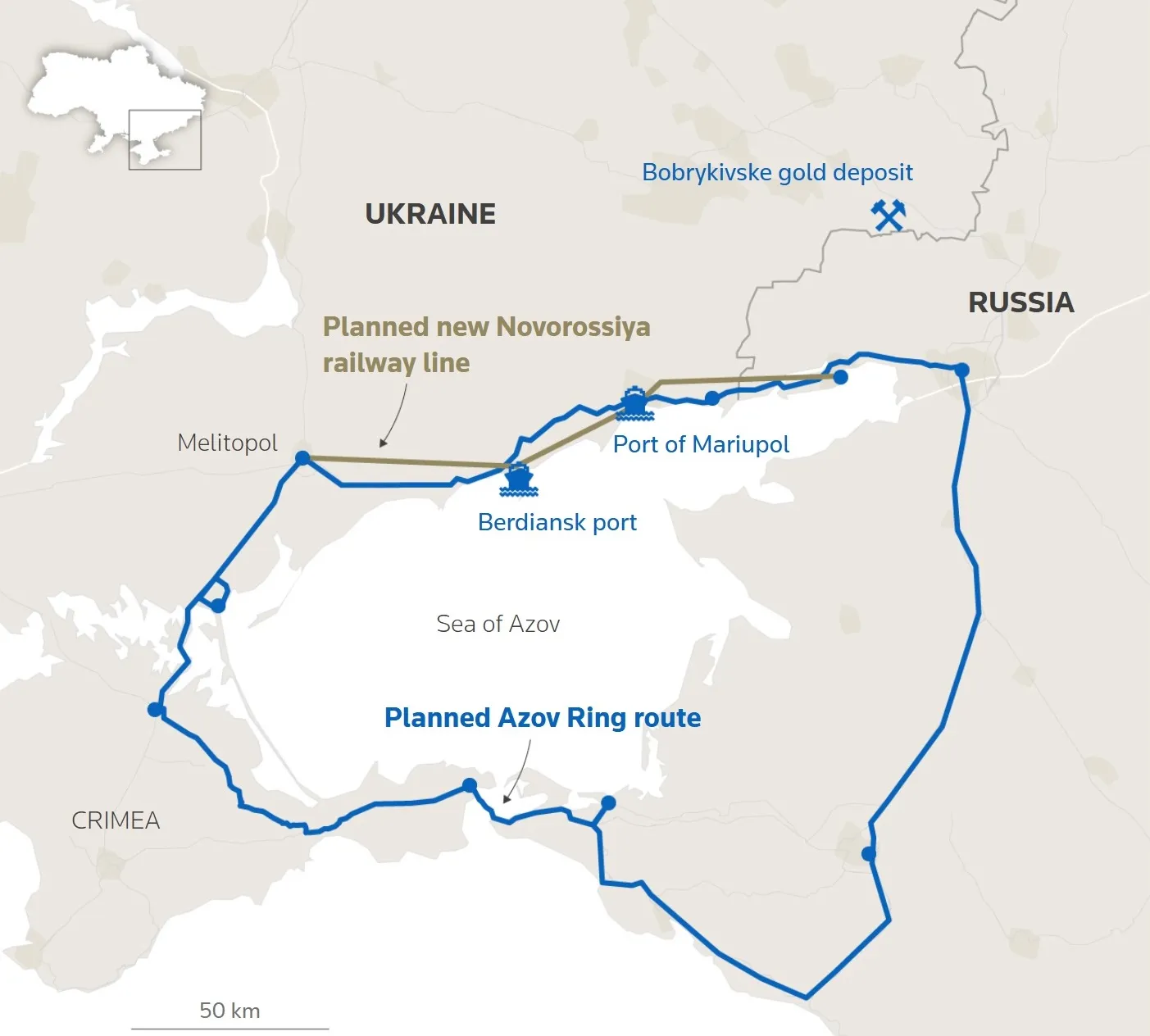
Russia is actively developing transport and trade infrastructure in the occupied territories of eastern and southern Ukraine. In its investigation, Reuters reports that Moscow is investing hundreds of millions of dollars in these projects, combining military, economic and political objectives.
Russia is promoting the so-called ‘Novorossiya’ project and using it to incorporate the seized territories into its own territory. This refers to the temporarily occupied parts of the Donetsk, Luhansk, Zaporizhzhia and Kherson regions.
The Reuters investigation is based on an analysis of thousands of satellite images, Russian tender documents, public statements, data on exports and freight transport, as well as interviews with over thirty Ukrainian officials and former residents of the occupied territories.
Vladimir Putin has described these lands as historically Russian and stated that a large-scale socio-economic development programme has been launched for them. According to Reuters estimates, between 2024 and 2026, Russia allocated approximately $11.8 billion in federal funds to the development of the four occupied territories. This is almost three times more than the total amount earmarked for around twenty other Russian regions included in priority development programmes.
Rail links
One of the key areas has been the railway. Construction is ongoing on a 525-kilometre line within the railway system, which began in 2023. It is set to pass through the Donetsk, Luhansk, Zaporizhzhia and Kherson regions. Satellite imagery has also captured the construction of a 60-kilometre new section between Novoselivka and Kolosky, north of Mariupol.
According to a Ukrainian intelligence official quoted by Reuters, Russia is building new railway routes further from the front line to transport ammunition and military equipment more safely. The agency was unable to determine whether this section has been put into operation.
Motorway
In parallel, Russia is building the ‘Novorossiya’ motorway, which is set to form part of the major Azov transport ring. According to Russian tender documents, over $214 million has already been allocated across twenty contracts for the construction of this road. At the end of last year, the Russian Ministry of Transport announced that a further $123 million would be allocated to this project in 2026.
The road is set to stretch for 630 kilometres upon completion. It will combine new and upgraded sections and link the occupied territories with Russia and Crimea. Satellite images show bridge repairs, road widening, the construction of junctions and even the clearing of verges.
Between 2022 and 2025, over 2,500 kilometres of railways, motorways and roads were built, repaired or modernised in the four occupied territories and in areas adjacent to Russia.
Olga Kuryshko, the Ukrainian presidential representative in the Autonomous Republic of Crimea, told Reuters that Russia’s actions in the occupied territories resemble what Moscow did in Crimea following the 2014 annexation, but that the process is now proceeding much more rapidly. According to her, in three years of occupying the new territories, Russia has achieved as much as it did in Crimea over a decade.
Ports
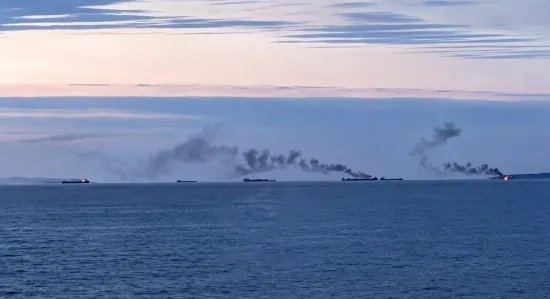
A separate focus has been the resumption of operations at ports on the Sea of Azov. In August, Russia added Mariupol and Berdyansk to the list of ports open to international shipping. Kyiv condemned this decision. Tenders worth over $13 million have been announced for both ports, involving dredging and the widening of channels to allow larger vessels to pass through.
Two employees at the port of Mariupol told Reuters that the port has become significantly busier in recent months. According to them, ships carrying coal and grain are entering and leaving the port, although the scale of operations remains below pre-war levels.
According to LSEG data, between July and November last year, 18 cargo ships operated by Russian and foreign companies departed from the ports of Mariupol and Berdyansk. Most of them were bound for ports in Turkey. In 2024, according to LSEG, no ships entered or left these two ports.
Russia is using the occupied territories to extract and sell natural resources. According to Russian customs data, between March 2022 and March 2025, at least 508,500 tonnes of coal, coke and anthracite, worth $13.2 million, were exported from the occupied regions. The main buyers were trading companies from Turkey and the United Arab Emirates. Supplies also went to India, Indonesia, Egypt and Algeria.
Sale of seized assets
State auctions have become another instrument of control, through which Russia is putting assets in the occupied territories up for sale. These include mines, quarries and agricultural land. Among the largest sales was the right to develop the Bobrykivske gold deposit in the Luhansk region. It was purchased for $9.7 million by the company “Alchevskpromgroup”, which is controlled by the Russian mining company “Polyanka”.
According to auction documents, the deposit’s reserves amount to approximately 1.64 tonnes of gold. At current spot prices, its value is estimated at nearly $260 million.
Ukrainian President Volodymyr Zelenskyy, commenting to Reuters, cited the example of Crimea and said that Russian investment there is a façade that brings no benefit to the peninsula’s residents. In his words, Crimea does not resemble a modern resort, as everything there is militarised.
Carolina Heard, an expert at the Institute for the Study of War, commented that the scale of the investments and the long-term nature of the infrastructure projects indicate that the Kremlin has no intention of returning these territories to Ukraine as part of any future peace settlement. She added that active investment in the industry and economy of the occupied regions also ties Ukraine financially to Russia.