Kryvonos declared his readiness to face suspicion and explained the course of high-profile investigations by the National Anti-Corruption Bureau of Ukraine (NABU)
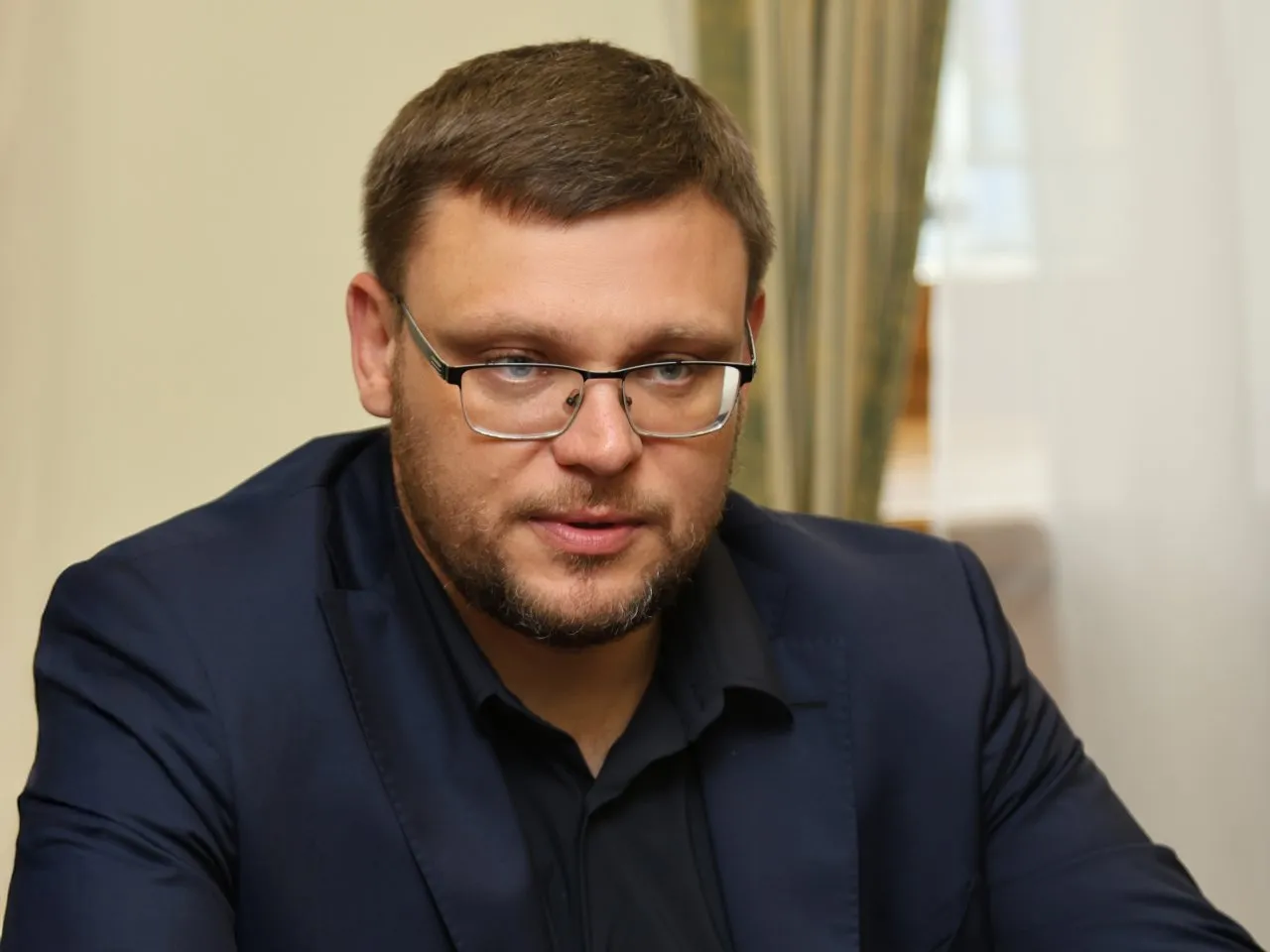
The director of Ukraine's National Anti-Corruption Bureau, Semen Kryvonos, has stated that he is prepared to face charges himself and the leadership of the Specialised Anti-Corruption Prosecutor's Office, but only if there is evidence of a crime. He announced this on 10 February during a briefing, commenting on allegations of political agreements not to bring charges against certain high-ranking officials.
According to Kryvonos, no political agreements between NABU and SAP are possible, as these bodies are institutions with collective responsibility, a system of checks and balances, and independent detectives and prosecutors who have passed open competitions. He stressed that suspicions are reported immediately after sufficient evidence has been gathered, and their absence means that the process of gathering evidence is ongoing.
Separately, Kryvonos explained NABU's cautious communication in the so-called Midas case. According to him, the investigation is actively cooperating with about ten jurisdictions, including European Union countries, to obtain information about the financial transactions, accounts and property of the persons involved. Expert examinations are currently underway and responses to requests for international legal assistance are awaited.
He also said that the extradition procedure, particularly with regard to Israel, is lengthy, but NABU is working on preparing the relevant requests and will continue to cooperate with foreign states to return the individuals involved in the case to Ukraine. At the same time, SAPO head Oleksandr Klymenko noted that cooperation with the State Financial Monitoring Service in this case could be more active. Kryvonos clarified that earlier, this service had blocked a significant amount of funds that were planned to be used as bail for one of the suspects, which led to his detention.
As the NABU recalled, a special operation to expose corruption in the energy sector was announced in November. The investigation established the existence of a large-scale scheme to influence strategic enterprises in the public sector, in particular Energoatom. Five of the seven suspects were detained as part of the proceedings. Among those involved are a businessman whom the investigation considers to be the head of a criminal organisation, a former adviser to the Minister of Energy, and the executive director of security at Energoatom. Two suspects, Timur Mindich and Alexander Zuckerman, have left Ukraine.
Kryvonos also spoke about the European Union's support for anti-corruption agencies. According to him, the EU provides NABU with expert, technical and organisational assistance within the framework of the European Anti-Corruption Initiative, in particular with regard to equipment and training. NABU cooperates with the European Public Prosecutor's Office and law enforcement agencies of EU countries, and also works as part of joint investigation teams.
He cited the example of cooperation with the French prosecutor's office, which made it possible to return to the budget about €4 million that had been embezzled as part of a corruption scheme at the Polygraph Combine Ukraine. According to Kryvonos, exposing corruption schemes has a positive impact on the country's defence capability, in particular by strengthening economic capacity and supporting the Armed Forces of Ukraine.