Magnetic storms in June 2026: forecast of dangerous days

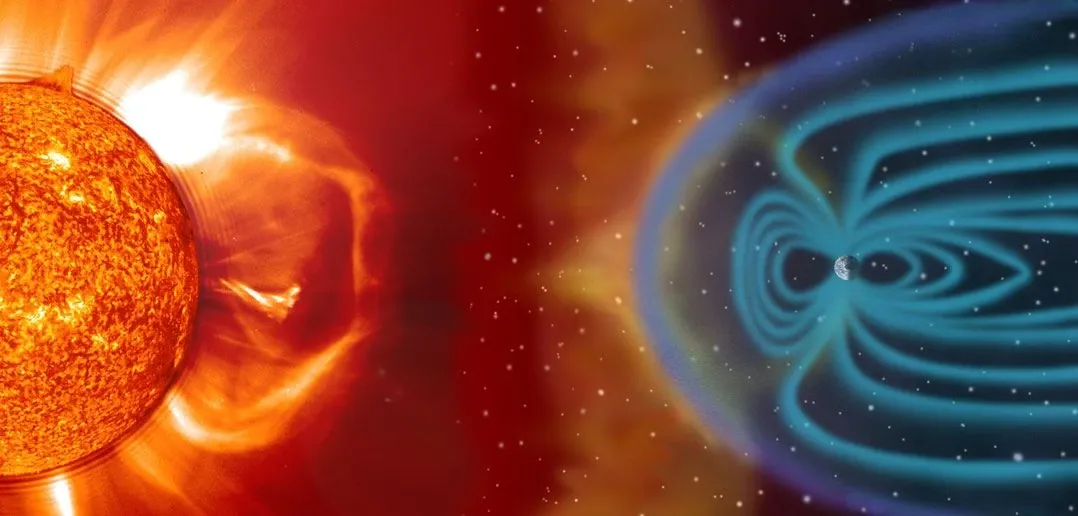
This is according to a forecast by the NOAA Space Weather Prediction Centre (SWPC). According to NOAA, a moderate G2-level magnetic storm is expected on 11 June, and a weak G1-level storm on 12 June.
In June 2026, magnetic storms are not expected to be prolonged, but several days may bring increased geomagnetic activity.
According to the NOAA SWPC forecast, the most significant disturbances are expected on 11 and 12 June. It is on these dates that G2 and G1-level magnetic storms are likely to occur.
The Space Weather Prediction Centre notes that the increased activity is linked to the influence of high-speed solar wind flows from a negative-polarity coronal hole.
When will the magnetic storms occur in June 2026?
According to NOAA’s preliminary forecast, the most active days of the month will be:
11 June – a probable G2-level magnetic storm;
12 June – a probable G1-level magnetic storm.
A G2 level indicates a moderate geomagnetic storm, whilst a G1 level indicates a weak one. On the NOAA scale, G1 corresponds to a Kp index of 5, and G2 to a Kp index of 6.
When geomagnetic disturbances are possible
Apart from 11–12 June, active geomagnetic conditions are possible on 1, 3, 4, 5, 13, 14 and 23–27 June. On these days, G1–G2 storms are not forecast, but rather increased activity without reaching storm levels.
On the remaining days of June, according to NOAA, calm conditions or calm conditions with periods of minor disturbance are expected. The forecast may be updated as solar activity changes and depends on new flares, coronal mass ejections and solar wind flows.
What does the G-index of a magnetic storm mean?
NOAA uses a five-level geomagnetic storm scale – from G1 to G5. G1 indicates a weak storm, G2 – moderate, G3 – strong, G4 – very strong, and G5 – extreme.
The G-index is linked to the planetary Kp-index, which reflects the level of disturbance in the Earth’s magnetic field. The higher the index, the stronger the geomagnetic activity.
For most people, weak and moderate magnetic storms do not pose a direct danger. However, during periods of heightened activity, some people may complain of fatigue, headaches, sleep problems or fluctuations in their well-being.
How to minimise the impact of magnetic storms
On days of heightened geomagnetic activity, it is worth paying closer attention to how you feel, especially for people with chronic conditions, blood pressure issues or cardiovascular problems.
The basic advice remains simple: get at least 7–8 hours of sleep, drink plenty of water, avoid overexertion, steer clear of alcohol and heavy meals, and avoid unnecessary stress.
If you experience a sudden deterioration in your health during a magnetic storm, don’t simply put it down to the weather or solar activity. In such cases, it is best to consult a doctor.
Follow us on Telegram