The ‘Marichka’ AI system will reduce the time taken to make decisions within the Armed Forces of Ukraine to a matter of minutes

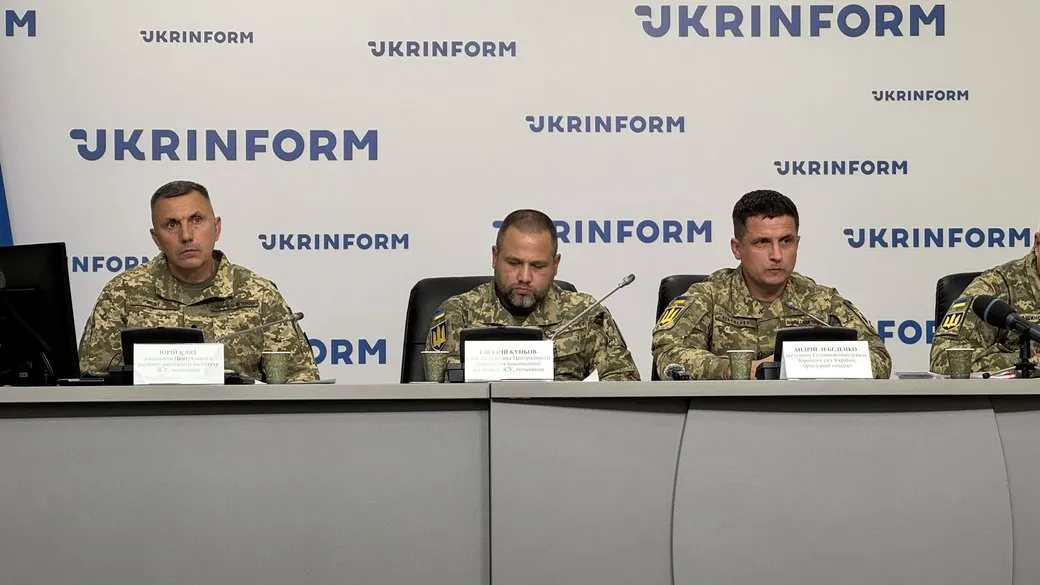
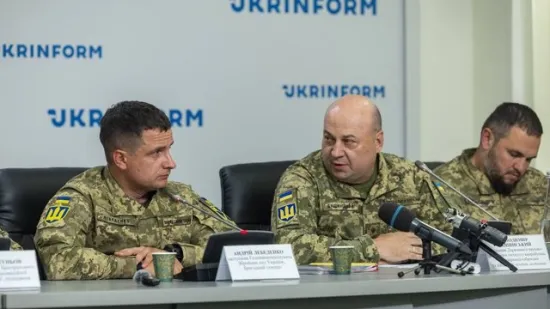
Yuriy Klyat, the head of the institute, spoke about this during a briefing, according to ‘Suspilne’.
Before making a combat decision, a regiment or brigade commander must gather intelligence on their own units and the enemy, assess available forces, weapons, ammunition, potential casualties and the development of the situation.
Under current regulations, this process can take between six and 12 hours. Military personnel need to review around 20 documents, collate information from various sources and prepare possible courses of action.
‘Marichka’ is designed to automate a significant portion of this work. The system will gather information within a single secure environment, analyse it and provide the commander with the results within a few minutes.
This is particularly important in modern warfare, where the situation may change before a traditional set of documents has even been finalised.
How ‘Marichka’ will work
In terms of how it interacts, the developers compare the system to ChatGPT. However, ‘Marichka’ will not be a publicly accessible chatbot and will not use open-source information from the internet to prepare combat decisions.
It is intended to be a closed military neural network that will operate using data from the Armed Forces. It will collect and verify information, automatically determine the balance of forces and assets, assess resource requirements and forecast potential losses.
The system will also be able to model various scenarios on an interactive map. If the situation changes, ‘Marichka’ will report this and list the proposed scenarios.
For example, a commander will be able to receive an assessment of how a change in enemy numbers, the loss of a specific route, a shortage of ammunition or the arrival of an additional unit will affect the execution of a mission.
Will the AI make combat decisions?
The final decision will remain with the commander. ‘Marichka’ is designed to help the commander analyse large volumes of information more quickly, but will not have the authority to command troops independently or determine which operation to carry out.
This is a fundamental difference between a decision-support system and autonomous control. A neural network can suggest several options and calculate the likely consequences, but the commander must verify the data, assess the risks and select the final plan.
The quality of AI recommendations depends on the accuracy of the data fed into the system. If data on the enemy, one’s own forces or resources is incomplete or out of date, the result may also be inaccurate. This is precisely why the developers have included a function to verify information, and do not transfer responsibility for decisions to the machine.
What stage is the development at?
During the initial trials, ‘Marichka’ successfully completed tasks using test data. This means that the system has already demonstrated its ability to process information and generate calculations under controlled conditions.
However, there have been no reports yet of the neural network being fully deployed in combat units. The developers are continuing to test and train the system, verify the accuracy of its responses and secure the information transmission channels.
No date has been given for the completion of development or the start of ‘Marichka’s’ deployment within the armed forces. Nor have its technical specifications, computing power or methods for obtaining operational data been disclosed.
How classified information will be protected
The plan is to upload military orders and documents classified as ‘For Official Use Only’ and ‘Secret’ to ‘Marichka’. In future, the system is expected to be capable of handling materials with a higher level of classification.
Before this happens, the developers must ensure the security of the communication channels and the environment in which the data will be stored. Due to the sensitivity of the information, details of the architecture and security mechanisms are not being disclosed.
The closed format means that the system must not transfer military documents to external commercial platforms. Information processing must take place within the secure environment of the Armed Forces of Ukraine.
Who will use ‘Marichka’
The system is being developed primarily for the command posts of brigades, army corps and troop formations. It is at these levels that large volumes of intelligence, operational and logistical information need to be rapidly integrated.
‘Marichka’ is intended to assist not individual servicemen at their posts, but the headquarters that plan operations, deploy forces and coordinate the work of various units.
Deputy Commander-in-Chief of the Armed Forces of Ukraine Andriy Lebedenko noted that elements of artificial intelligence are already being used in drones, radars and control systems for certain types of weaponry. ‘Marichka’ is designed to consolidate information from various sources and streamline the command and control of troops.
What will change once the system is launched
The main advantage will be speed. If headquarters can indeed reduce the time taken to prepare calculations from several hours to minutes, commanders will have more time to respond to changes in the situation.
The system may also reduce the amount of manual work involved in handling documents and calculations. Officers will be able to focus on assessing proposed options, risks and the actual capabilities of their units.
At the same time, ‘Marichka’ is still at the development and testing stage. Its effectiveness in real combat conditions will depend on the accuracy of the data, the reliability of its security, the speed at which information is updated, and the system’s ability to function correctly under non-standard circumstances.
Follow us on Telegram.