The magnetic storm on 19 March is set to intensify to G2 level: what does this mean?

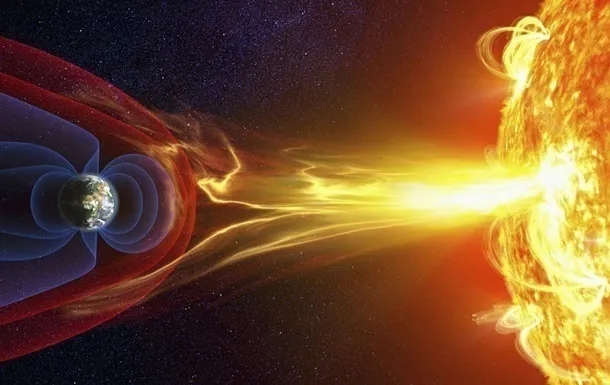
This has been reported by the NOAA Space Weather Prediction Centre. Space weather forecasters are
predicting heightened geomagnetic activity on 19 March 2026. NOAA has issued a G2-level magnetic storm warning, which corresponds to a moderate intensity on the international scale. The centre’s latest update also states that the G2 Watch is in effect from 19–21 March due to a combination of the possible arrival of coronal mass ejections and the effects of solar wind flow from a coronal hole.
The cause of the current deterioration in space weather is attributed to plasma ejections that left the Sun on 16 March. NOAA explicitly states that these CMEs are expected to reach Earth on 19 March. Additional specialist sources note that the initial forecast concerned a single eruption following an M2.7-class flare, but subsequently the talk has turned to at least several CMEs, which may overlap and prolong the disturbance.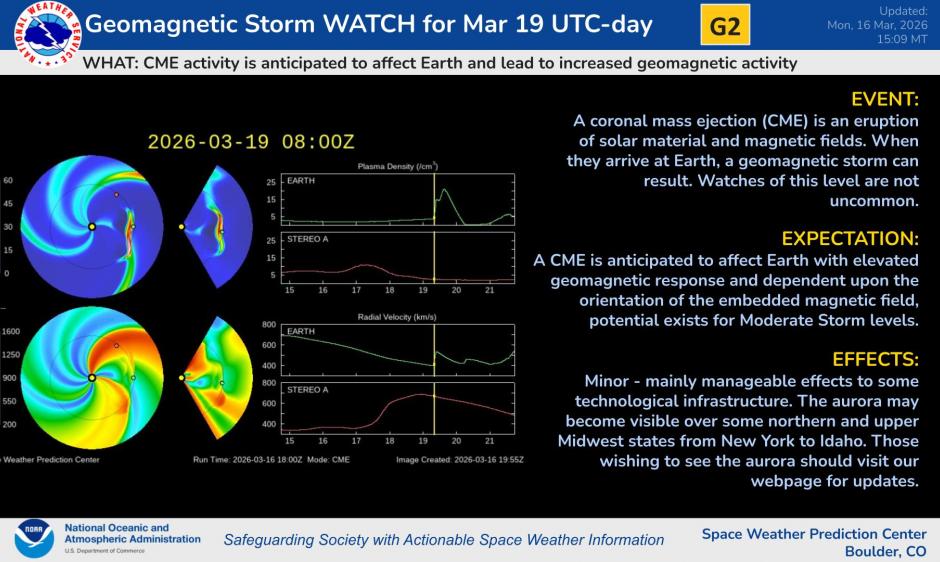
Therefore, for 19 March, it is more accurate to speak not of an already confirmed ‘strong’ storm, but of a forecast moderate G2-level storm with a likelihood of further development. NOAA also admits a small probability of intensification to G3, but emphasises a high level of uncertainty regarding the precise impact of individual eruptions.
During magnetic storms, weather-sensitive people may complain of headaches, fatigue, irritability, difficulty sleeping and a general deterioration in well-being. Against the backdrop of this forecast, experts advise monitoring blood pressure, taking prescribed medication as usual, drinking more water, and avoiding heavy meals, alcohol and excessive physical exertion. It is also advisable to get a good night’s sleep and reduce stress levels. These are general recommendations, not a medical opinion for a specific individual. A
magnetic storm occurs when the Earth’s magnetosphere reacts to impacts from solar wind and plasma following solar flares and coronal mass ejections. Such disturbances can last from a few hours to several days. For 19–21 March, NOAA continues to monitor the situation and advises keeping an eye on forecast updates, as the timeframe and intensity of the impact may still change.