Magnetic storms on 29–30 April 2026: when will activity peak?

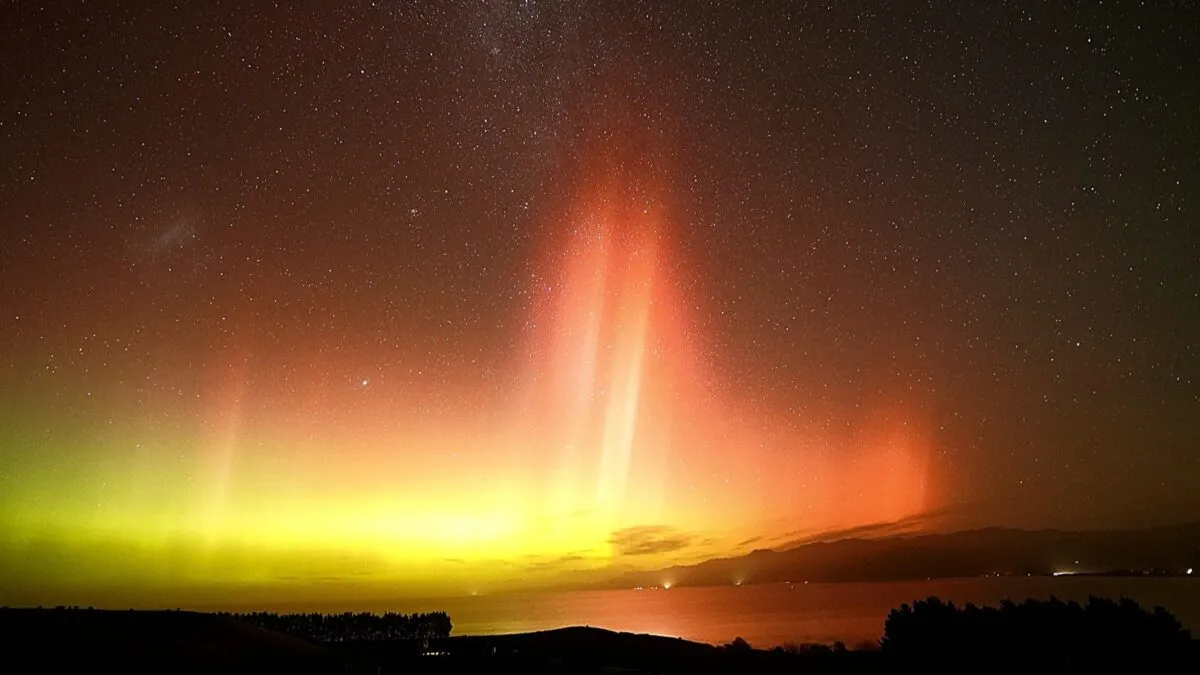
This is according to the latest data from the NOAA Space Weather Prediction Centre.
At the end of April, the geomagnetic background remains relatively stable.
According to the latest data from the NOAA Space Weather Prediction Center, fluctuations within the Kp 2–4 range are expected on 29 April.
On 30 April, readings may temporarily rise to Kp 4. This is still below the level of a weak G1 magnetic storm.
Experts note that no significant coronal mass ejections towards Earth have been recorded at present.
Moderate solar wind flows remain the main influencing factor.
That is why no strong geomagnetic storms are forecast for the coming days.
29 April is expected to be a calmer day. Most forecast values will remain within the Kp 2–4 range.
This level corresponds to a slightly disturbed geomagnetic background without a magnetic storm.
For most people, 29 April should pass without significant discomfort.
On 30 April, there may be a brief increase in activity up to Kp 4.
This is an unstable but not yet stormy level.
Some weather-sensitive people may experience fatigue, irritability or headaches.
Therefore, 30 April may be the most stressful day. At the same time, no G1-level magnetic storm is officially expected yet.
A magnetic storm is the Earth’s magnetic field’s reaction to charged particles arriving from the Sun following solar flares or an increase in solar wind.
When the particle stream reaches Earth, geomagnetic fluctuations of varying intensity occur.
The intensity of these fluctuations is determined by the Kp index.
Kp 0–2 indicates a quiet state.
Kp 3–4 corresponds to an active or unstable background.
Kp 5 indicates a weak magnetic storm.
Kp 6 indicates a moderate storm.
Kp 7–9 is considered a strong storm.
The G scale is also used: G1 – a weak storm, G2 – moderate, G3 – strong, G4 – very strong, G5 – extreme.
Even minor fluctuations in the magnetic field can affect the well-being of sensitive individuals.
Possible symptoms include headaches, drowsiness, fatigue, fluctuations in blood pressure, irritability, anxiety and reduced concentration.
Usually, such symptoms are short-lived and subside once the geomagnetic background stabilises.
To help cope with any fluctuations on 29–30 April, doctors advise getting plenty of sleep and drinking enough water.
It is also worth avoiding overexertion, spending more time outdoors, reducing coffee consumption and avoiding stress.
Separately, they advise monitoring blood pressure and not overworking the body physically.
People with cardiovascular conditions are advised to keep essential medication to hand.
According to preliminary estimates by NOAA, further short-term periods of increased activity are possible in early May.
This could happen if active regions on the Sun intensify or the speed of the solar wind increases.
Therefore, the forecast may be updated daily depending on the solar situation. It was
previously reported that on 26–27 April 2026, geomagnetic activity remained weak, with no major storms.
As reported by ThePublic, Chernobyl: a planetary disaster that they tried to ‘hush up’
Follow us on Telegram