The Ministry of Defence has ordered Motorola body cameras for the TCC for a further 291 million hryvnias

This has been reported on the Prozorro system.
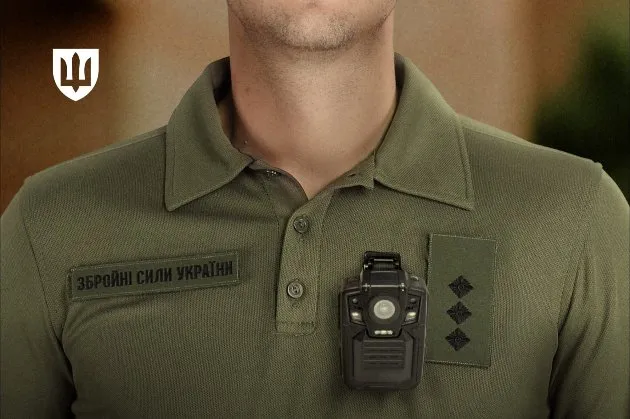
The Ministry of Defence of Ukraine has signed a new contract to purchase Motorola body cameras for military personnel of the TCC and SP. According to “Prozorro”, on 17 April the ministry ordered video cameras and associated equipment from “Dolia i Ko. Ltd” for a total of 290.91 million UAH.
By 31 July 2026, 5,525 body-worn cameras are to be delivered to Kyiv. Payment for the goods is due within 30 working days of delivery. The warranty period is one year.
The report notes that the hryvnia prices have not changed compared to the first purchase of hundreds of cameras in the winter. Specifically, VB400 body cameras currently cost 41,820 UAH, or $958 per set, whilst V500KF body cameras with LTE cost 65,328 UAH, or $1,497 per set.
In December 2025, the Ministry of Defence had already ordered these same models from the same company at the same hryvnia prices. At that time, this amounted to $988 and $1,543 respectively.
For comparison, it is noted that in May 2025, the police ordered Motorola VB-400 cameras from another supplier, Tes.La LLC, at 26,976 UAH, or $647, and V500 cameras at 49,800 UAH, or $1,194. This is cheaper, but those sets came with a different mount – KF-DOCKCLAMP instead of KF-DOCKCROCCLAT – and did not include licences.
How the tender proceeded
The cheapest bidder was Spektr-8 LLC with an offer of 106.80 million UAH, which is almost three times less than Dolya & Co. Ltd’s bid of 290.91 million UAH.
This company offered BlackEYE products manufactured by Anton Volodymyrovych Kyrychenko (sole trader). However, the contracting authority rejected its bid due to the lack of a tender guarantee in the form of a bank guarantee, as well as the absence of documents confirming a protection rating of at least IP67 and resistance to drops and impacts.
Another participant, Smart Defence LLC, offered Audax products from the UK for 7.57 million UAH for the lot concerning LTE cameras. This was 9% cheaper than the price of “Dolia and Co. Ltd” at 8.31 million UAH.
However, this bid was also rejected. The reasons were the lack of documentation confirming protection of at least IP67 and resistance to drops and impacts. Furthermore, the proposed video cameras had half the memory required – 64 GB instead of 128 GB – and half the number of docking station ports – 4 instead of 8.
What was disputed during the tender stage
The article also describes the complaints of anonymous firms regarding the procurement conditions. They complained about the requirement to provide test reports or protocols regarding protection rating of at least IP67 and resistance to drops and impacts.
Some requested that the submission of these documents be postponed until the delivery stage, whilst others considered them confidential; however, the contracting authority refused to make such changes.
Separately, anonymous participants demanded that the condition requiring the proposed equipment to be fully compatible with that already in use by the customer—namely, Motorola V500KF and VB400 video cameras—be removed from the documentation.
The contracting authority replied that it did not require participants to confirm the compatibility of equivalents with Motorola equipment or software.
Following this, the participants drew attention to the contradiction and began to ask how exactly the contracting authority would verify compatibility, and whether a bid featuring body cameras from another manufacturer—which formally meet the technical specifications but do not integrate with Motorola’s software and infrastructure—would meet the tender requirements.
In response, the contracting authority explained that compatibility is dictated by the specific nature of the work of the TCC and the SP. According to its logic, a participant declares compatibility simply by submitting a bid; and if, upon delivery, it transpires that the goods are incompatible with existing equipment, penalties will be imposed on the supplier and the contract security of 5% will be forfeited.
The contracting authority also noted that manufacturers interested in long-term cooperation with public sector clients integrate their goods into the systems already in use by those clients.
What the State Audit Service checks
The State Audit Service is investigating these tenders for possible breaches of the law during the opening, consideration and evaluation of tender bids.
In particular, the State Audit Service requested an explanation of how exactly the Ministry of Defence determined the expected cost of the procurement.
In response, the Ministry of Defence published a price monitoring report. This covered three tenders from last year, adjusted for the dollar exchange rate, as well as three commercial proposals: “Dolia and Co. Ltd” – 290.91 million UAH, “IT-Integrator” LLC – 308.08 million UAH and “Alfatelecom” LLC – 324.88 million UAH.
What is known about the supplier
The Kyiv-based company “Dolia & Co. Ltd” is owned by Yaroslav, Larisa and Andriy Tatarintsev.
In total, since the launch of “Prozorro” in 2016, contracts worth 938.14 million UAH have been concluded with the company.
The Ministry of Defence turned out to be the company’s largest customer – 409.24 million UAH. The ministry has been purchasing video cameras from the company since December 2025, and previously ordered Motorola radio stations, batteries for them, charging stations and other equipment.
Why does the TCC need body cameras?
The reference section of the article notes that in September 2025, the Ministry of Defence required representatives of the TCC and the Joint Staff working in alert groups to use body cameras.
Furthermore, in December 2025, the ministry began introducing body cameras during quality control procedures for the acceptance of logistical supplies for the Armed Forces of Ukraine.
As reported by ThePublic, the Odesa Regional TCC and SP confirmed the detention of military personnel from one of the district territorial recruitment and social support centres in Odesa. The agency stated that it is cooperating with law enforcement to establish all the circumstances.
Follow us on Telegram