Hong Kong’s Deadliest Fire in 60 Years: Why Did the Blaze Spread So Fast?
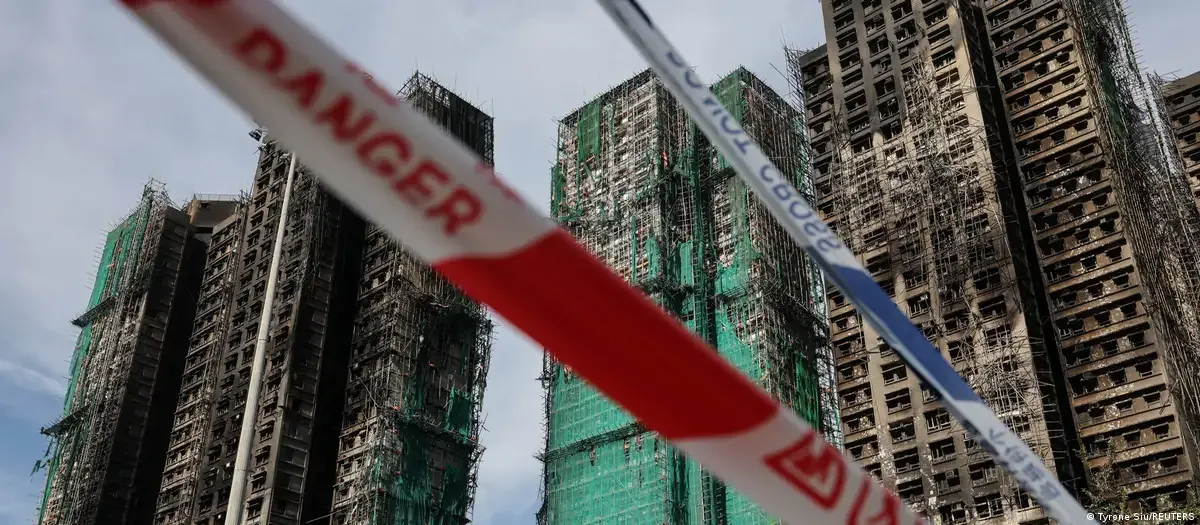
Public sentiment in Hong Kong is turning from grief to anger, as more residents question how such a large-scale tragedy could have occurred. ThePublic.info reports, citing BBC Ukraine, that on Wednesday a massive fire engulfed a densely populated subsidised housing complex, killing at least 128 people and seriously injuring dozens. The blaze raged for more than 24 hours, and many residents are still considered missing.
Preliminary findings suggest that flammable construction materials may have contributed to the rapid spread of the fire — including scaffold mesh, plastic window coverings, and bamboo structures commonly used in Hong Kong building renovations. Although firefighters eventually extinguished the blaze, its consequences proved far worse than expected. Experts are already calling it a “technological disaster,” and the public is asking who should be held accountable — especially after the fire alarm reportedly failed to activate.
Three people involved in renovation works have already been arrested on suspicion of manslaughter, and authorities have launched a corruption investigation. The phrase “This is not a coincidence” has gone viral on social media.
Residents have begun sharing testimonies. Some claim the fire alarm did not work when the blaze broke out. On Friday, authorities announced that after checking all eight housing blocks, the fire alarm system was found to be malfunctioning. According to homeowner Kiko Ma, the system may have been disabled during the renovation, as construction workers frequently used the fire escape to access the building. She lives in Canada and visits her Hong Kong apartment several times a year. In her view, “This tragedy could have been prevented if everyone had done their job properly.” She also said the renovation company used cheap, highly flammable materials, and that residents often saw workers smoking and leaving cigarette butts on windowsills.
This is the deadliest fire recorded in Hong Kong in 63 years. It has already surpassed the 1962 Sham Shui Po fire, which claimed 44 lives and left hundreds homeless.
The housing complex, Wan Fuk Court, built in the 1980s in the Tai Po district, consists of eight residential towers, each 31 stories tall. Seven of them were partially or fully destroyed by the fire. Although the flats were sold at subsidised prices, daily management of the complex was handled by private companies. According to the 2021 census, around 4,600 people lived there — nearly 40% of them residents aged 65 and over.
Firefighters said they faced serious challenges during the rescue operation — including extreme temperatures, the risk of scaffolding collapse, and cramped, overcrowded apartment layouts typical of central Hong Kong buildings. In public housing, the average living space is just 14.1 square metres per person.
Police are investigating whether the safety standards for scaffold materials, plastic coverings, tarpaulin and other renovation supplies were met. In a press release, authorities explained that the fire spread particularly quickly due to foam blocks installed behind apartment windows — apparently to “protect against dust and debris.”
Several experts also believe that the bamboo scaffolding connecting the residential buildings played a critical role in accelerating the fire. While such structures are iconic and widely used in Hong Kong construction, the authorities had already announced plans earlier this year to gradually replace bamboo with steel — which is stronger and fire-resistant.
Even before the fire, some residents expressed concerns about renovation plans, calling them risky. However, their calls to elect a new management committee were ignored. One homeowner, referred to only as Mr. Lai, said that contractors prioritised cost efficiency over safety. He noted that just last month, another building in central Hong Kong also caught fire when its bamboo scaffolding ignited.
Authorities have now ordered inspections of all residential complexes undergoing major renovation — to assess fire safety and compliance with building material standards.