US allies in the Middle East are calling on Trump to launch a ground invasion of Iran

US allies in the Persian Gulf are increasingly concerned about the escalation of the conflict between Washington and Tehran, which they believe poses risks to regional security and is having a negative impact on the economy.
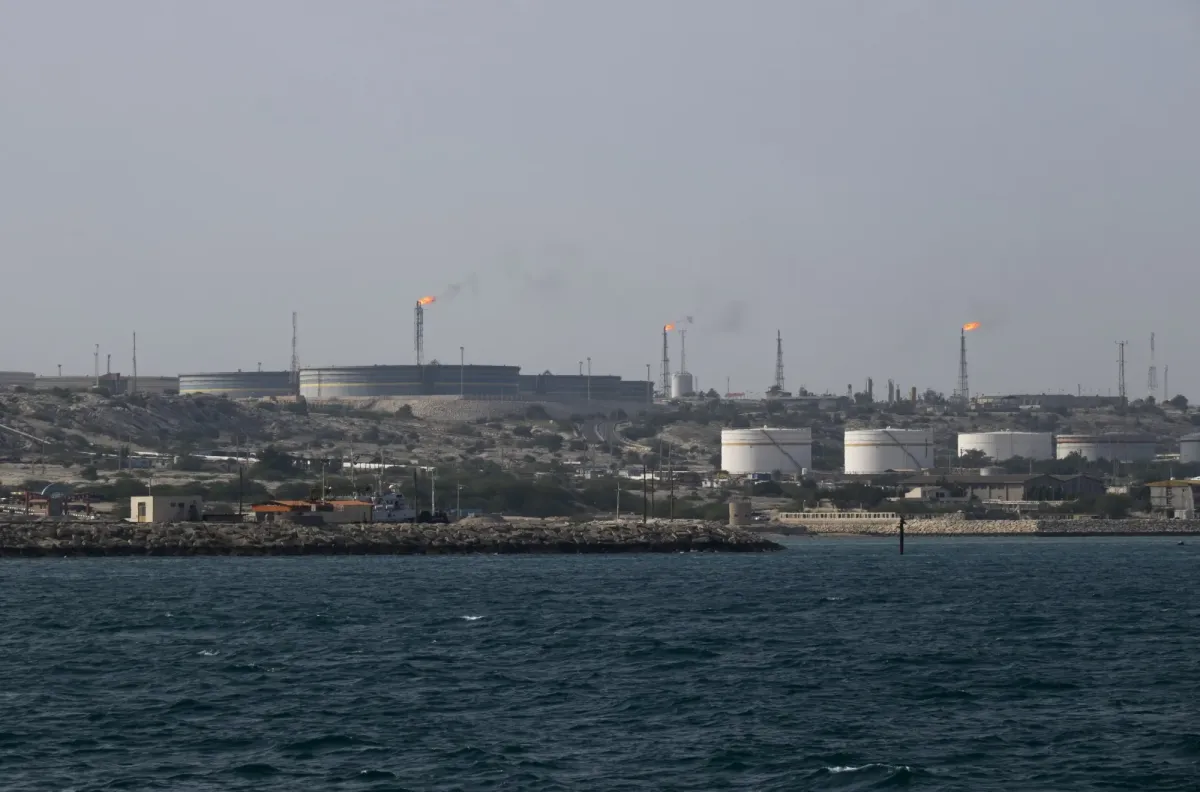
According to Bloomberg, citing informed sources, there is no unified position among the countries in the region regarding the US’s next steps. Some officials believe that President Donald Trump should step up the military campaign, in particular by considering the possibility of deploying ground troops to certain areas of Iran and establishing control over the oil terminal on the island of Khark. In their view, without tougher action, the Iranian leadership will not relinquish control of the Strait of Hormuz.
At the same time, other countries – including Qatar, which, alongside Pakistan, is one of the main mediators – are insisting on an immediate de-escalation. According to the agency’s sources, they are seeking to prevent hostilities from returning to the scale seen in March and early April, when the US and Israel launched massive strikes against Iran, and Tehran responded with large-scale drone and missile attacks.
Former US diplomat David Schenker stated that, in the view of many regional representatives, the US needs to “escalate further in order to achieve de-escalation”, as the current course of the conflict is not forcing Iran to make concessions either on the Strait of Hormuz or on its nuclear programme.
An unnamed US official told Bloomberg that Donald Trump’s administration has been in constant contact with the Gulf states since the start of the war. According to him, Iran’s attacks on states in the region demonstrate the danger posed by Tehran and are yet another argument against it acquiring nuclear weapons.
Donald Trump himself stated on 22 July that the conflict could continue for some time yet. During a meeting with the President of Lebanon, he said that the US could end the operation right now, but “we’re not leaving tomorrow”.
According to Bloomberg, in recent weeks the unity among the Arab Gulf states regarding the need for a diplomatic settlement has weakened following mutual accusations by the US and Iran of breaching the memorandum of understanding.
The report notes that Kuwait, Bahrain and Jordan have come under attack from Iran. In Kuwait, missiles and drones attacked water and power supply facilities, leading to repeated suspensions of air traffic. The tanker fleets of Saudi Arabia, Qatar and the United Arab Emirates were also attacked near the Strait of Hormuz, whilst Oman and Iraq came under fire, according to the agency.
Bloomberg’s sources note that the war is forcing some states in the region to review their own security systems and consider deepening defence cooperation with European countries.
According to the agency, the US President is increasingly frustrated by Iran’s stance following the deaths of three American servicemen in Jordan and Iraq, as well as Tehran’s refusal to halt attacks on vessels in the Strait of Hormuz.
At the same time, Bloomberg notes that the possible deployment of US troops or an attempt to establish control over the island of Khark could provoke an even stronger response from Iran, a further rise in oil prices and increased risks for US military personnel.
According to the agency’s sources, shipping traffic through the Strait of Hormuz continues to decline, and many officials from Gulf states do not expect shipping to return to normal in the near future.
Michael Ratney, the former US ambassador to Saudi Arabia, stated that countries in the region are frustrated by the situation but are avoiding harsh public statements as they seek to maintain constructive relations with Donald Trump’s administration.
The article also notes that the United Arab Emirates is calling for the swiftest possible restoration of safe shipping through the Strait of Hormuz and is urging European states to play a more active role in clearing the waters of mines once the situation has stabilised.
According to Bloomberg, the war is creating uncertainty for the economies of the Gulf states, which in recent years have been actively developing not only the oil sector but also tourism, artificial intelligence and financial services. The agency also reports that none of the six member states of the Gulf Cooperation Council currently plans to participate in a potential $300 billion reconstruction fund for Iran, which was discussed following the signing of a memorandum of understanding.