Why is the US deploying special forces, marines and paratroopers to the Middle East?

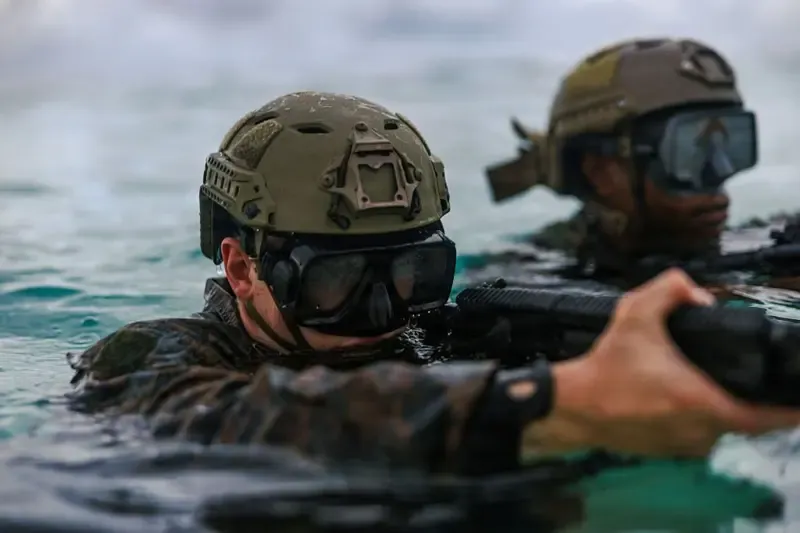
The US is deploying rapid reaction forces to the Persian Gulf region. The 31st Marine Expeditionary Unit is already in the region, and the 11th Unit and units of the 82nd Airborne Division are also on their way there.
According to the BBC’s US partner, CBS News, US Special Forces, including Navy SEALs and Army Rangers, have also been deployed to the region.
Unlike the troops already stationed in the region, these units are intended for use in ground operations.
Until now, the US and Israel have refrained from large-scale ground operations on Iranian territory.
In total, at least eight thousand troops will arrive in the Persian Gulf region. This includes 2,500 marines in each expeditionary group and between 3,000 and 4,000 paratroopers.
These figures are described in the text as approximate, as the marines and paratroopers include not only strike force personnel but also support and logistics units, including aircrew. At the same time, these estimates do not account for the sailors on the ships carrying the units to the region.
According to commentators, these forces could be deployed in three possible scenarios. These include the unblocking of the Strait of Hormuz, the capture of Khark Island, or the removal from Iran of enriched uranium, which could be used in the development of nuclear weapons.
The text also notes that, given the example of the operation in Venezuela, preparations for amphibious raids could be very thorough, and their execution almost flawless. The very fact of deploying forces on permanent standby, according to this assessment, indicates an expansion of US military capabilities in the region and may suggest that the conflict is developing beyond the initial plans.
Unblocking
Iran blocked the Strait of Hormuz immediately after the start of the allies’ air campaign in late February.
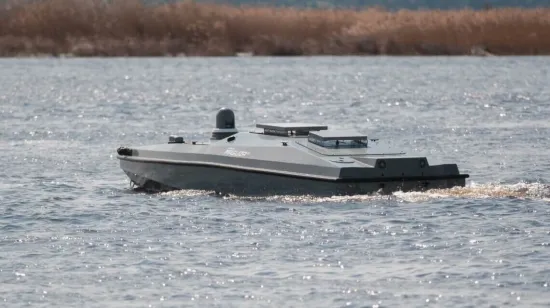
At its narrowest point, the strait is 50 kilometres wide. It lies within the range of anti-ship missiles and is vulnerable to mining and attacks by unmanned boats.
According to data from the US Energy Information Administration for 2024, approximately 20 per cent of global trade in liquefied natural gas passes through the strait. In the first half of 2025, the total volume of oil shipments through the Strait of Hormuz averaged around a quarter of the total volume of global maritime oil trade.
Merchant vessels, including supertankers, are unable to pass through the strait. The text states that the reason lies not only in the crews’ reluctance to take risks, but also in the decision of leading insurance companies, which consider the risk of transiting this waterway to be too high.
As a result, insurance conditions have been significantly tightened and premiums have risen sharply, making passage economically unviable or unacceptable for many shipowners.
US President Donald Trump is demanding that Iran open the strait by 6 April and is threatening to intensify bombing, particularly of energy facilities. If Iran does not make concessions, the US, in addition to bombing, may use deployed forces to unblock the strait.
A maritime fortress
The text states that the blockade relies on a chain of islands located both within the strait itself and near its western entrance.
First and foremost, these are the islands of Abu Musa, Greater Tunb and Lesser Tunb. These three islands are situated in the western part of the strait and block the entrance to it from the Persian Gulf.
They are the subject of a territorial dispute between Iran and the United Arab Emirates.
These islands are home to an airfield and various military installations, including air defence positions and missile systems capable of striking targets on land and at sea.
The most important island in the strait itself is Qeshm, the largest island in the Persian Gulf. It stretches along the Iranian coast for more than a hundred kilometres and, according to the text, is a natural maritime fortress controlling the strait.
Adjacent to it are Larak, Hormuz and Khengam, which are also used to control the strait.
All these islands are equipped with surveillance systems, missile positions—including underground missile bunkers—as well as shelters for conventional and unmanned boats.
The text states that to forcibly unblock the strait, it would be necessary to capture at least each of these islands. At the same time, if Iran viewed the blockade as a defensive strategy, then these islands were likely being prepared for defence.
Main oil terminal
The second likely scenario is the capture of Khark Island.
The text notes that 90 per cent of Iran’s oil trade passes through this island, which is the main source of revenue for the current regime.
Denying Tehran access to this terminal, as the article states, would weaken revenue from oil sales and reduce the ability to fund expensive military programmes, primarily missile and nuclear ones.
At the same time, such an escalation, according to the text, could provoke retaliatory strikes on key targets in the Gulf, although Iran is believed to have so far avoided attacking many economically vital targets in the Gulf states.
Furthermore, the destruction of Kharg’s infrastructure, as the author notes, could hinder the development of a country with a US-friendly government, should such a government come to power. Therefore, the article describes the capture of the island by US forces as a logical option, as this would deprive Tehran of access to oil exports whilst not preventing its restoration at a time convenient for the US.
The US has already carried out several strikes on the island, but, as stated in the text, their targets were solely military facilities. Among them was an airfield, the capture of which, in the event of an amphibious operation, is described as a key objective, as once restored it would enable the deployment of additional forces by air.
Islands
The article notes that the capture of small islands near a major coastline usually makes sense primarily when a subsequent landing on the mainland is planned.
Islands can provide cover for the coastline, ensuring air defence and support for defensive positions, so capturing them prior to a large-scale landing is described as a logical tactic.
At the same time, without further military advancement, the islands could become easy targets for shelling from the mainland. The text emphasises that a small island cannot manoeuvre like a ship.
It is also noted that if an island is within range of artillery, this becomes even more dangerous, as artillery shells are harder to intercept than missiles.
That is precisely why, as the text states, a landing on the islands must be accompanied by further action on the mainland. But for this, according to the author’s assessment, the Americans clearly lack sufficient forces.
Seizure of uranium
The article also examines a scenario involving the removal from Iran of stocks of enriched uranium stored at facilities in Isfahan and Natanz. These sites were struck during the 12-day war last summer.
Earlier, Israel’s Channel 12 reported that, in exchange for lifting sanctions, Washington is demanding that Tehran, among other things, dismantle its nuclear capabilities, including three key facilities in Natanz, Isfahan and Fordow, as well as hand over enriched uranium to the IAEA.
The Wall Street Journal, citing US officials, reported that Donald Trump is considering a military operation to remove the uranium. According to the publication, this complex raid would likely require the presence of US troops on Iranian soil for several days or longer.
According to the newspaper, prior to the June operation, Iran was believed to have over 400 kilograms of highly enriched uranium with a 60 per cent enrichment level and nearly 200 kilograms of material with a 20 per cent enrichment level, which can easily be converted into weapons-grade uranium with a 90 per cent enrichment level.
It is difficult to determine from open sources exactly where this uranium is located and what condition it is in.
Israeli military expert David Hendelman previously wrote that this is a rather complex and large-scale operation. The text quotes him as saying that, given the adequate security of the uranium storage sites, strikes would require the complete neutralisation of air defences and security personnel, a field airfield, powerful continuous air cover, dedicated air defences, ground security, engineering equipment and special forces operating directly at the storage site.
At the same time, the expert noted that these materials do not pose a radiation hazard to people, as the uranium is not stored in its pure form but as a hexafluoride compound.
According to him, uranium hexafluoride is highly toxic and chemically reactive, so working with it requires chemical protection equipment and careful handling of the containers; however, there is virtually no radiation hazard, as even enriched uranium is only very weakly radioactive.