Dutch intelligence has stated that Russia may be preparing for a conflict with NATO following the war in Ukraine

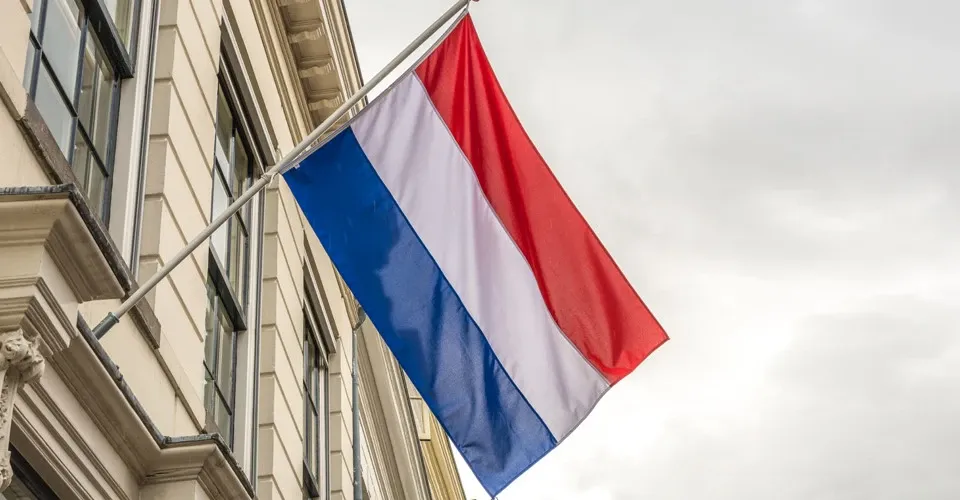
In its annual report, the Dutch military intelligence service, the MIVD, noted that, under conditions favourable to Russia, the country could build up sufficient military capabilities for a regional confrontation with NATO within a year of the end of hostilities in Ukraine.
According to the intelligence assessment, Russia’s objective may not be the military defeat of the alliance, but rather the creation of political division through limited territorial actions, including the threat of nuclear weapons.
The report states that whilst hostilities in Ukraine continue, a full-scale conflict between Russia and NATO is unlikely. At the same time, the MIVD points out that Russia is already taking concrete preparatory measures for a possible confrontation with the alliance.
MIVD Director Vice-Admiral Peter Resink stated that Russia poses the greatest and most direct threat to peace and stability in Europe.
Other Western intelligence agencies generally agree with the assessment regarding Russia’s preparations for a potential conflict with NATO, but differ on the timeframe. In particular, Estonian intelligence believes that Russia will not launch a military attack on NATO countries within the next year.
The report emphasises that the war in Ukraine is part of Russia’s long-term intentions to reshape the security architecture in Europe. Russia seeks a multipolar world in which it is one of the superpowers, and views liberal-democratic values as a threat to its own stability.
It is also noted that the deterrence mechanisms that operated during the Cold War are now largely absent. At the same time, the world is on the cusp of technological changes in the fields of artificial intelligence, quantum computing and bioscience.
The intelligence report indicates that Russia’s use of methods falling below the threshold of open conflict creates a risk of uncontrolled escalation. The assessment of the situation may also be influenced by the unpredictability of US security policy.
In October, Russia tested a cruise missile with a nuclear power plant and a torpedo capable of being fitted with a nuclear warhead. Furthermore, according to the MIVD, it has likely deployed the ‘Oreshnik’ medium-range ballistic missile in Belarus.
According to intelligence estimates, since 2022 Russia has suffered around 1.2 million irreplaceable losses, of which over 500,000 are fatalities. Meanwhile, Ukraine’s losses are estimated at approximately half a million.
Despite this, in 2025 Russia continued to expand its armed forces by recruiting personnel, producing heavy weaponry and building up strategic ammunition stocks.
The report also notes that the combat experience gained in Ukraine has contributed to improving the quality of the Russian armed forces, particularly in the field of unmanned systems.
Russia retains the capacity for large-scale arms production despite sanctions and restrictions on access to resources. At the same time, its space sector has been weakened by sanctions and the exodus of specialists.
To compensate, Russia uses commercial satellite imagery, purchases satellite data from Chinese companies and employs unmanned systems for reconnaissance.
The MIVD also points to increased cooperation between Russia and China in the field of space technology and military activities. China, whilst maintaining a formally neutral stance, has stepped up its cooperation with Russia over the past year.
The report states that the world is in the early stages of a new nuclear arms race, which is being exacerbated by technological developments and the weakening of arms control.