Germany has unveiled a new military strategy, with Russia identified as the main threat

The main threat is Russia
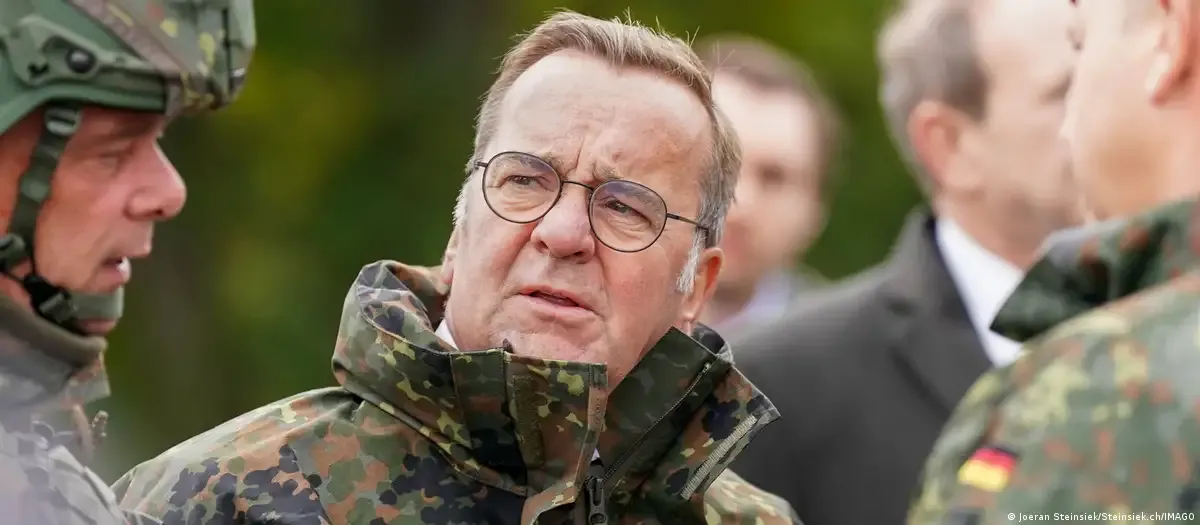
On 22 April, German Defence Minister Boris Pistorius presented a comprehensive concept for the country’s military defence in the new security environment in Berlin. The document includes the first-ever military strategy and development plan for the armed forces in the history of the Federal Republic of Germany, detailing their structure and composition. The details of both documents are classified, reports DW.
During a joint appearance with Bundeswehr Inspector General Carsten Bröer, Boris Pistorius stated that in future the Bundeswehr’s active-duty strength should stand at 260,000 personnel. Together with reservists, the total troop strength is set to rise to at least 460,000.
The Bundeswehr’s new strategy is primarily focused on deterrence. The central theme is countering threats from Russia. The document analyses how the Bundeswehr should respond to potential military scenarios, particularly in the event of a Russian attack on NATO territory. This information is classified. Pistorius stated: “It is quite clear that we cannot make these scenarios public. Otherwise, we would have to add Vladimir Putin to our mailing list.”
According to the minister, “Russia is preparing for a military confrontation with NATO through rearmament and regards the use of military force as a legitimate tool for advancing its interests.”
He also said that espionage, sabotage, cyberattacks and disinformation campaigns are no longer the exception but have become a constant threat. Countering them, he said, has become an ongoing task.
According to the document, Moscow is “creating the conditions for a military attack on NATO countries” and is already conducting hybrid operations against them, including against Germany. Pistorius stated that “Russia perceives the West as fundamentally hostile, seeks to undermine the Alliance’s unity, separate the US from Europe, bring about the collapse of NATO and expand its sphere of influence”. According to Boris Pistorius and Carsten Broer, Russia could be ready to attack NATO territory by 2029.
In November 2025, Silke Willems, Deputy Head of the Federal Office for the Protection of the Constitution, stated: “We are witnessing a sharp escalation of the situation.” German Interior Minister Alexander Dobrindt described Russia’s hybrid attacks as a “stress test” for democracy.
The army of the future
Boris Pistorius stated that the Bundeswehr would be transformed into “Europe’s strongest conventional army”. According to him, the short-term goal is to enhance defence capabilities, the medium-term goal is a significant build-up of potential, and the long-term goal is to secure a technological advantage.
The authors of the strategy assume that the outcome of future warfare will be determined by information superiority, the resilience of one’s own systems, and networked interaction. The document states that data is becoming a weapon, and artificial intelligence complements and expands human capabilities. The Bundeswehr must achieve information superiority and deprive the enemy of it, in particular by building up offensive and defensive capabilities in space and cyberspace.
According to the authors’ vision, future warfare will be waged simultaneously using the means of both the past and the future. High technologies, in particular quantum computing and robotics, will be deployed alongside low-cost drones. The strategy envisages a combination of high and mass technologies so that Germany is not forced to expend high-tech weapons against the enemy’s mass systems.
The “change of eras” in Germany continues
Shortly after the start of Russia’s full-scale invasion of Ukraine, the then German Chancellor Olaf Scholz, in a speech to the Bundestag, described the new era in relations with Russia as a “turning point”. Since then, Russia has finally ceased to be perceived as Germany’s strategic partner, as it was regarded prior to the annexation of Crimea.
Retired Bundeswehr Brigadier General Klaus Wittmann told DW that over four years ago Olaf Scholz delivered a historic speech on the “turning point”, and that Russia’s campaign against Ukraine has overturned a number of principles of German security policy. In particular, he said, this concerns the principle that Germany does not supply weapons to conflict zones. He noted that a national security strategy was introduced in Germany almost three years ago, but it did not clearly state what this meant for defence policy in practice. According to him, it is only now, more than four years after the “turning point”, that Minister Pistorius has unveiled the Bundeswehr’s new strategy.
At the end of August 2025, the German government established the National Security Council. Its role is to make the federal government better prepared and to develop contingency plans for crisis situations. The council is chaired by Federal Chancellor Friedrich Merz. In addition to him, the council’s permanent members include eight ministers: the head of the Foreign Office, and the ministers for the Interior, Defence, Finance, Economy, Justice, Economic Cooperation and Digitalisation.
Retired Colonel and Research Fellow at the Geneva Centre for Security Policy, Wolfgang Richter, told DW that when a state uses military force in the interests of its own security and escalates to full-scale war, this inevitably creates a sense of threat among its neighbours, as they begin to fear that they themselves could be the next target.
He explained that threats also include traditional methods, primarily espionage, as well as sabotage and online activities. If internet services are disrupted, foreign systems are hacked, or false information is spread, all of this falls under what is commonly referred to as hybrid operations.
Five key points of the strategy
The document, available on the German Ministry of Defence’s website, sets out five key points on which the new strategy is based.
The first point concerns the blurring of the boundaries of war. The document notes that it is not only Germany’s military infrastructure that is under threat, but all sectors of German society. For this reason, the Bundeswehr must cooperate with all state authorities.
The second point concerns a paradigm shift in warfare. Deterrence and preparations for war must be carried out using modern technologies, and the Bundeswehr must accelerate innovation, particularly in the field of unmanned aerial vehicles.
The third point defines the information battlefield. The document states that data is becoming a weapon, and the Bundeswehr will develop capabilities in space, as well as in the cyber and information domains.
The fourth point is devoted to long-range warfare. Long-range weapons significantly increase the threat; there are no longer any safe zones for retreat, and the Bundeswehr must acquire more high-precision long-range weapons and a robust air defence system.
The fifth point concerns weapons production. The document states that weapons systems are being produced ever more quickly and cheaply; quantity is automatically turning into quality, and therefore a balance is needed between high technology and mass production.
In addition, the Defence Minister announced a package of measures to reduce bureaucracy in the army. The use of artificial intelligence is planned for this purpose.
Bastian Ernst, Chairman of the German Reservists’ Association and a member of the Bundestag’s Defence Committee for the Christian Democratic Union, suggested in an interview with the Redaktionsnetzwerk Deutschland editorial network that the age limit for reservists should be raised from 65 to 70 by 2035.
Why Pistorius’s plans are being called overly optimistic
As of 31 January 2026, the Bundeswehr’s active personnel strength stands at around 186,400 service personnel. There has been growth, but even with the help of an active recruitment campaign, the force has only managed to increase its numbers by 3,600 service personnel over the course of a year.
Prior to the announcement of the new strategy, the aim was to bring the number of personnel to approximately 203,000 by 2031. The government has ruled out reinstating compulsory military service, which was suspended in 2011, and has instead decided to introduce voluntary service first. At the same time, experts doubt that an increase to 260,000 active personnel is possible without reinstating compulsory military service.
The US and nuclear deterrence
The strategy also states that the US remains indispensable to NATO, both politically and in terms of its military capabilities. At the same time, the Bundeswehr is to shoulder a greater burden within the Alliance, and this has been declared a military-strategic priority. Germany will continue to contribute to NATO’s nuclear deterrence within the framework of the nuclear sharing arrangement.
The reserve is recognised as an integral part of the armed forces. Inactive units will also be fully equipped. Reservists in the so-called field reserve, intended to replace combat units, will receive a minimum kit, including personal kit and service weapons.