The Danish Prime Minister has publicly called on Trump to stop making threats regarding Greenland

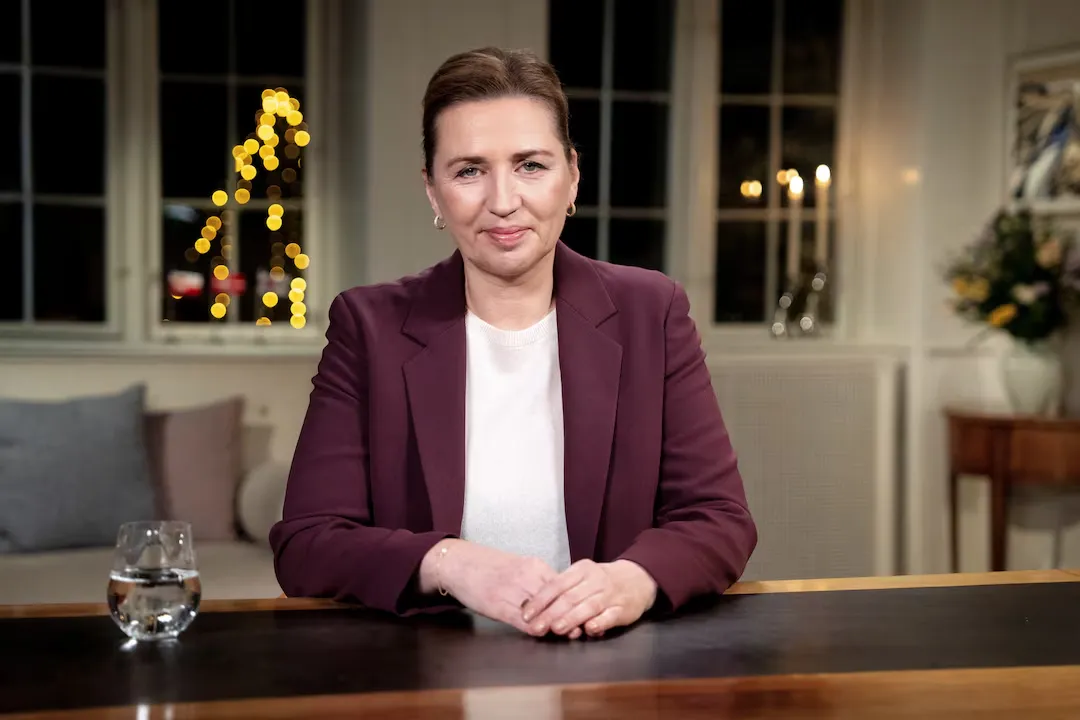
This was reported by Reuters. Sweden’s official position was also made public by the country’s government.
Frederiksen stated that the US must cease its threats and talk of potentially establishing control over Greenland. She emphasised that Greenland is not for sale, and that any decisions regarding its future must be taken not in Washington, but within the Kingdom of Denmark and Greenland itself.
Against this backdrop, Sweden has sided with Denmark. Foreign Minister Maria Malmér Stenergård, during a meeting with Danish Foreign Minister Lars Løkke Rasmussen, expressed her full support for Denmark and Greenland. The Swedish government has separately emphasised that borders cannot be altered under political pressure, and that issues concerning the island’s future must be resolved in accordance with international law.
Why Sweden supports Denmark
For Stockholm, this stance is not merely a gesture of solidarity, but a continuation of an established approach to relations with Copenhagen. At the government level, Sweden describes its relations with Denmark as “close and good”, and Denmark itself remains one of Sweden’s closest partners in the EU, NATO, the UN and Nordic cooperation. This is precisely why the Swedish authorities are keen to ease tensions and prevent Arctic issues from turning into a new crisis between allies.
NORDEFCO – a defence cooperation framework involving Denmark, Iceland, Norway, Finland and Sweden – plays a distinct role in this. Its aim is to strengthen the defence capabilities of the Nordic countries, seek joint solutions and create synergies. For a region where Greenland is of strategic importance, a scenario in which one NATO ally exerts pressure on another brings additional uncertainty. This is precisely why the Nordic countries are focusing on coordination, deterrence and Vision 2030, rather than on revising the status of territories through political pressure.
The status of Greenland itself is also fundamental to this story. The island has self-government but is part of the Kingdom of Denmark. The 2009 Act on Self-Government enshrines Greenland’s right to self-determination and outlines the mechanism within which the question of independence may be considered should Greenland itself so decide. This is precisely what underpins the position of Copenhagen and Stockholm: external pressure cannot override the will of the island itself.
Swedish-Danish relations have a complex history, but today they have long since moved beyond the old rivalry. Following the Kalmar Union of 1397–1523, the wars of the 17th century, the Treaty of Roskilde in 1658 and the Treaty of Copenhagen in 1660, the two countries gradually moved from hostility to institutional cooperation. In the 20th century, this process was cemented by the Nordic Council, established in 1952, as well as further integration, notably the opening of the Øresund Bridge in 2000. Therefore, Sweden’s current support for Denmark does not appear to be a situational reaction, but rather a continuation of an already established partnership.
It should be noted that Copenhagen plans to step up defence activities on the island and increase NATO’s involvement in the Arctic in the wake of Donald Trump’s statements.