They are penetrating metres of concrete. The US has used its latest bunker-busting bombs against Iran for the first time

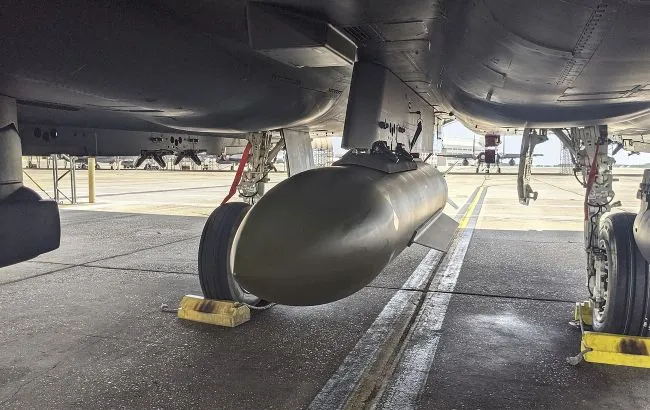
This has been reported by Defence Express.
US Central Command has officially confirmed the use of bombs weighing over 2.2 tonnes. It stated that these were used to strike positions housing anti-ship missiles that posed a threat to shipping in the region.
Iran has several types of such missiles in service, including the subsonic Nasir and Ghadir, with ranges of up to 90 and 300 kilometres respectively. In addition, Tehran possesses the Khalij Fars, Hormuz-1 and Hormuz-2 ballistic missile systems, capable of striking targets at a distance of up to 300 kilometres.
Iran traditionally deploys such systems and munitions in underground shelters, which require specialised bunker-busting munitions to destroy. These include the GBU-72/B – the latest munition produced by Boeing, which has been in service since 2021.
GBU-72/B bunker-busting bombs: what is known about them
The latest GBU-72/B bomb is regarded as a standard solution for striking well-protected targets. It is not as powerful as super-heavy munitions such as the 12-tonne GBU-57A/B, but has a wider range of applications.
The GBU-72/B has replaced the obsolete GBU-28, which was developed in a rush during Operation Desert Storm in 1991.
The exact specifications of the new bomb are unknown, but according to expert estimates, it surpasses the capabilities of its predecessor, which could penetrate tens of metres of soil or several metres of reinforced concrete.