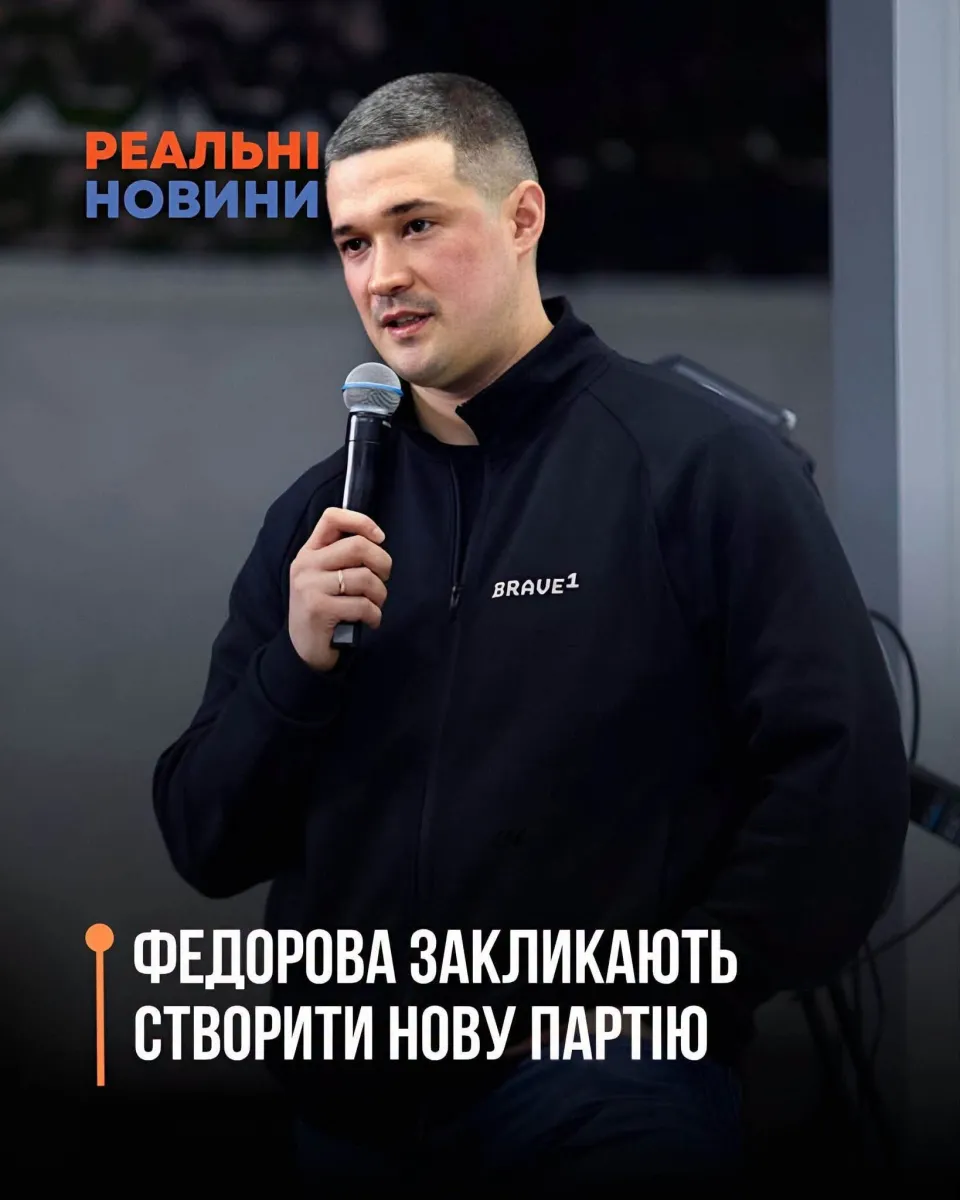
There are already calls for Fedorova to form a new party
Following reports of the possible formation of a new political party involving Mykhailo Fedorov, a debate has unfolded in the public sphere regarding the role of digital technologies in modern politics and electoral processes.
THE DARK MIRROR OF ELECTIONS
Fedorova is already being urged to form a new party — and this isn’t just another story about yet another politician. It’s a symptom of a new type of election in a banana republic of the digital age: first, they build an app for you, then, through the app, you’re conditioned to view the state as a service; then the service becomes a political religion; and finally, the service administrator steps onto the stage, no longer as a civil servant but as a ready-made candidate. The media are already quoting *The Times*: following Fedorov’s resignation, his allies are reportedly calling for the creation of a new political force, whilst he himself is being seen as a potential rival to Zelenskyy.
This is how technology shapes elections. Not through ideology. Not through party training. Not through debate on national doctrine. Not through accountability to the people. But through the image of an effective interface. People aren’t being sold politics, but a button. Not a state, but an app. Not sovereignty, but UX. Not a party, but a brand. Not a programme, but a feeling: ‘this bloke has launched something, so he can launch the country’.
This is *Black Mirror* in real life. The state is in ruins, the front line is exhausted, the TCC is rounding up people, businesses are being stifled by restrictions, the security services are becoming increasingly opaque, the courts are bending to pressure, the population is in decline, and yet once again the voter is being fed a glossy technological avatar. This country was once sold out through a TV series and the television image of a ‘simple, honest president’. Now it can be sold through a digital office, drones, Brave1, “Diyu”, marketplaces, points, data and the promise that it’s enough simply to replace the old political software with new software.
But this is a lie. Because Ukraine’s problem isn’t a poor interface. The problem is that inside that interface sits the state itself: a state that is controlled, corrupt, authoritarian, anti-national, and devoid of any doctrine for the life of a Ukrainian. If you slap a nice design onto this machine, it won’t become a republic. It will simply become a more comfortable cage.
In a normal country, technology serves the citizen. In a banana republic, it’s used to set up an electoral farm. First, citizens are digitised. Then they’re segmented. Then they’re analysed. Then they’re fed the right message. Then they’re given new ‘hope’. Then a party is launched. Then they say: these aren’t the old politicians, this is a new generation. And no one asks the key questions: who owns the data, who sets the agenda, who pays for the campaign, who is behind the platform, who controls the algorithm, who turns the people into an audience.
So elections cease to be an expression of the people’s will. They become an extension of product marketing. And that is precisely why I am not impressed by this new political romanticism surrounding Fedorov. Because if a ‘tech’ candidate doesn’t talk about terms of service, demobilisation, the TCC, a political SBU, conscription as a cash cow, soldiers’ rights, the preservation of Ukrainians, and the authorities’ responsibility for the nation’s depletion, then this isn’t new politics.
It is a new interface for the old-fashioned exploitation of the titular nation, which is perfectly capable of making a banana republic seem modern.
All articles in the "Opinion" section are published in full from their original sources. The editorial team may not share the authors’ views and accepts no responsibility for their statements.