The minimum cost of living in Ukraine is not being increased due to 170 payments

Katerina Melnychenko
Katerina Melnychenko Deputy Editor-in-Chief
The minimum cost of living in Ukraine is not being increased due to 170 payments
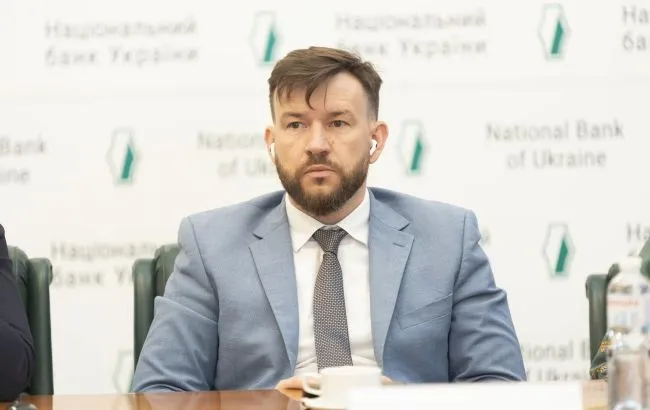
Photo: Denis Ulyutin, Minister of Social Policy (facebook.com/minfin.gov.ua)
Ukraine is currently unable to raise the minimum subsistence level, as it is still linked to around 170 different benefits. The Ministry of Social Policy states that the calculation system itself must first be reformed, four draft laws must be passed, and this indicator must be decoupled from the benefits that are currently automatically dependent on it.

This was reported by RBC-Ukraine, citing a statement made by Social Policy Minister Denis Ulyutin during Question Time in parliament.

Social Policy Minister Denys Ulyutin explained that the current subsistence minimum in Ukraine cannot simply be raised, as it is linked to approximately 170 different payments. According to him, most of these are wages that are not directly related to the subsistence minimum itself.

He identified the outdated methodology for calculating this indicator as a separate problem. The Ministry of Social Policy believes that the current system no longer corresponds to modern realities and requires a complete overhaul.

According to Ulyutin, several stages must be completed before a full-scale reform can begin. These include the adoption of four draft laws already before the Verkhovna Rada, the decoupling of the subsistence minimum from the payments to which it is currently linked, and the introduction of a so-called ‘base value’ – a separate indicator for calculations.

The minister emphasised that it is precisely this link to a large number of payments that is currently blocking any increase. If the subsistence minimum is changed under the current system, this will automatically lead to a rise in costs across the entire chain.

Once the necessary laws have been passed, he said, Ukraine will be able to adopt the European method of calculating the minimum subsistence level. This approach comprises two components – food and non-food.

It is proposed that the food component be determined on the basis of the nutritional composition of food, i.e. taking into account how much and what nutrients a person needs. The non-food component should be calculated separately for each person.

Ulyutin stated that the government is ready to move forward in this direction, as is the relevant parliamentary committee. At the same time, he made it clear that the issue lies not in a lack of political will, but in the sequence of actions: first, the legal and calculation framework must be changed, and only then can the reform itself be implemented.

Earlier, the minister also stated that there are no plans to cut basic social benefits in Ukraine. According to him, any changes may only concern support for people who find themselves in difficult life circumstances, and only on condition of a transition from ‘status-based’ payments to targeted assistance in line with actual needs.

As reported by ThePublic, in April 2026 the minimum subsistence level in Ukraine will remain unchanged at the level set on 1 January. The minimum wage will also remain unchanged, whilst some other financial changes over the course of the month will apply only to specific categories of citizens.

Follow us on Telegram
Share tittle
Economy
Fuel prices could rise to 100 hryvnias per litre as early as August
Economy

Fuel prices could rise to 100 hryvnias per litre as early as August

Petrol and diesel at Ukrainian petrol stations could approach the 100 hryvnia per litre mark as early as the beginning of August 2026. This is a forecast by fuel expert Dmytro Lyushkin, and not an approved or guaranteed price.

23.07.2026
All the electricity put up for sale was sold at the long-term auction
Economy

All the electricity put up for sale was sold at the long-term auction

Energoatom and Ukrhydroenergo have sold all the electricity volumes offered at the first special long-term auctions. In total, the state-owned companies sold 462,148 MWh, to be supplied between August and December 2026.

22.07.2026
The IMF has postponed the introduction of VAT for sole traders until 2028: what will change
Economy

The IMF has postponed the introduction of VAT for sole traders until 2028: what will change

The International Monetary Fund has agreed to postpone the introduction of value added tax (VAT) for sole traders operating under the simplified tax system. Instead of January 2027, the new rules are due to come into force on 1 January 2028.

22.07.2026
After the war, the military levy may be replaced by a reconstruction tax — the government is discussing the idea with the IMF
Economy

After the war, the military levy may be replaced by a reconstruction tax — the government is discussing the idea with the IMF

The Ukrainian government is considering replacing the current 5 per cent military levy with a special tax for post-war reconstruction. This option is included in the updated Memorandum of Cooperation between Ukraine and the International Monetary Fund.

22.07.2026
Court overturns 4 million fine following an inspection of ‘Tekhno Yizhak’
Economy

Court overturns 4 million fine following an inspection of ‘Tekhno Yizhak’

During a retrial, the Kharkiv District Administrative Court quashed a tax penalty of 4,038,423 hryvnias imposed on a business owner following an inspection of a shop in the centre of Odesa. The decision was based on irregularities in the way the inspection was arranged, rather than on a refutation of the tax authorities’ claims regarding the accounting of goods.

22.07.2026