Restrictions on petrol sales have already been imposed in 20 regions of Russia

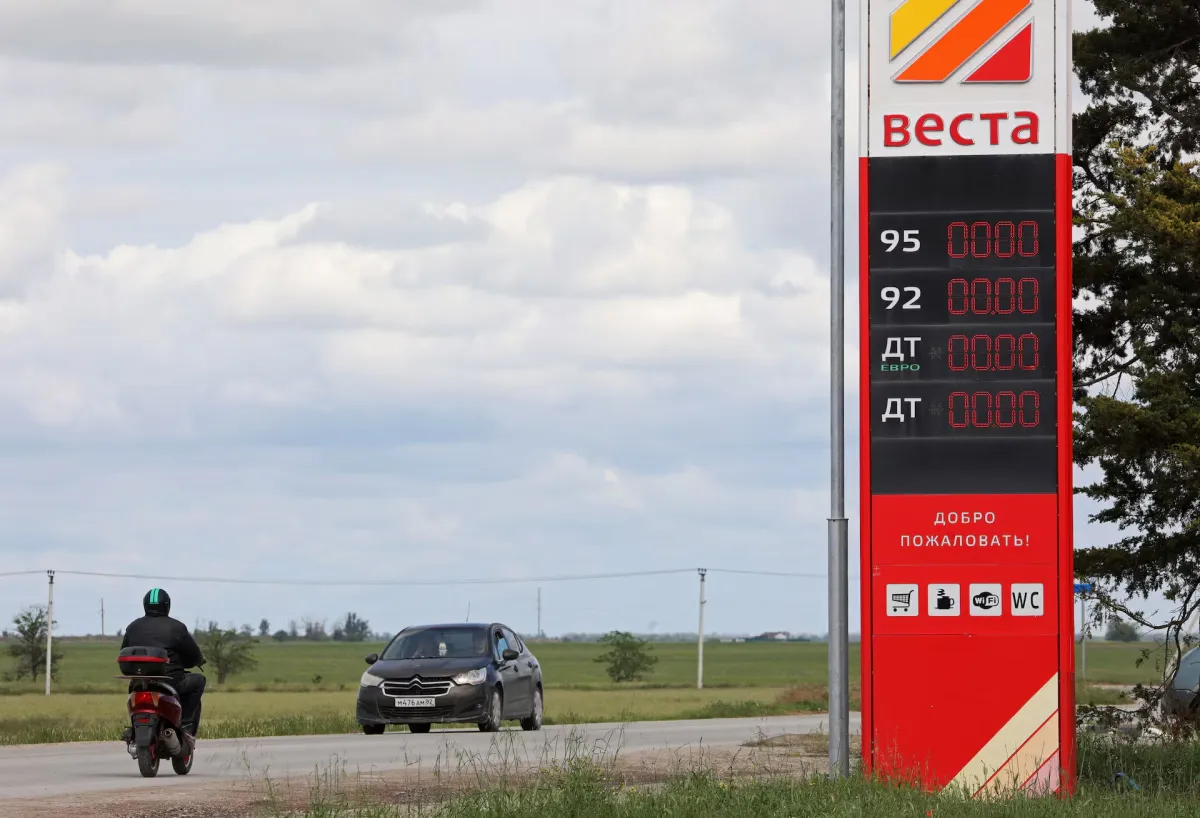
Fuel shortages, believed to be linked to attacks on Russian oil refining infrastructure, have affected at least 15 regions in Russia, including Moscow and St Petersburg. Restrictions on petrol sales have also been introduced in five temporarily occupied regions of Ukraine, reports The Moscow Times.
At the end of May, residents of Ryazan began complaining about a shortage of AI-92 and AI-95 petrol. Shortly before this, drones struck Rosneft’s Ryazan oil refinery, one of the largest in the country.
In May, residents of occupied Crimea also reported fuel shortages. At some petrol stations, AI-95 petrol was limited to a maximum of 20 litres per person.
In Sevastopol, the occupying authorities initially limited petrol sales to 20 litres per person and introduced ration cards for diesel fuel. Subsequently, a temporary shortage of AI-92 and AI-95 petrol was announced.
In early June, the restrictions reached New Moscow. Local petrol stations stopped selling more than 60 litres of petrol and more than 100 litres of diesel fuel per person. Similar limits had previously been introduced in St Petersburg.
Also in early June, restrictions on fuel sales were introduced at Rosneft and Tatneft petrol stations in the Kursk, Belgorod and Pskov regions.
Fuel shortages have also affected the Moscow region. Since 30 May, the ORTK network has been selling no more than 60 litres of petrol and 100 litres of diesel per vehicle. At some petrol stations belonging to Gazprom and Lukoil, the limit ranged from 100 to 150 litres.
Restrictions have also been reported in the northern and north-western regions of Russia. Residents of the Novgorod region report limits on petrol sales of up to 20 litres. Temporary restrictions are also in place at some petrol stations in Karelia. The regional Ministry of Industry and Trade attributed this to increased demand due to the start of the summer holiday season.
Fuel shortages have also arisen in the Murmansk region. Local residents report a lack of petrol and diesel at a number of petrol stations.
In the Voronezh region, customers at a petrol station in the village of Shilovo were warned that AI-95 petrol would be unavailable until the end of the month due to supply disruptions. In the Oryol region, the sale of petrol in metal jerrycans has been suspended.
Similar restrictions are in place in Krasnoyarsk. Rosneft petrol stations have announced limits that came into effect on 29 May. A similar ban on filling jerry cans with fuel has been introduced in the Tomsk region, creating difficulties for owners of petrol-powered generators and motorised cultivators.
Fuel shortages have also been reported in the Koryak District of Kamchatka. Local authorities explained the restrictions by the need to preserve fuel reserves until the winter road opens next year.
In addition, limits on petrol sales have been imposed in the temporarily occupied territories of the Zaporizhzhia, Donetsk and Luhansk regions. Representatives of the occupation administration of the so-called ‘LPR’ have warned of the risk of a fuel shortage.
Despite the spread of restrictions, Russian Deputy Prime Minister Alexander Novak stated that the situation on the country’s fuel market remains stable.