Restrictions on petrol sales have been introduced in Moscow and St Petersburg

Tamara Vasylchuk
Tamara Vasylchuk Journalist
Restrictions on petrol sales have been introduced in Moscow and St Petersburg

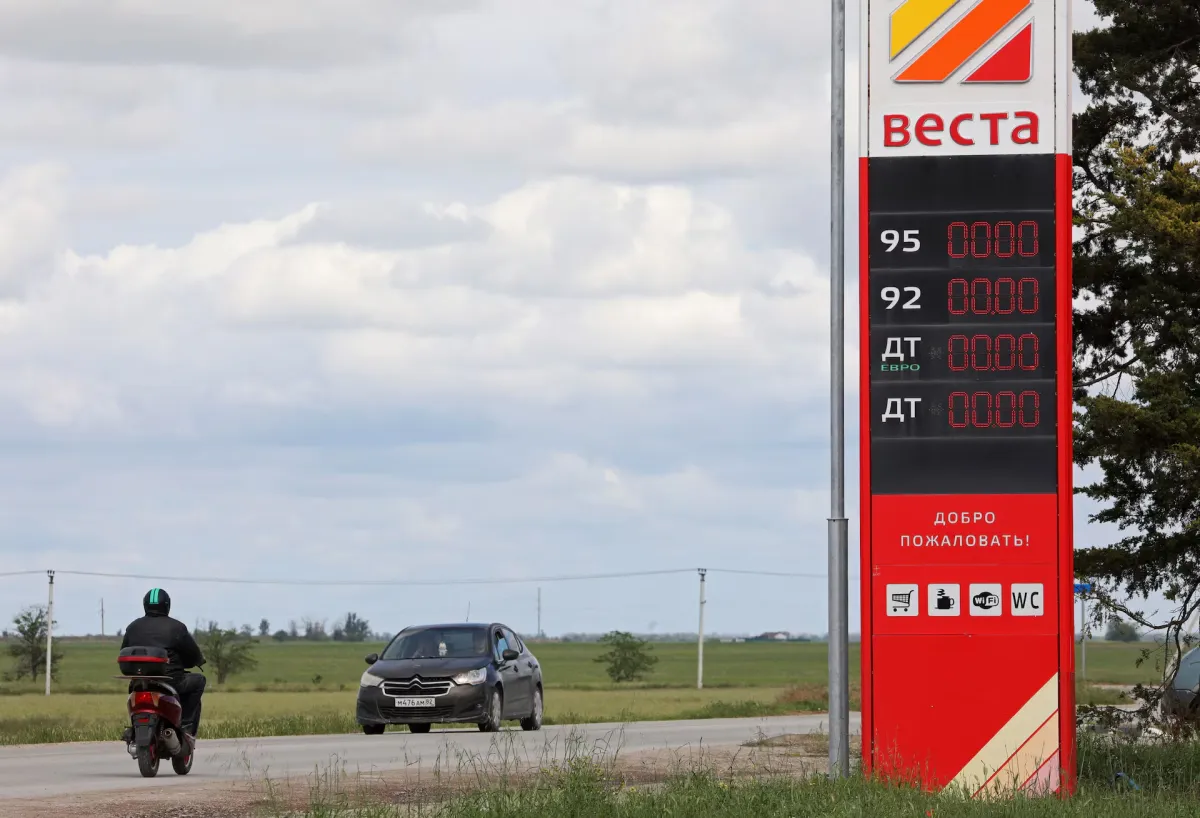
A sign showing zero prices for fuel at a gas station. Authorities have restricted fuel sales due to a supply shortage caused by attacks on Ukraine. REUTERS Oleksiy Pavlishak
Petrol stations in Moscow and St Petersburg are introducing limits on the sale of petrol and diesel. The companies attribute these measures to market conditions and supply difficulties.

Restrictions on petrol sales have begun to be introduced in the Moscow region and St Petersburg, according to local media reports.

In the Troitsk district, a limit on fuel sales has been imposed at a petrol station belonging to the ORTK network. A single customer may now purchase no more than 60 litres of petrol and 100 litres of diesel.

ORTK’s head office has stated that the restrictions have been in place at all petrol stations in the network since 30 May. They will remain in force until the market situation stabilises.

Lukoil’s press service announced the introduction of a limit of 100 litres of petrol per person at the company’s petrol stations in the Moscow region. Gazprom has set a limit of 150 litres. Meanwhile, Rosneft and Tatneft have reported that they have not yet introduced any restrictions, but do not rule out the possibility of doing so depending on the situation.

Russian media have also reported a sharp rise in fuel prices at Moscow petrol stations. According to sources, this is due to difficulties in purchasing petrol and logistical complications.

Restrictions on petrol sales have also been in place in St Petersburg since the end of last week. This information was confirmed by the hotline of Kirishiavtoservice, a subsidiary of the region’s main oil refinery. Russian media sources also attribute the situation to problems with fuel supplies.

Earlier reports indicated a petrol shortage in the Belgorod and Kursk regions of Russia, as well as in the temporarily occupied territory of Crimea. Fuel market participants predict that the petrol crisis could spread to other regions of the country.

In addition, the Russian government has banned the export of aviation fuel until 30 November.

President Volodymyr Zelenskyy stated that between January and May 2026, the Ukrainian Armed Forces struck 15 Russian oil refineries, triggering a crisis in the fuel market.
Follow us on Telegram

Share tittle
Economy
"Ukrnafta" is to build a new gas-fired combined heat and power plant with the support of the EBRD
Economy

"Ukrnafta" is to build a new gas-fired combined heat and power plant with the support of the EBRD

"Ukrnafta", in partnership with the European Bank for Reconstruction and Development, is preparing to build a modern combined-cycle gas-fired combined heat and power plant with a capacity of around 250 MW.

21.07.2026
The IMF has approved a $690 million tranche for Ukraine: the conditions
Economy

The IMF has approved a $690 million tranche for Ukraine: the conditions

The Executive Board of the International Monetary Fund has completed the first review of the four-year Extended Fund Facility programme for Ukraine. The decision paves the way for the immediate release of approximately $690 million.

21.07.2026
The cost of living in Ukraine: Getmantsev reveals the actual figure
Economy

The cost of living in Ukraine: Getmantsev reveals the actual figure

The real cost of living in Ukraine should be at least 11,000–12,000 hryvnias per month. However, there are currently no plans to raise it to this level in the near future due to the constraints on the state budget.

20.07.2026
Electricity tariffs from 1 August: how much will a kWh cost?
Economy

Electricity tariffs from 1 August: how much will a kWh cost?

From 1 August 2026, the electricity tariff for households will remain unchanged. Household consumers will continue to pay 4.32 hryvnias per kilowatt-hour, regardless of their monthly consumption.

20.07.2026
The National Bank has increased its foreign currency sales to over a billion dollars
Economy

The National Bank has increased its foreign currency sales to over a billion dollars

Between 13 and 17 July, the National Bank sold 1.074 billion dollars on the interbank foreign exchange market. This is 203.09 million dollars, or almost a quarter, more than the previous week.

20.07.2026