Russia is attacking Ukraine with 'daggers' – what is known about the aeroballistic missile

What is the ‘Kinzhal’ missile system?
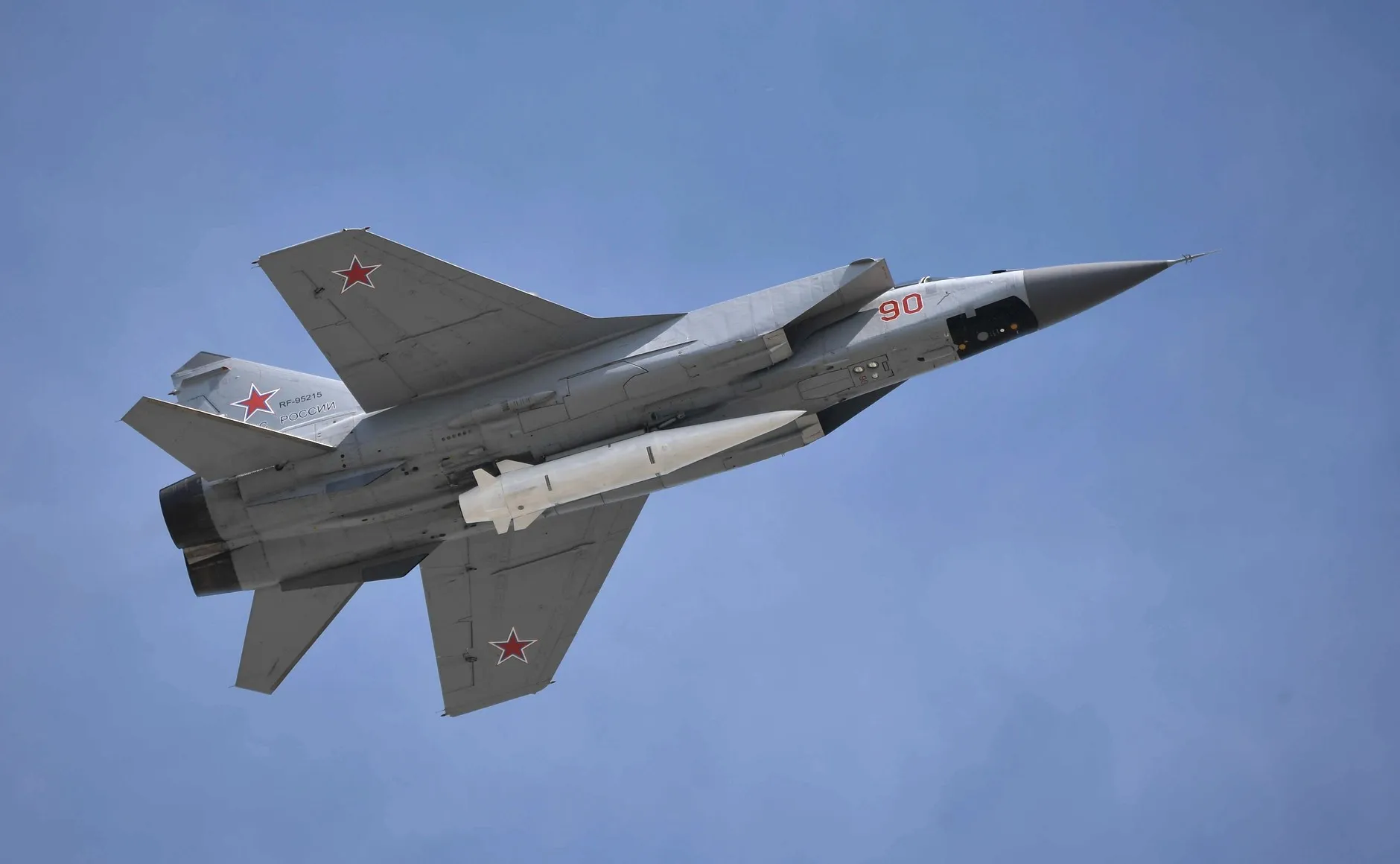
The ‘Kinzhal’ or Kh-47M2 ‘Kinzhal’ is described in various sources as a Russian airborne missile system equipped with a high-precision aeroballistic missile. The missile is designed to engage both stationary targets and surface vessels, including aircraft carriers, cruisers, destroyers and frigates.
The system is based on the modernised MiG-31K fighter-interceptor. Some sources also note that the ‘Kinzhal’ is the airborne variant of the ‘Iskander’ missile system.
Purpose and features
The missile was developed to overcome air defence and anti-missile defence systems. It is air-launched. After launch from an aircraft, the missile must reach high speed, climb to altitude and move towards the target, manoeuvring along its flight path.
The ‘Kinzhal’ is not a winged missile but an aeroballistic missile and can carry a conventional or nuclear warhead. In Russia, the ‘Kinzhal’ was described as a missile that cannot be shot down even by modern American Patriot systems. However, in May 2023, Ukrainian air defences intercepted such a missile for the first time.
Launch platforms for the ‘Kinzhal’ missile
The missile can be carried by:
The MiG-31K, which carries a single missile.
The Tu-22M3, which can carry four missiles.
Tu-160, which is expected to carry four missiles on each of its two launchers.
The Su-57, which is also being considered as a carrier in the future.
Speed and range
The missile can fly at a speed ten times the speed of sound, with a maximum speed of up to 14,688 kilometres per hour or 4,080 metres per second.
Regarding flight range, up to 2,000 kilometres is specified for the system when launched from a MiG-31K. However, taking the carrier aircraft into account, some sources estimate the launch range at up to 3,000 kilometres. For the Tu-22M3, a range of over 3,000 kilometres is specified.
The flight altitude at the moment of reaching hypersonic speed is 20 kilometres. The warhead weighs 500 kilograms.
Testing and use in the war against Ukraine
Russia conducted the first successful tests of the system on 1 December 2017. Operational military trials began in February and March 2018.
In March 2022, Russia announced for the first time that it had used the ‘Kinzhal’ in Ukraine. This refers to a strike on Deliatyn in the Ivano-Frankivsk region, as well as a statement by the Russian Ministry of Defence regarding the destruction of a fuel depot in Kostyantynivka, Mykolaiv region.
On 9 May 2022, missiles from the system were fired at civilian targets in the Odesa region. The strike injured two people and destroyed five tourist infrastructure sites.
On 7 August 2022, during another round of ‘Kinzhal’ missile strikes, Russia struck targets in the Vinnytsia region.
During its massive missile strikes on Ukraine, Russia consistently employs various types of missiles, including the Kh-47 ‘Kinzhal’.
Interceptions and effectiveness assessments
Until May 2023, no ‘Kinzhal’ missiles had been shot down. The first reported interception took place on 4 May 2023, when Ukrainian air defence forces destroyed a missile in the skies over the Kyiv region. The interception by a Patriot system was confirmed by US government sources and a Pentagon spokesperson.
On the night of 16 May 2023, the Air Force Command of the Armed Forces of Ukraine reported that 27 aerial targets had been shot down during a missile attack on Kyiv, including six ‘Kinzhal’ missiles.
Since the start of the full-scale invasion, over 160 ‘Kinzhal’ missiles have been launched, many of which have been shot down. The missile is dangerous, but it should not be regarded as a weapon that cannot be intercepted. Following the deployment of Patriot systems, assessments of its capabilities have changed.
How many ‘Kinzhals’ does Russia have and how much do they cost?
The exact number of missiles in Russia is unknown; stocks of these missiles are limited, and most of them have already been used. The ‘Kinzhal’ missile is an expensive and limited-production weapon, with only 4–10 units produced per month. A single missile costs at least US$10 million.