BBC: Russia has begun using a new type of strike drone - rocket "kamikaze" drones

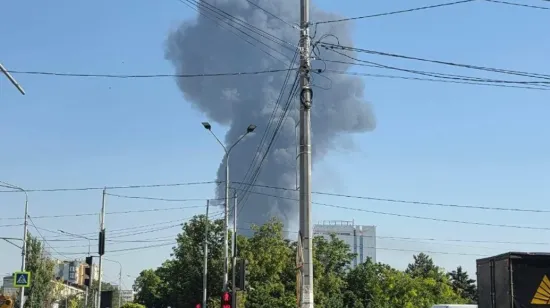
For the first time, Ukrainian military recorded up to eight missile drones on July 30. At that time, the Air Forces reported that the drones attacked from the northern direction, writes BBC.
It is likely that such drones were also used during the night attack on July 31 among ordinary imitation drones or modified "Shaheds" with internal combustion engines, explained Yuriy Ignat, spokesperson for the Air Forces of the Armed Forces of Ukraine, during a telethon broadcast.
According to him, there are not many such drones so far.
"Of course, there is no mass use of missile drones yet — these are isolated cases," Ignat explained, but added that they complicate the work for Ukrainian air defense.
At the same time, he later called on not to spread fake information that these "Shaheds" are supposedly impossible to shoot down.
In the opinion of a military expert in the field of drones and EW, Serhiy Beskrestnov (Flesh), a missile "Shahed" is a response by the enemy to the success of Ukrainian interceptor drones.
"How many of them will be in the coming months, there is no information yet," the expert noted.
Reacting to Ignat's statement, Flesh added that a missile Shahed is not a wonder weapon.
"We have what to work with now. They have been shot down and will continue to be shot down. We just need to think one step ahead, about new budgetary and mass countermeasures if they become too many," Flesh added.
What is a missile "Shahed"
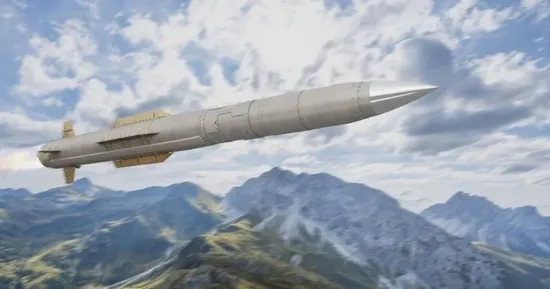
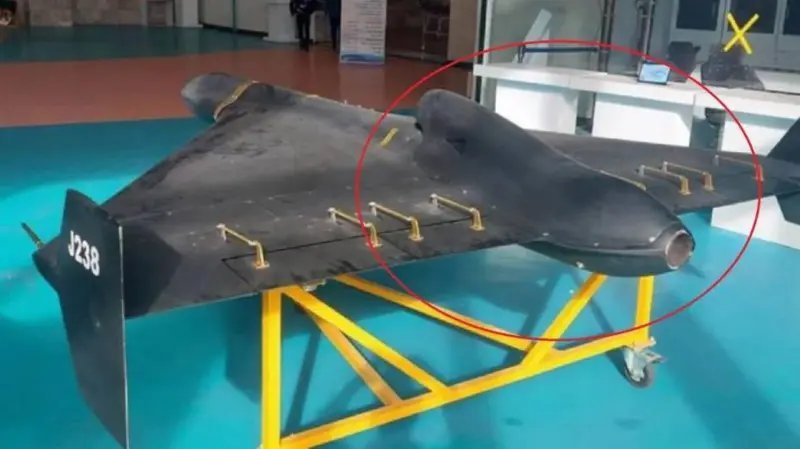
Actually, a missile "Shahed" is an Iranian missile-kamikaze drone produced by HESA — Shahed-238, explains the specialized publication "Military". This model was presented at the Islamic Revolutionary Guard Corps exhibition in November 2023.
Since January 2025, Russia has begun establishing the production of its analog of the missile Shahed-238 — "Geran-3". The drone is equipped with a small turbojet engine Tolou-10/13.
Therefore, according to the authors of the article, the new missile drones are not so much a "response" to the development of Ukrainian interceptors, but a "result of consistent work since the beginning of 2023 on the adaptation and Iranian product".
Missile "Shaheds", whether Iranian-made or Russian analogs, have significantly higher speeds than regular "Shaheds". Their speed can exceed 500 km/h, and in flight parameters, they resemble cruise missiles. Such drones also have a greater range, which can reach 2500 km.
Speed and maneuverability greatly complicate their detection and interception.
"In fact, on radar, such a drone appears as a cruise missile. Not all means we currently use can intercept such targets," said the Air Force spokesperson.
As "Military" explains, this drone is essentially unreachable for Ukrainian interceptor drones, helicopters, light aircraft, and mobile fire groups, and requires the development of new technologies for successful interception.
If the drone flies at an altitude of 9 km, only missile aviation or large anti-aircraft missile systems can shoot it down. And given its high speed, the reaction time is also reduced, experts assert.
To shoot down such drones, full-fledged anti-aircraft artillery equipped with radars, optical stations, and programmable shells is needed.
"Such means are not only costly and expensive to operate (the cost of one programmable shell of 35 mm caliber exceeds 1000 euros), but are also relatively rare among partner countries and require long production," explains "Military".