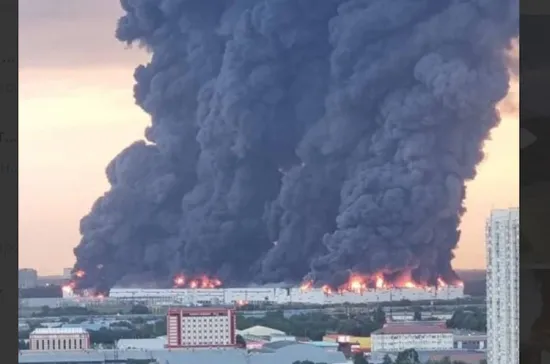
Experts warn that Russian aviation has become more dangerous since the war in Ukraine

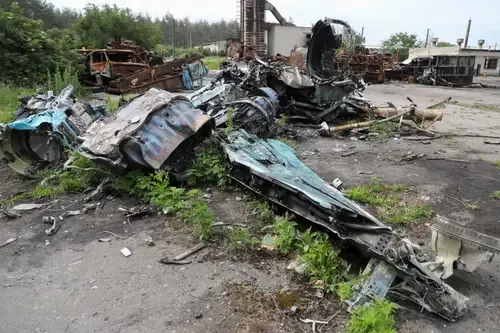
Air warfare experts believe that the Russian air force has become a greater threat to NATO countries since the start of the war against Ukraine in February 2022. According to their assessment, the hostilities have provided Russian pilots with experience of modern conflict and have also contributed to the modernisation of weapons and systems, reports Business Insider.
Justin Bronk, an expert at the Royal United Services Institute for Defence Studies, noted in a report that Russian aviation now poses a greater threat to Western air forces in Europe than it did before the invasion. Gordon Davies, former Deputy Assistant Secretary General for Defence Investment at NATO, stated that the alliance must reassess its view of Russian capabilities and not underestimate them.
According to Bronk, despite significant aviation losses in the war, these losses are not decisive. He estimates that around 130 aircraft have been shot down or seriously damaged. At the same time, Russia has been able to produce more aircraft than it has lost, notably the Su-35S, Su-34 and Su-30SM(2), leading to an increase in its overall air fleet.
The expert also noted that some of the most advanced aircraft and weaponry were not actively deployed in the war. At the same time, combat experience has significantly improved the level of training for pilots and crews. According to Davis, Russian pilots have significantly improved their skills in conducting intense combat operations.
Furthermore, Russia has modernised its weaponry. In particular, Su-35 fighters are equipped with R-37M long-range missiles, which increases the potential threat to NATO operations. Capabilities for striking from a safe distance have also been developed, notably using missiles and glide bombs.
Experts note that Russia has also improved its air defence systems. Despite losses in the war, hundreds of batteries remain in service, and new versions continue to be produced. Combat experience has enabled greater effectiveness in their use against aircraft and drones.
According to Bronk, in the event of a direct conflict, Russian air defence systems could be more effective against NATO aircraft than they were prior to 2022. Improved coordination between aviation and ground-based missile systems is also noted.
At the same time, experts emphasise that Russia does not surpass NATO in capabilities, but has become a more serious threat. According to Bronk’s assessment, in a direct aerial confrontation, Russian forces may face significant difficulties; however, combat operations are not limited solely to the air component.
Western officials also note that, due to Russia’s robust air defence, establishing complete air superiority in a potential large-scale conflict could be more challenging.
At the same time, Russia continues to face a number of challenges, including a rigid command structure and limited access to Western technology. NATO, for its part, has also obtained new data on the strengths and weaknesses of Russian systems, although, according to experts, the quantity of necessary weaponry in Europe remains insufficient.
Follow us on Telegram