Rotations on the front line have been put on hold due to a shortage of personnel in the brigades

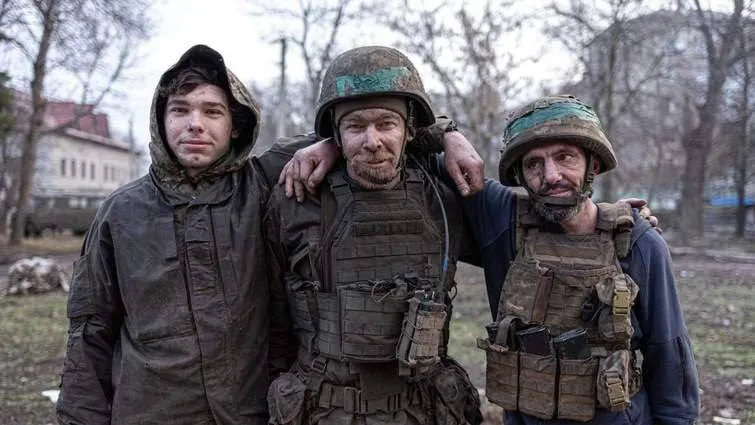
This is according to DeepState.
The problem of soldiers being stationed at their posts for extended periods has become acute on the front line. According to DeepState, in some cases, soldiers remained on the front line for between 100 and 300 days, and sometimes even longer.
Initially, this issue was merely discussed; later, such cases began to be presented as ‘heroic’ stories online, although the situation itself seemed absurd. Following widespread publicity, the Office of the Military Ombudsman became involved in the matter, and now the Commander-in-Chief has also intervened.
This concerns an order regarding the mandatory rotation of military personnel carrying out duties on the front line.
DeepState notes that the move itself can be seen as positive, but without a real replenishment of units, it is unlikely to be effective. According to analysts, the root of the problem lies in the unfair distribution of troops between brigades and a chronic shortage of personnel.
Why the order is difficult to implement
After the order was communicated to the commanders, according to DeepState, they expressed outrage and dissatisfaction. They consider the task set to be practically impossible to carry out.
The brigades lack proper reinforcements, and this is one of the main reasons for the prolonged deployment of troops in their positions. Due to a shortage of personnel, commanders are unable to carry out proper rotations.
In many brigades, there are barely enough personnel to cover the losses inflicted by the enemy through active assault operations, drones and other means of attack.
DeepState emphasises that losses are not limited to those killed in action. After spending too long at their posts, a soldier may go on sick leave or no longer be able to return to their position.
This is precisely why orders mandating rotation without replenishing personnel risk remaining a mere formality in response to public demand.
The problem of brigade replenishment
Analysts believe that the situation cannot be resolved if the main priority for troop replenishment remains with assault units, where a high number of casualties are recorded.
DeepState states that the issue of brigade replenishment must be urgently reviewed. In their assessment, despite the president’s order on fair distribution, senior military leadership continues to increase the strength of assault regiments.
Analysts also believe that assault regiments should be distributed more effectively among the corps. In their view, this could strengthen specific sectors, particularly in cases where the enemy is breaking through.
What changes are being proposed
DeepState is calling for a constructive approach to the issue of rotations and the prolonged deployment of troops in their positions.
Among the necessary steps, analysts cite an audit of personnel in brigades, an audit of reinforcements and losses to understand the relationship between these processes, and an assessment of commanders’ effectiveness.
Separately, they propose conducting an audit of positions. According to DeepState’s assessment, some of these may be unnecessary or politically motivated, and personnel are simply being wasted there.
Another point mentioned is a review of the issue of assault regiments and their use to reinforce sectors.
Trackers for fighters in positions
Commanders were particularly surprised by the instruction to use trackers to monitor fighters at their posts.
Analysts note that this idea provoked both surprise and laughter, as it is almost impossible to implement in practice.
DeepState emphasises that the order reveals nothing new. Commanders already have to find personnel for rotations, seek the means to carry them out, train personnel and look after the fighters.
At the same time, the problem is that these requirements are often not applied equally to everyone. Commanders rarely face real consequences for failing to follow such procedures, and after being removed from one brigade, they may be assigned to another.
Analysts attribute this to a shortage of commanders, which persists after four years of full-scale invasion and 12 years of war.
DeepState emphasises: you cannot simply issue an order and force commanders to carry out tasks for which they lack the personnel. The shortage of personnel in the brigades has been known and discussed for a long time, but the problem remains relevant to this day.
As reported by ThePublic, a proposal has been made in the Rada to ‘reset’ disability certificates for mobilisation.
Follow us on Telegram