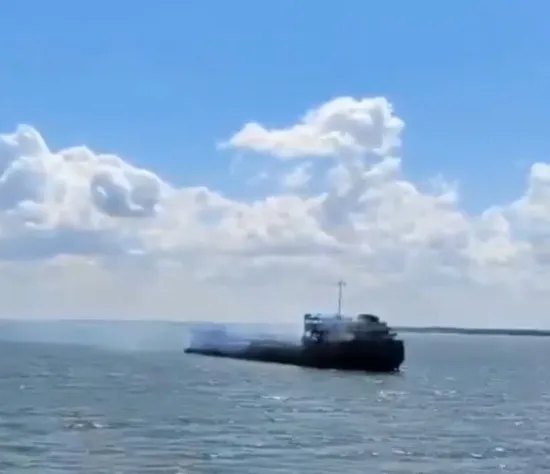
Russia could lose 20 per cent of its grain exports due to the Ukrainian blockade of the Sea of Azov


These two ports account for 15 per cent of Russian grain exports and 17–21 per cent of vegetable oil exports, reports The Moscow Times, citing an estimate by Nikolai Lychov, managing partner at AgroTrend.
Other analysts put the figure even higher – at up to 25 per cent of total grain and vegetable oil exports. Trade with Middle Eastern countries, particularly Turkey – which purchases almost one in every five tonnes of Russian grain – takes place via the shallow-water ports on the Kerch Strait.
At the end of last week, according to Reuters sources, the Russian authorities informed shipping companies that they were no longer accepting applications for passage through the Kerch Strait, which connects the Sea of Azov and the Black Sea.
The day before, the Ministry of Transport and the Ministry of Agriculture of the Rostov Region announced that they were seeking alternative routes for grain exporters, whose harvest has recently begun.
Due to the late start to the harvest and logistical constraints, grain exports in July will be 20 per cent lower than planned, according to forecasts by IKAR analysts: 2 million tonnes instead of 2.5 million. Some of the exports, which have been paralysed in the Sea of Azov, can be redirected to deep-water ports: these can handle 4–4.5 million tonnes per month. This will be sufficient for July.
Grain exports will have to be reorganised ‘on the fly’ – that is, at the very peak of the season, amidst a late harvest and a fuel crisis, and this is “an almost impossible task”, according to Lychev: for the flow to take a new route, stations, terminals and ports need to be ready to handle these volumes, but they are not, he explains.
Follow us on Telegram