Russia has attacked Kyiv with ‘Bandera-rols’: what is known about the new munition

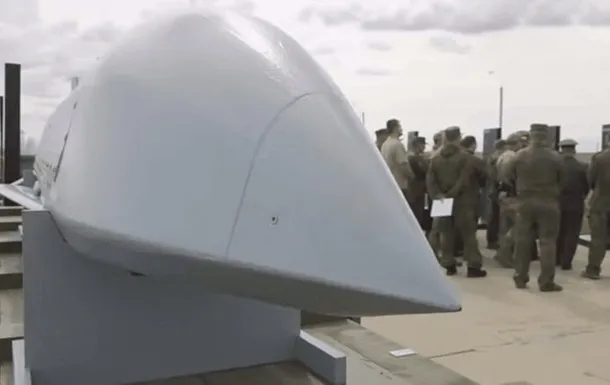
Korrespondent.net reports this, citing information from the Main Intelligence Directorate of the Ukrainian Ministry of Defence and military experts.
Among the weapons used were ‘Banderole’ loitering munitions.
According to Ukrainian monitoring groups, during previous launches, these munitions may have been launched from areas around the Black Sea. During the latest attack, they approached from the direction of the Chernihiv region.
What are the specifications of the “Banderol”?
According to the Main Intelligence Directorate, the “Banderol” is capable of travelling up to 500 km and reaching speeds of over 500 km/h. Its warhead can weigh up to 150 kg.
It uses aviation kerosene as fuel.
The munition can perform manoeuvres with a smaller turning radius than typical Russian cruise missiles, whilst maintaining its characteristic flight path.
Who developed the munition
According to Ukrainian intelligence, the ‘Banderole’ was developed by the Russian company ‘Kronstadt’, which is subject to sanctions.
This same company is also linked to the development of the “Orion”, “Sirius”, “Molniya”, “Grom”, “Termit” and “Helios” UAVs.
What foreign components were found
The Main Intelligence Directorate (GUR) reported that a number of foreign components had been found in the Russian “Banderole”.
In particular, this refers to the Chinese Swiwin SW800Pro jet engine, which is used in model aircraft. According to intelligence reports, such engines are even sold via online platforms.
Murata batteries from Japan, Dynamixel MX-64AR servo motors from South Korea, and microchips manufactured by companies from the US, China, Switzerland, Japan and South Korea were also found in the munition.
How the ‘Banderol’ is launched
The main launch platform for the “Banderol” is said to be the Russian reconnaissance and strike drone “Orion”, also known as the “Inokhodets”.
In addition, the Russians are working on adapting the munition for launch from Mi-28N helicopters.
After being released from the carrier, the jet engine ignites, and the wings and stabilisers deploy. The munition then flies using an inertial guidance system and is guided by Russian “Kometa-M” antennas.
How the “Banderole” differs from “Shaheds”
The key difference with the “Banderole” is its significantly higher speed compared to the Iranian “Shaheds”, which Russia is using on a massive scale for attacks on Ukraine.
According to aviation expert Kostyantyn Kryvolap, this may help the munition to penetrate Ukraine’s air defence system with pinpoint accuracy.
At the same time, he believes that the “Banderole” is unlikely to become a widespread replacement for the “Shaheds”, as it is roughly three times more expensive and has limited launch options.
What are the limitations of the new weapon?
Experts note that the “Banderol” may be effective for precision strikes, but is not suitable for such widespread use as the “Shaheds”.
Among the limitations cited are its dependence on delivery platforms, such as ‘Orion’-type drones or helicopters, as well as its large dimensions, which make the munition a more conspicuous target for aircraft and air defence systems.
When Russia first used the “Banderol”
According to reports from the Air Force, Russia first deployed “Banderole” against Kyiv around a month ago – on 14 May.
On that occasion, the enemy utilised a wide range of air attack weapons, including ‘Gerberas’, ‘Italmas’, ‘Shaheds’, jet-powered drones and ‘Banderole’ loitering munitions.
Ukrainian experts suggest that Russia is testing this type of weapon for strikes on Kyiv as a cheaper alternative to cruise missiles.
Follow us on Telegram