Russia would lose a third of its troops within 10 days in the event of a war with NATO

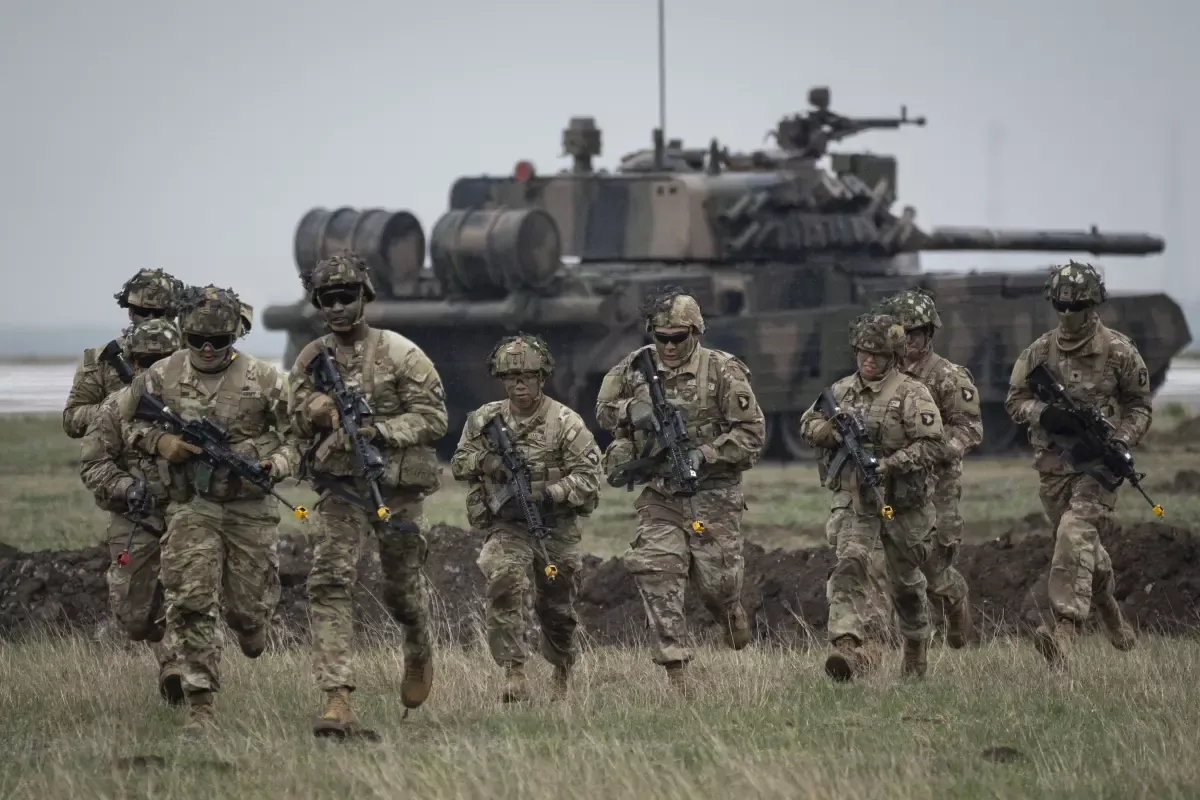
As part of a military simulation, a scenario was examined in which Russia, following political disputes among NATO allies and an unstable situation in Europe, launches an offensive against Lithuania from three directions simultaneously.
Under the scenario, Russian troops advance through the Latvian region of Latgale and take up positions near the Ignalina nuclear power station. At the same time, another group of troops enters from Belarusian territory and reaches the outskirts of Vilnius, which by the end of the fifth day finds itself almost surrounded.
In the west, Russian forces break through from the Kaliningrad region across the Neman River and establish a bridgehead up to 20 miles deep.
The scenario notes that NATO continues to exist in name only, but the allies are unable to respond swiftly to the invasion.
A separate scenario was modelled in which Lithuania and a German brigade stationed in the country each had 12,000 HX-2 drones manufactured by Helsing.
In this case, the initial phase of the Russian offensive effectively failed. According to the participants’ estimates, Russian forces lost more than a third of their strength during the first ten days.
The HX-2s are described as loitering munitions with a range of around 60 miles. The drones are equipped with an artificial intelligence system that allows them to reach their targets even under active electronic warfare conditions.
According to the report, these drones have been in use on the front line in Ukraine for a year. Initially, due to Russian jamming, a significant proportion of the drones failed to reach their targets; however, the hit rate is now estimated to be between 60 and 80 per cent.
During trials in Kenya, such drones successfully struck targets identified by ground-based reconnaissance units.
Greg Melcher, former director of operations at the Pentagon’s Naval Department, stated that even without a rapid response from allies, NATO’s eastern flank countries are capable of holding back a Russian offensive provided they have the necessary weaponry.
According to him, frontline states could be able to contain or even repel attacks by several Russian armies for one to two weeks before reinforcements arrive from allies.
In an earlier version of the simulation, it was proposed to achieve a similar effect using Apache helicopters, HIMARS systems, and Hellfire and Spike missiles. However, the cost of such weaponry was estimated at approximately $16 billion, whereas the HX-2 drones would cost less than a tenth of that amount.
Helsing has set up drone production at an underground facility in Germany. The factory is designed so that it can be quickly moved in containers in the event of an imminent attack.
The production workforce consists mainly of former automotive industry workers. It takes approximately three and a half hours to assemble one drone, and monthly production stands at around three thousand units.
Germany has already agreed to allocate at least €269 million for the purchase of the HX-2. The contract value could rise to €1.5 billion.
Helsing is also looking for a site to set up a similar underground production facility in the UK.
Former Chief of the Defence Staff of the UK, Nick Carter, stated that the results of any military simulations must be assessed with caution.
According to him, the simulations did not take into account the fortifications that Lithuania is building on its borders with Belarus and Russia, nor the possibility of a faster NATO response.
At the same time, he noted that the increase in Russian troop casualties due to the use of drones demonstrates changes in modern warfare.
“At present, target detection outweighs the ability to hide in the constant struggle on the battlefield,” Carter said.