Russia's gold reserves have fallen to their lowest level since 2022, with nearly 28 tonnes of gold sold

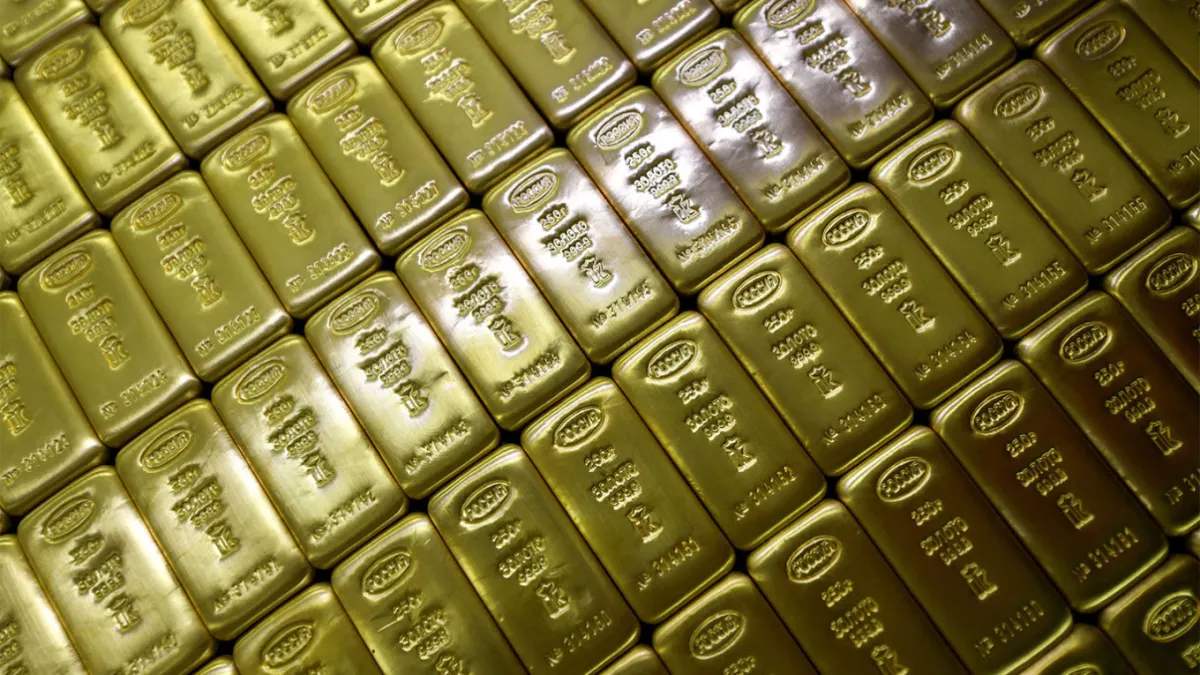
As of 1 May, Russia’s gold and foreign exchange reserves stood at 73.9 million ounces of gold. During April, this figure fell by 200,000 ounces, and by 900,000 ounces since the start of the year.
Converted into tonnes, the Russian Central Bank’s gold reserves fell by 27.9 tonnes between January and April. According to the World Gold Council, this was the largest decline since 2002, reports The Moscow Times.
In previous years, the Russian Central Bank had mainly been building up its gold reserves, often purchasing hundreds of tonnes of gold each year. Prior to this, the largest reduction in reserves was recorded in July 2005, when reserves fell by 7.7 tonnes.
Analysts link the current gold sales to transactions by the National Wealth Fund, whose assets form part of Russia’s gold and foreign exchange reserves.
Natalia Milchakova, an analyst at Freedom Finance Global, stated that one of the reasons for such transactions could have been to cover the budget deficit, which had reached 4.6 trillion roubles by the end of March.
According to her, the sale of gold could also be linked to the build-up of foreign currency reserves due to weak export revenues at the start of the year. She noted that the precious metal could have been exchanged for Chinese yuan.
Since 2022, the Russian authorities have actively used currency and gold from the National Wealth Fund to finance the budget against a backdrop of rising military spending.
Previously, gold transactions were predominantly domestic in nature, with the government selling the precious metal to the Central Bank, whilst reserves effectively remained within the system. From early 2026, the Central Bank began conducting transactions involving the sale of physical gold.
Economists Alexandra Prokopenko and Alexander Kolyandr suggested that this might be linked to the regulator’s reluctance to spend its remaining reserves in Chinese yuan. Following the imposition of sanctions, the Central Bank of Russia classified the structure of its reserves, and around $300 billion of its assets in the West were frozen.