Sudan accuses Ethiopia of drone attack

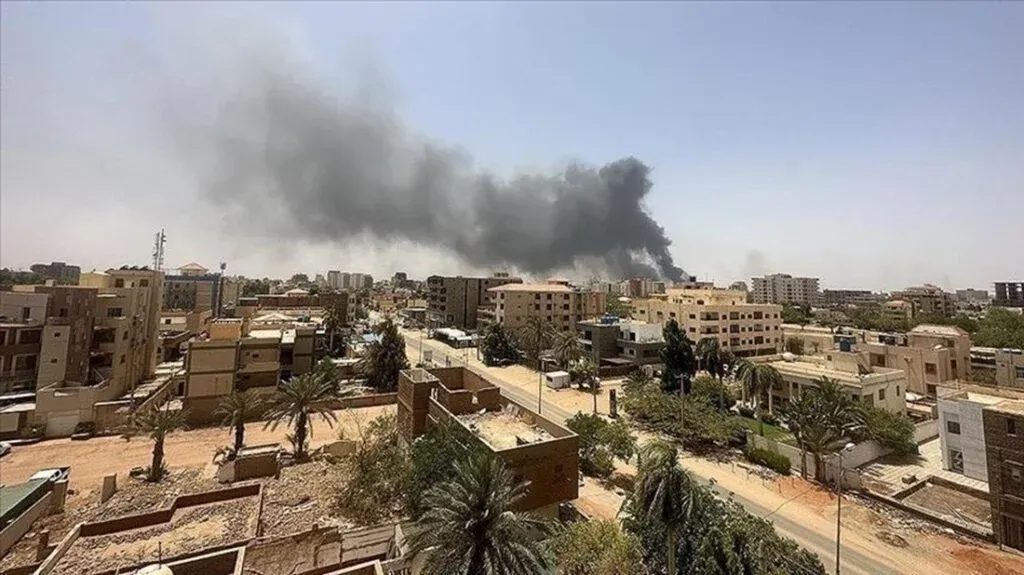
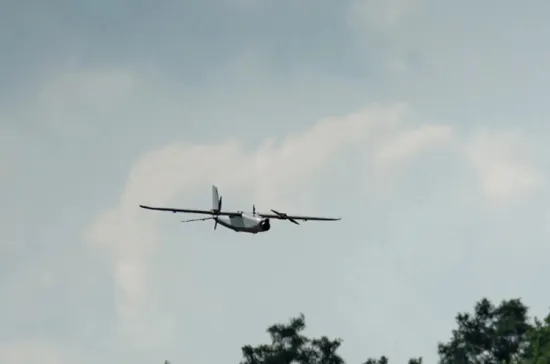
The Sudanese government has accused Ethiopia of attacking targets in Sudan from the Ethiopian side of the border using drones.
A statement from Sudan's Ministry of Foreign Affairs and International Cooperation said that during February and early March, the authorities recorded drones entering from Ethiopian territory. According to the government, they attacked targets inside the country.
Khartoum called these actions hostile behaviour, a gross violation of sovereignty and open aggression against the Sudanese state.
The Sudanese government warned the Ethiopian authorities about the consequences of such actions and declared its right to defend the sovereignty and territorial integrity of the country by all necessary means.
The Ethiopian authorities have not yet publicly responded to these accusations.
This is the first time Sudan has officially accused Ethiopia of interfering in the war, which has been going on in the country for almost three years. In this conflict, the Rapid Response Forces are fighting against the regular army.
Earlier, there were reports in the media about the possible creation of a camp in Ethiopia to train thousands of Rapid Response Forces fighters near the Sudanese border in the Blue Nile state. These reports also mentioned logistical support and arms supplies.
In late January and February, a coalition of Rapid Support Forces and the Sudan People's Liberation Movement-North, led by Abdel Aziz al-Hilu, carried out ground attacks on several positions in Blue Nile State. The Sudanese army said the attacks were repelled.
After unsuccessful attempts to capture positions, the Rapid Support Forces moved to intensive drone attacks on areas and villages in Blue Nile State, which borders Ethiopia.
At a UN Security Council meeting late last month, British Foreign Secretary Yvette Cooper said there was no ceasefire in Sudan as the parties continued to hope for military victory and obtained increasingly lethal weapons.
She also noted that external support from at least a dozen countries in the form of funding, production, transit and training of forces is contributing to the continuation of the war.
Egypt's ambassador to the UN, Ihab Awad, said there are documented reports that one of Sudan's neighbouring states has set up a camp to train and arm militants and is helping to move them.
According to a study by the International Crisis Group on tensions in the Horn of Africa, Sudanese officials have also accused the United Arab Emirates of increasing arms supplies to Ethiopia since November 2025, intended for the Rapid Response Force.
The United Arab Emirates has repeatedly been accused of supporting the Rapid Response Force through neighbouring countries, including in United Nations reports. The authorities in Abu Dhabi deny these accusations.
Sudanese army commander Abdel Fattah al-Burhan, meanwhile, enjoys the support of Egypt, Saudi Arabia and Turkey.
In February, UN High Commissioner for Human Rights Volker Türk said that the number of civilians killed in the war in Sudan in 2025 had more than doubled.
Speaking at the UN Human Rights Council, Volker Türk said: "This war is horrific. It is bloody and senseless."
He blamed both sides of the conflict for rejecting proposals for a humanitarian ceasefire and pointed to foreign sponsors who are financing what he called a high-tech war.
Fearing the spread of the conflict, Chad recently closed its border with Sudan.