Syrsky replied to Fedorov: what he said about drones and payments

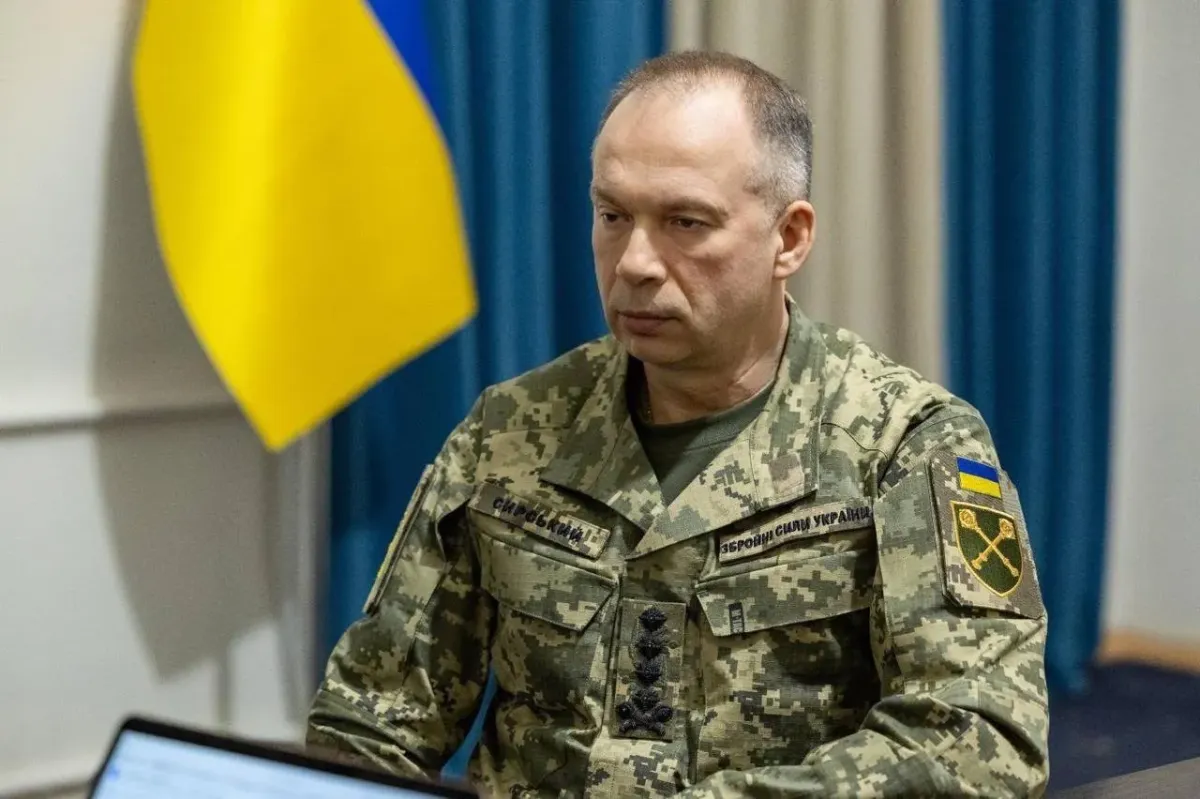
Syrskyi set out his position in a column entitled ‘My Job Is War’.
What Syrskyi said about the conflict with Fedorov
The Commander-in-Chief stated that he does not seek to cultivate a public image, has no political ambitions and rarely gives interviews. However, he decided to speak out following numerous reports of conflicts and alleged sabotage within the military leadership.
According to Syrskyi, the reports of his conflict with Fedorov came as a surprise to him. He described his relationship with the former minister as professional, although he acknowledged that the two sides held differing views on complex issues.
Syrskyi also apologised to Fedorov if he might have offended him with his firmness. At the same time, he urged people not to turn the discussion about the army into a confrontation between two officials.
The Commander-in-Chief emphasised that Ukraine is more important than any individual’s name, and that disputes over procurement, contracts and mobilisation must not be reduced to slogans or a struggle between separate political camps.
Earlier, during a public briefing following his resignation, Fedorov claimed that Syrskyi had allegedly issued him with an ultimatum and blocked some of the Ministry of Defence’s initiatives.
Who is responsible for supplying the army and combat operations
Syrskyi separately explained how powers are divided between the Ministry of Defence and the military command.
According to him, the ministry is responsible for supplying the troops, procurement, formulating defence policy and exercising civilian control over the Armed Forces of Ukraine. The Minister of Defence should not personally direct operations or be constantly on the front line.
War strategy, operational planning and the situation on the front line fall under the Commander-in-Chief’s responsibility to the Supreme Commander-in-Chief. Long-range strikes and operations against Russian targets are carried out by the Armed Forces of Ukraine, the Security Service of Ukraine, the Main Intelligence Directorate and the State Border Guard Service, and their actions are coordinated by the state’s military and political leadership.
Syrskyi emphasised that military strategy cannot be a public document, as revealing its details would assist the enemy. The effectiveness of the strategy, he said, must be assessed based on the situation on the battlefield.
How Syrskyi responded to accusations of micromanagement
The Commander-in-Chief rejected claims that he commands the troops manually or via messaging apps. He noted that the army is managed through headquarters, orders and the accountability of commanders.
As an example of decentralisation, Syrskyi cited the delegation of additional powers to corps commanders. In particular, they have been given the authority to make decisions regarding the redeployment of personnel within their own corps.
What the Commander-in-Chief said about drones
Syrskyi dismissed as baseless the accusations that he allegedly does not wish to develop the use of drones.
The Commander-in-Chief recalled that the Unmanned Systems Forces became a separate branch of the armed forces during his leadership of the Armed Forces of Ukraine. According to him, it was he who put forward Robert Brovdi, call sign ‘Madyar’, to the President as a candidate for the post of Commander of the Unmanned Systems Forces and took responsibility for that decision.
Syrskyi acknowledged that drones account for a significant proportion of the strikes against Russian forces. However, for them to operate effectively, the army also requires artillery, mortars, air defence and electronic warfare systems, engineering equipment and other types of weaponry.
The Commander-in-Chief warned that it is impossible to completely transition a million-strong army to waging war using drones within a few months. In his view, such an experiment could lead to the loss of territory and the lives of service personnel.
What Syrskyi said about personnel appointments
The Commander-in-Chief also denied that he promotes only officers personally loyal to him to senior positions.
As examples of commanders who had been promoted on the basis of their service record, he named Madyar, Oleg Apostol, Andriy Gnatov, Andriy Biletskyi, Denys Prokopenko (call sign ‘Redis’), Oleksandr Veres, Yuriy Fedorenko (call sign ‘Achilles’) and Yevhen Karas.
Syrskyi acknowledged that the procedures for transferring military personnel remain complex and time-consuming. He stated his willingness to support their simplification, provided the changes do not undermine the command and control of the troops.
Syrskyi criticised the results of the new contracts
According to the Commander-in-Chief, the new military contracts were presented over a month ago, yet only around two thousand service personnel have signed them.
Syrskyi claims that some soldiers and officers were disappointed as they had expected different terms. He also raised legal concerns regarding the decree governing the conduct of the relevant trial.
The Commander-in-Chief emphasised that every proposed change must have the appropriate legal framework, defined funding and a clear implementation procedure.
Who is responsible for carrying out the mobilisation reform
Syrskyi confirmed that the Army and the territorial recruitment centres fall within his chain of command.
He assured that the military leadership is ready for the changes, is participating in sessions of the Verkhovna Rada, is forwarding reports on identified violations to the State Bureau of Investigations, and is insisting on the involvement of the police.
At the same time, according to Syrskyi, the legislative and administrative aspects of the mobilisation reform are to be prepared by the Ministry of Defence.
What is happening with payments to military personnel
Separately, the Commander-in-Chief raised the issue of pay for military personnel.
Syrskyi claims that part of the funds earmarked for payments to military personnel has been diverted to the purchase of drones. According to him, this has created a risk of a funding shortfall for the second half of the year.
He reported that the military command, together with the government, is seeking a solution to ensure timely and full payments. The Commander-in-Chief emphasised that funds intended for military pay must not be treated as a reserve for reallocation without first assessing the consequences.
At the same time, Syrskyi did not provide any documentary evidence of the reallocation of funds in his column. There has also been no official response from the Ministry of Defence regarding this part of his statement.
Is Syrskyi prepared to work with the new defence minister?
The Commander-in-Chief stated that the General Staff would cooperate with any Minister of Defence appointed by the state.
He denied any conflict between the military command and the ministry and emphasised that his main priorities remain strategy, the front line and the safety of personnel.
Follow us on Telegram!