The anonymous power of Telegram: how regional public groups in Podillia are influencing the war, politics and public opinion

We analysed several Telegram channels in the Podillia region – from the Khmelnytskyi, Vinnytsia and Ternopil regions. The focus varies from channel to channel, but the problems are the same: anonymous owners, fake news, scant attention to fundraising for the Armed Forces, a near-total absence of stories about heroes, and a toxic portrayal of the topic of mobilisation.
Khmelnytskyi region: ‘We don’t advertise the recruitment drives’
In Khmelnytskyi, the most telling example is “Khmelnytskyi LIVE”. To the average reader, it is simply a major city channel, but who runs it, who makes the decisions and who is responsible for the content remains an open question.
The first thing that catches the eye is the blatant disregard for support for the Armed Forces of Ukraine and other units defending the country from enemy invasion.
One might think that with such a resource (280,000 subscribers), the channel’s administrators could organise strong support for the army. Yet the header of the profile, intended for suggestions and news, states clearly: contributions are not published.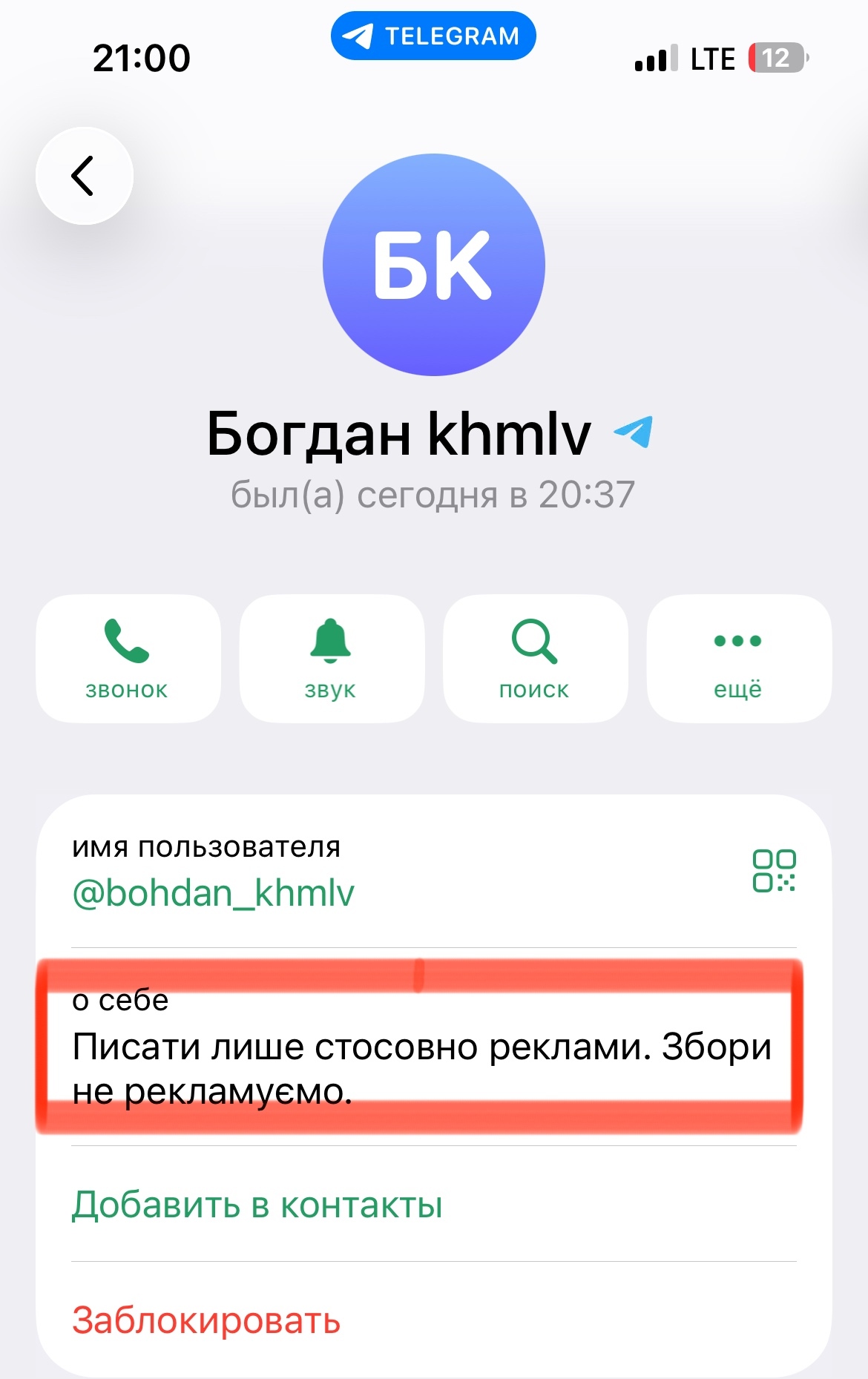
It is therefore no surprise that the channel also lacks information about heroes – the administrators avoid news of fallen soldiers and do not cover their stories. Occasional mentions may occur, but they do not set the overall tone. The channel’s administrators would do well to visit the Walk of Fame in the city centre, assuming, of course, that they are actually from Khmelnytskyi.
Disruption of mobilisation and harassment
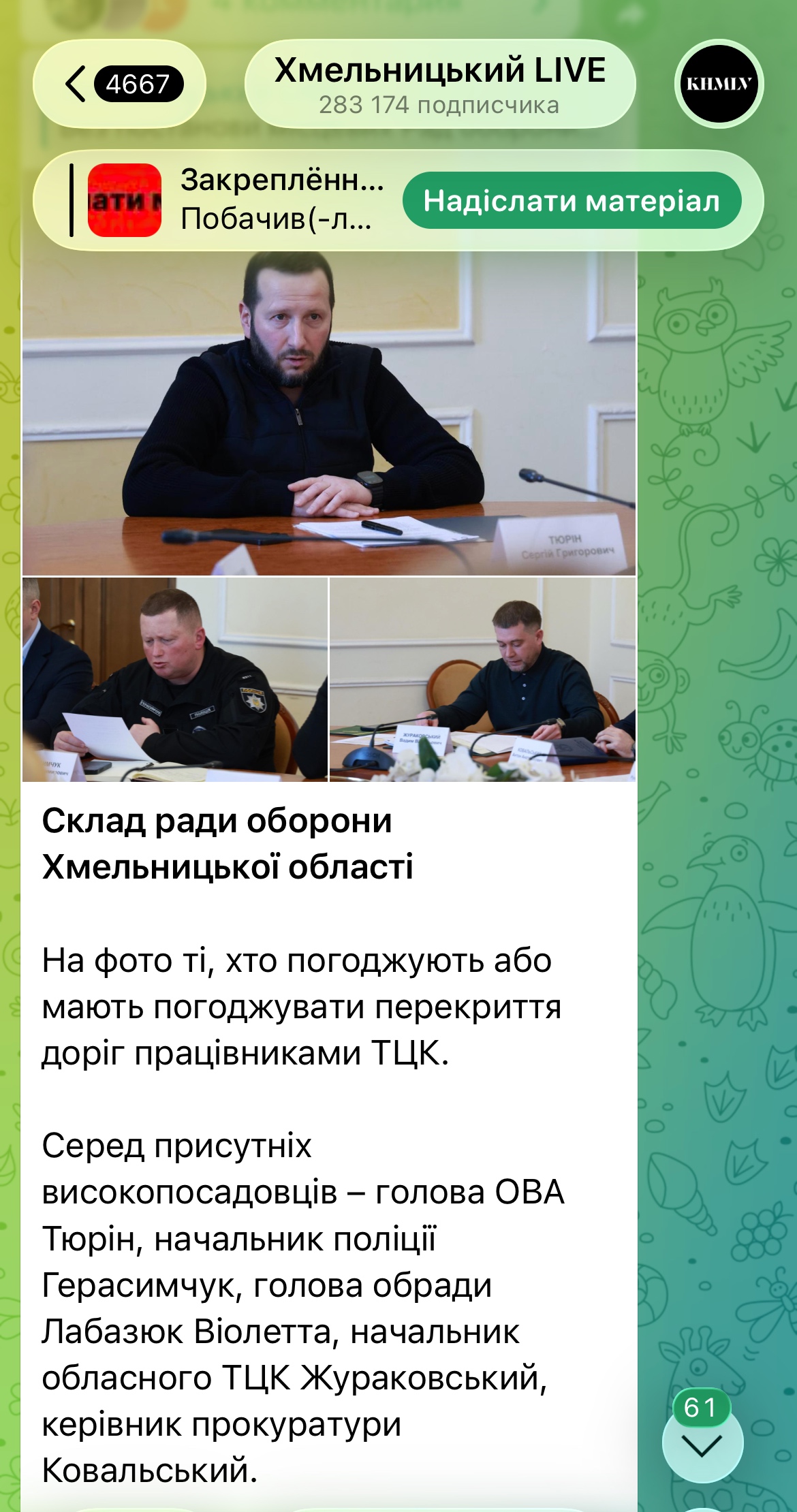
“Khmelnytskyi LIVE” handles the topic of mobilisation the worst. As can be seen from the screenshots, the channel regularly presents news about the TCC through the lens of fear and conflict. The feed is constantly filled with toxic polls, reports of danger to people on the streets, and aggressive videos depicting conflicts. All of this is presented in a sensationalist, one-sided manner and serves to undermine mobilisation.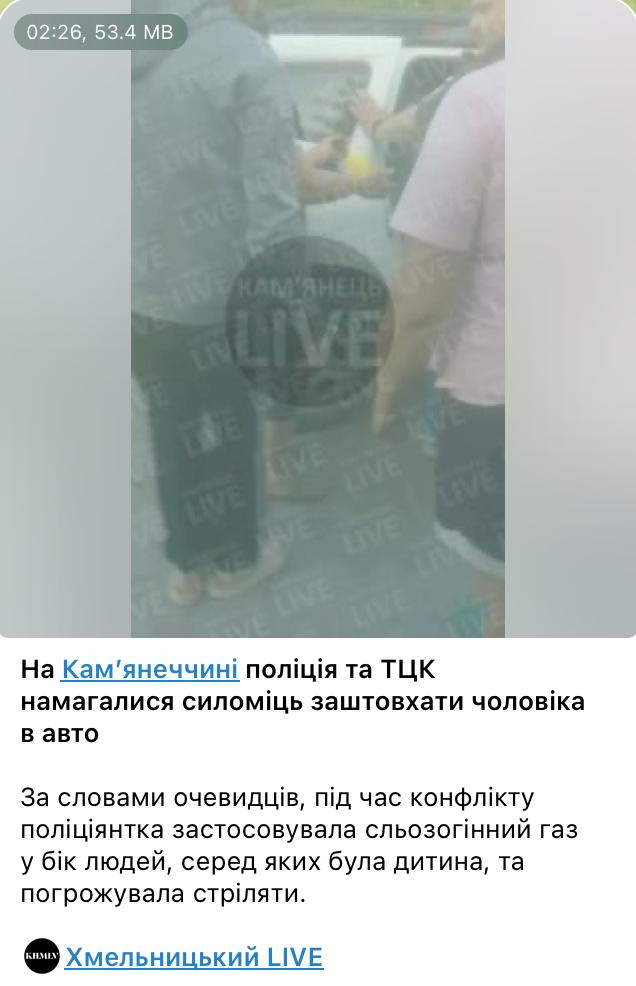
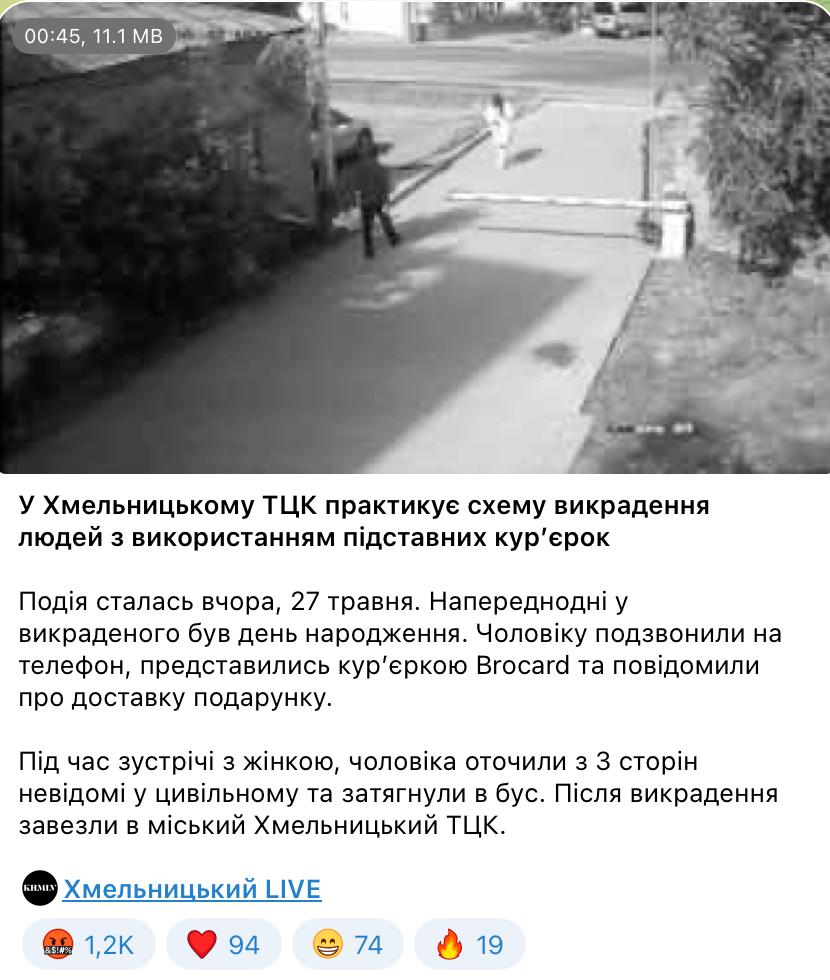
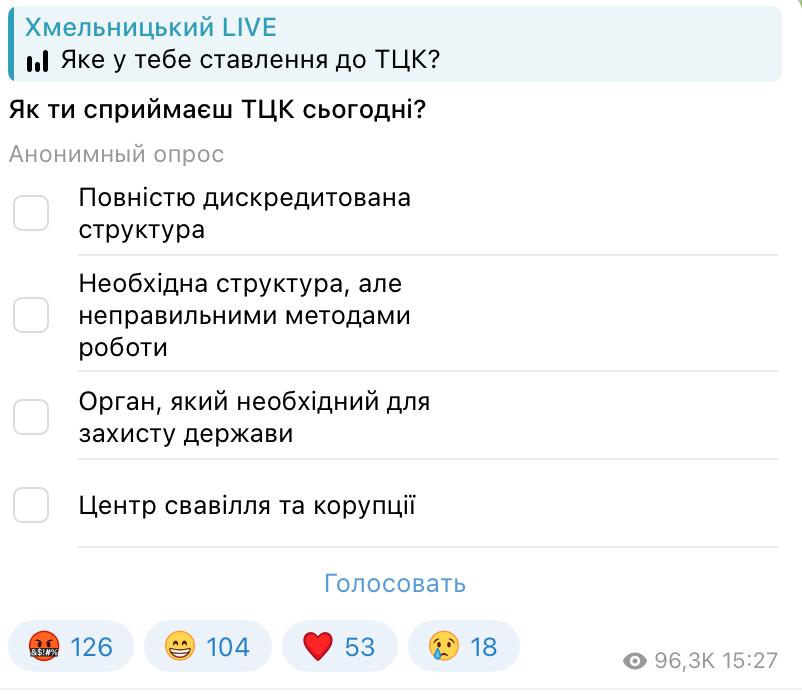
At the same time, no one even attempts to verify whether the people in the videos are actually TCC staff, serving military personnel, or simply bystanders. Viewers are immediately presented with a ready-made negative emotion and conclusion.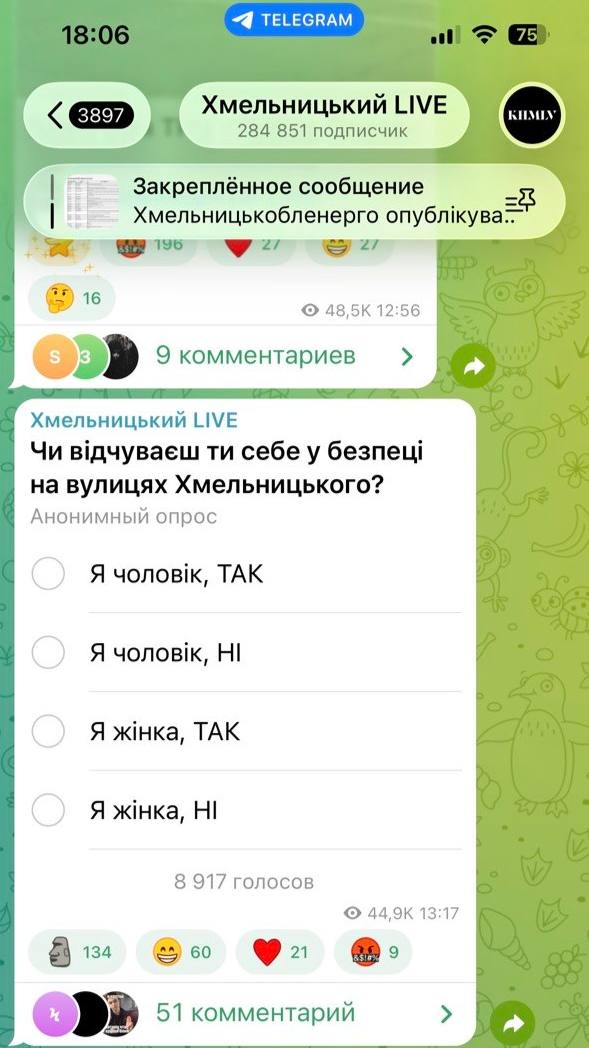 Other posts are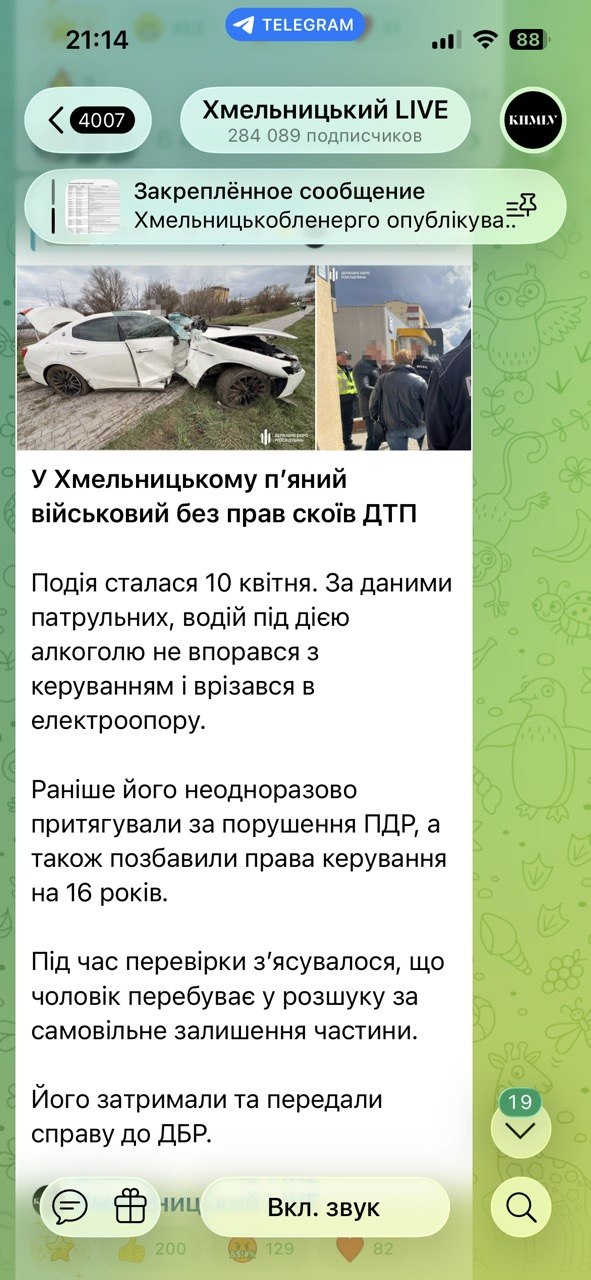
equally telling. Even the official position is used by the channel not to provide balance, but to fuel the conflict. First, the audience is presented with the claim that the TCC staff’s actions are illegal, followed by a list of officials who can be linked to this story. Presented in this way, the news becomes not an explanation, but yet another tool for fuelling mistrust and undermining mobilisation.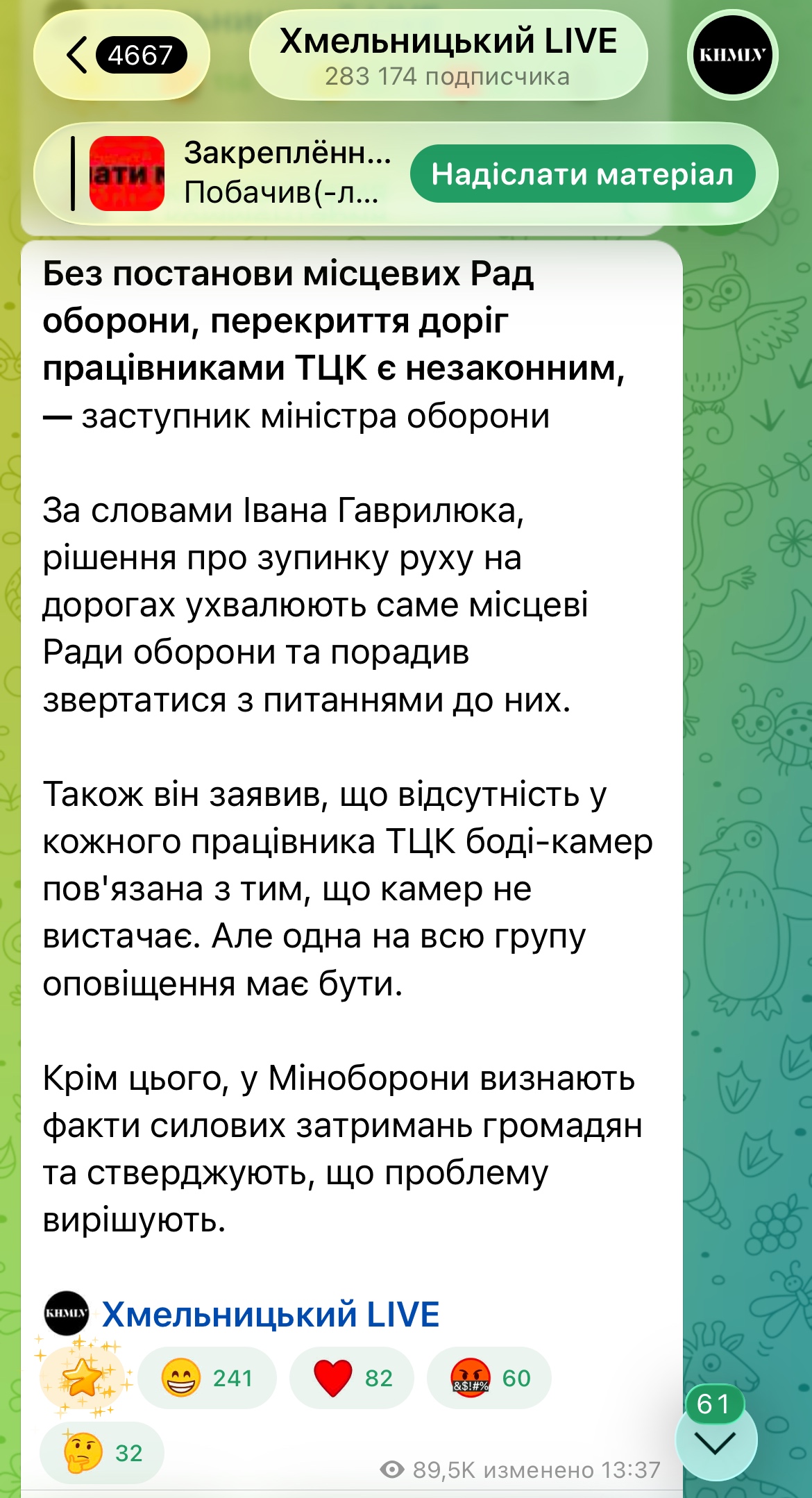
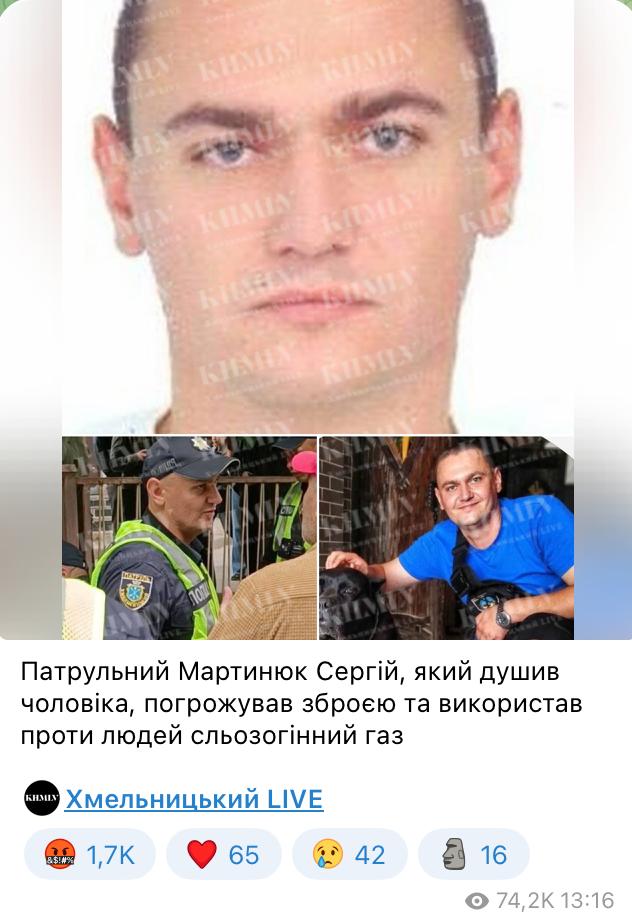
Moreover, the channel openly engages in doxing of law enforcement officers involved in mobilisation efforts – publishing the personal details of police officers and military personnel. The latest example is when the channel published the details of a patrol officer who detained a man in the city centre. It later transpired that the detainee was under a security alert and had resisted law enforcement officers, but this did not stop the channel’s administrators from publishing the information.
It is worth recalling that disrupting mobilisation is a criminal offence. And if the channel systematically stirs up this issue, the law enforcement agencies should not stand by and watch, but should give this the appropriate legal assessment.
Vinnytsia region: hype, fakes and lax accountability
In the Vinnytsia region, the largest audiences have been gathered not by traditional media, but by Telegram channels such as “Real Vinnytsia” and “Trukha Vinnytsia”. “Real Vinnytsia” is the local leader, which publishes not just sensationalist content, but constantly frightens its audience with fake news. One of the most famous examples is the story about the alleged “nuclear bombing of Vinnytsia”. Journalists in
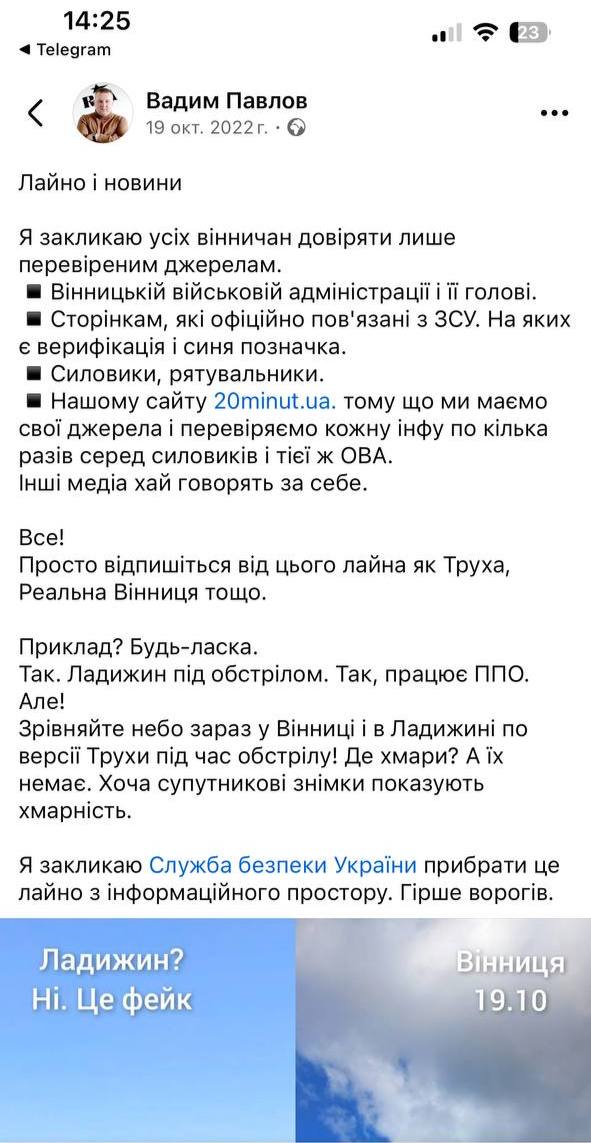
Vinnytsia also point out that information is often presented there without proper verification. Vadym Pavlov, editor-in-chief of “20 Minutes”, spoke openly about the use of the entire arsenal of tabloid journalism – from fake news to manipulative headlines.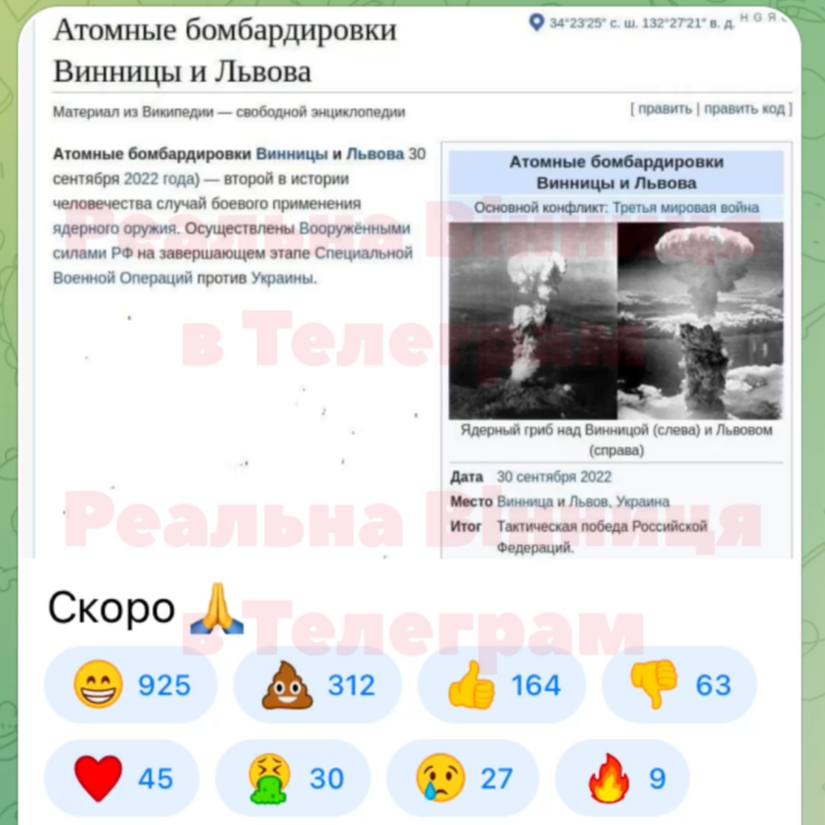
At the same time, the feed also contains useful information for the military and practical updates that go beyond mere scandals surrounding the TCC. However, unlike some other public pages, “Real Vinnytsia” at least does not openly state that it does not publish fundraising appeals, although there is plenty of advertising on the channel. In other words, the problem here lies more in the quality, verification and presentation of the content, rather than in such a demonstrative distancing from the topic of supporting the army.
It is telling that back in the summer of 2025, the Telegram channel “Trukha Ukraine” was fined 4.8 million hryvnias for violating the law on gambling advertising. And following this, in January and February 2026, the National Council on Television and Radio Broadcasting registered first the “Trukha Ukraine” channel itself, and then a further 31 channels in the network as online media.”
Ternopil region: unmarked advertising and political propaganda
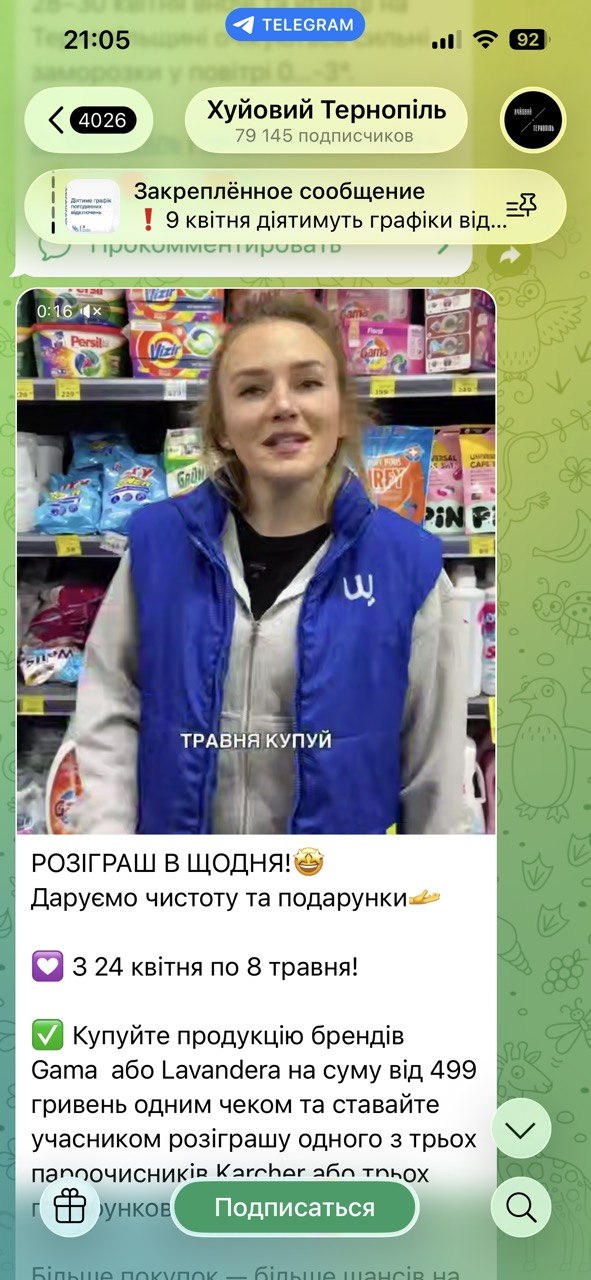
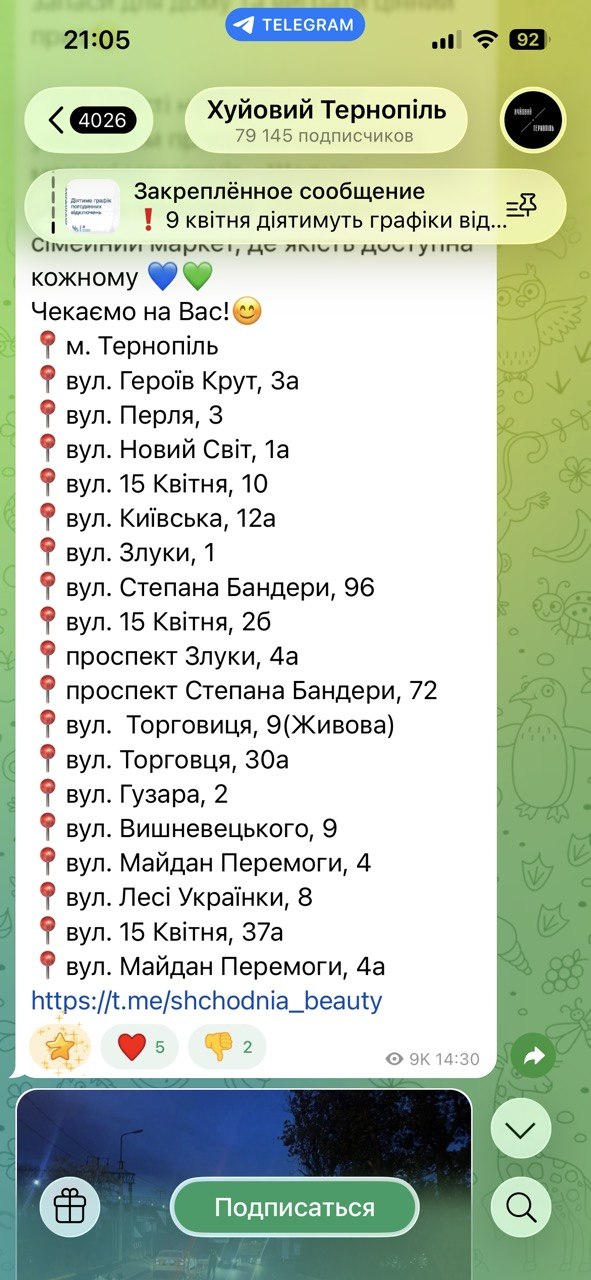
The Ternopil segment shows the other side of the same model. “Faynyy Ternopil” and “Kh*ovyy Ternopil” do not label their advertising.
In “Operative News of Ternopil”, we did not see any commercial propaganda or labelled advertising, but there is political propaganda here.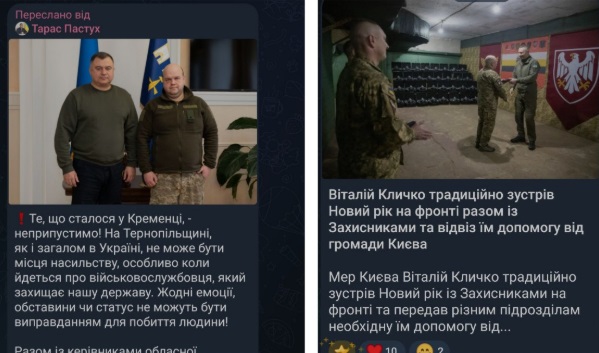
These are texts that create a positive image of politicians, officials, civil society organisations or charitable foundations, but do not provide information of public benefit. Instead, they contain emotional assessments, complimentary remarks and a showcase of “achievements”.
What do we have as a result?
All in all, a fairly clear picture emerges. Regional Telegram channels in Podillia often operate according to a single formula: anonymity, a weak heroic narrative, politically advantageous attacks and very vague accountability. In some cases, it’s heavy-handed political propaganda; in others, it’s alarming hype; in others still, it’s toxic mobilisation rhetoric. But the model itself remains almost unchanged.
And the main question here is no longer whether it is permissible to write about the war, the government or mobilisation. The question is this: does the channel have a clear entity to hold accountable? Is there anyone to complain to if advertising is disguised as news, if fake news is peddled, if conflict is presented as the norm? When a channel influences the moods of tens of thousands of people, yet hides its owners, sells adverts as it pleases, stokes fear and attacks key institutions, this is no longer a matter of taste. It is a matter of public accountability.
As reported by ThePublic, Zheleznyak announced that the owners of anonymous Telegram channels had been booked by the SBU.
Follow us on Telegram