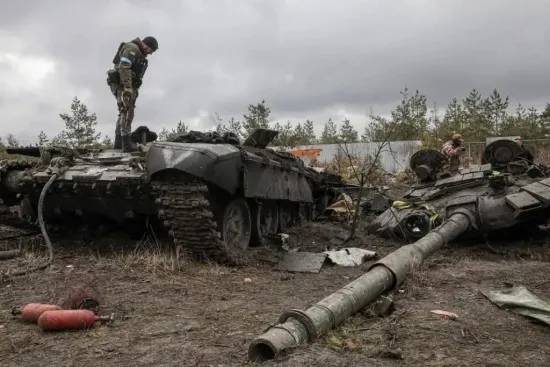
The blockade of the Sea of Azov has reduced Russian wheat exports to their lowest level in nearly ten years

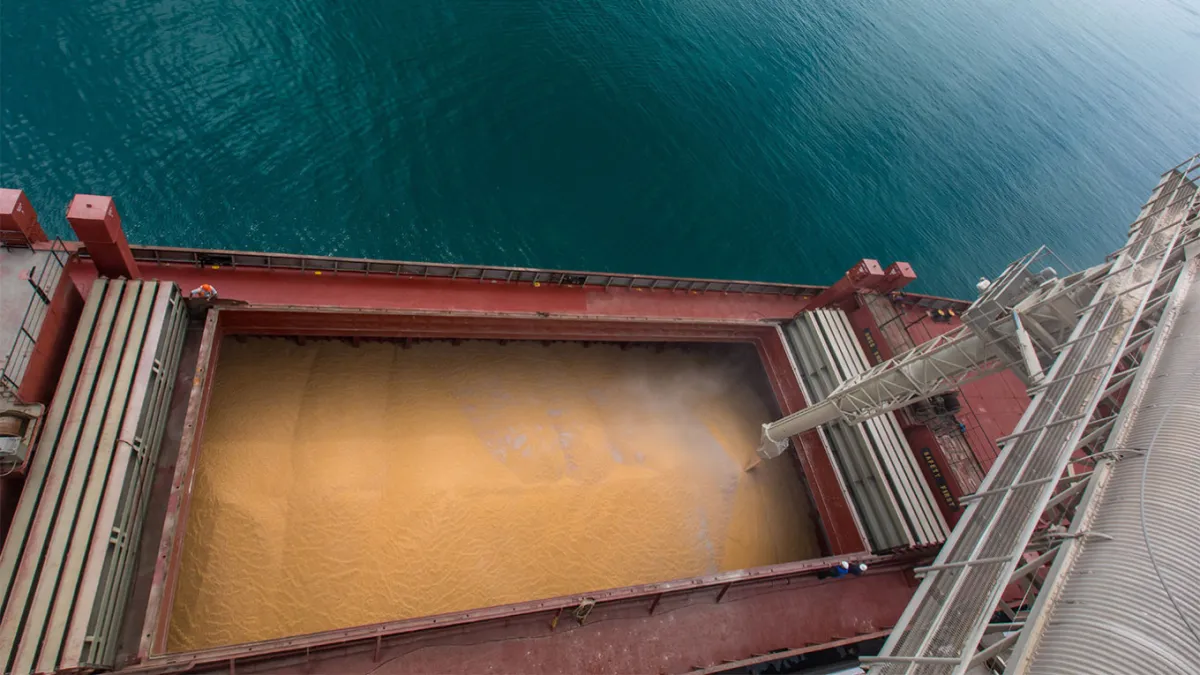
The blockade of shipping in the Sea of Azov and restrictions on passage through the Kerch Strait have had a significant impact on Russian grain exports. According to a forecast by the analytical firm SovEcon, Russia is set to export around 1.5 million tonnes of wheat in July. This is a third less than in the same period last year, when 2.1 million tonnes were exported, and almost half the average for the last five years, which stood at 3.1 million tonnes.
Analysts estimate that July’s export volume will be the lowest since 2017 and will effectively return to levels seen a decade ago. Andriy Sizov, CEO of SovEcon, explained that the main reason for this decline was the restrictions on navigation through the Kerch Strait.
On 11 July, following drone attacks in the Sea of Azov area – during which, according to reports, more than 100 vessels were targeted – the Russian authorities suspended the acceptance of applications to pass through the Kerch Strait. According to SovEcon’s estimates, up to 25 per cent of Russia’s total exports of grain and sunflower oil are at risk, as this is the volume that passes through the shallow-water ports located beyond the Kerch Strait. Trade with the Middle East and Turkey – which remains one of the largest buyers of Russian grain – is conducted via these ports. Exports are further affected by weak demand from Egypt and Turkish importers.
Due to the situation in the Kerch Strait, grain exports via the Don have come to a complete halt, industry sources told the publication ‘Gorod N’. In the previous agricultural season, 14.7 million tonnes of grain and grain products were exported via this route, accounting for 27 per cent of Russia’s total grain exports.
Alexander Yaroshenko, president of the Ural Don holding company, stated that all port silos on the Don are full. According to him, grain procurement has effectively ceased, new consignments are not being accepted, and agreed export contracts are falling through due to the inability to ship the produce.
Yaroshenko also noted that this is precisely when the peak trading period should have begun, when farmers receive payment for their harvest and can invest it in the new production cycle. At the same time, he said, it is currently impossible to sell the grain.
It is practically impossible to redirect exports to Black Sea ports, in particular Novorossiysk or Tuapse. According to Yaroshenko, these ports are physically incapable of handling the entire volume of grain exported from southern Russia, and the railway infrastructure is not designed to cope with such volumes.
A grain trader speaking to ‘Gorod N’ noted that the approaches to the ports of Novorossiysk and Tuapse would be unable to accommodate the additional flow of wagons, which could lead to prolonged congestion. Furthermore, the Black Sea ports are not equipped to handle the export of value-added products, pulses and durum wheat.
According to the trader, the closure of the Azov-Donetsk basin could lead to the halting of certain export segments, the spoilage of high-value products, idle processing plants and port infrastructure in the Volga-Azov-Don basin, as well as creating serious economic problems for a number of Russian regions.