Three signs that could indicate the start of a world war

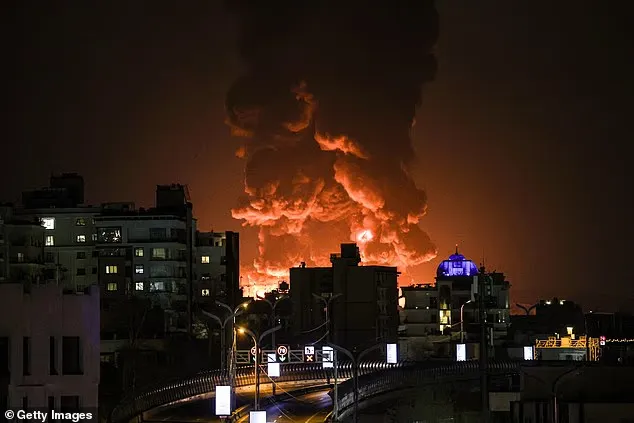
Anthony Glees, honorary professor at the University of Buckingham, said there are three signs that could indicate the start of a world war.
According to him, the first sign is the start of a war based on a political decision rather than a need for defence. Glees called the decision by the US and Israel to attack Iran a "war of choice" and noted that similar decisions in the past preceded two world wars.
The historian also stated that, in his opinion, the conflict in the Middle East was not initiated for reasons of self-defence, but as a political decision by leaders seeking to retain power.
He cited a second sign: an approach to international politics that can be described as "might makes right." According to Glis, such views have been demonstrated in the past by regimes that started wars against neighbouring states.
The historian cited the willingness to continue hostilities instead of seeking a quick end to the conflict as the third sign.
At the same time, US President Donald Trump has repeatedly stated that the military campaign against the Islamic Revolutionary Guard Corps is over. He also spoke about the possibility of ending the operation, but stressed that negotiations could only take place after Iran's unconditional surrender.
Glees noted that his criteria for the start of a global conflict can also be applied to Russia's war against Ukraine.
He recalled that on 24 February 2022, Russia launched a full-scale invasion of Ukraine. According to him, this decision was not related to the need for defence, but was part of a policy of expanding influence.
Russia violated Ukraine's sovereignty, international borders and international agreements, explaining its actions with statements about fighting the so-called "neo-Nazi regime."
According to Glys, the conflict has been going on for several years and has been accompanied by negotiations involving the United States and other countries.
He also compared the current situation to the events of World War II, noting that it became global after Japan's attack on Pearl Harbor in 1941 and Germany's subsequent declaration of war on the United States.
The historian also drew attention to the growing tensions surrounding the conflict with Iran. According to reports, Russia may have begun sharing military intelligence on the positions of American forces with Iran.
Russia and China, which have partnerships with Iran, have publicly condemned the US and Israeli strikes and said that this could lead to a further escalation of the conflict in the region.
Commenting on the situation, US President Donald Trump said that American forces had made significant progress in accomplishing their objectives.
"I think the war is practically over. They have no fleet, no communications, no air force... I already have the end of this operation in mind," he said in an interview with CBS News.