Turkey is promoting the Middle Corridor as an alternative to the Strait of Hormuz

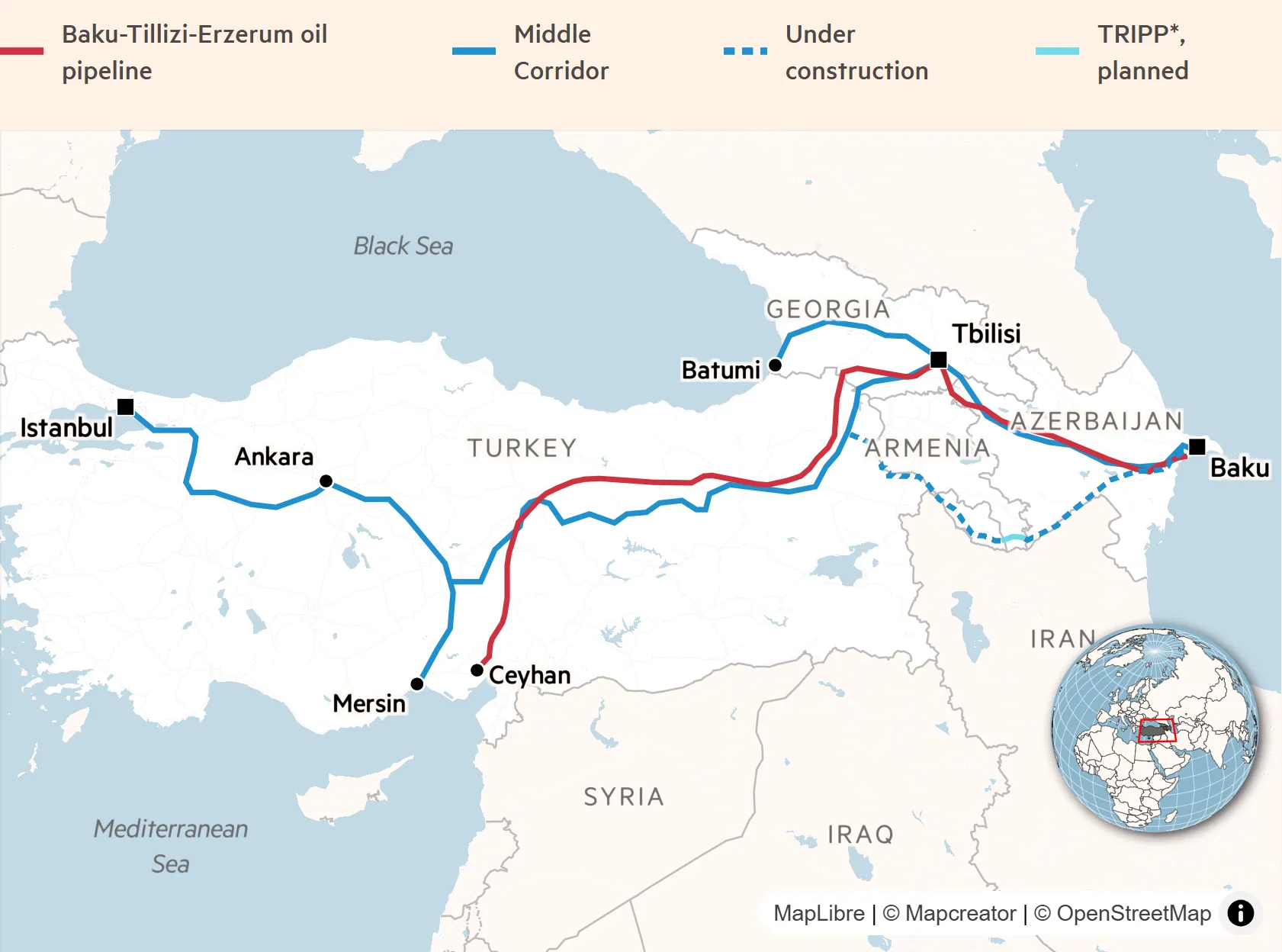
Turkey has stepped up its promotion of the so-called Middle Corridor as an alternative trade route between Europe and Asia. One of the key elements of this strategy is the potential opening of the Aligjan border crossing on the border with Armenia, which has been closed for 32 years, reports the FT.
At the start of the year, Turkish officials began installing passport processing systems at the border. This could pave the way for the launch of a new transport route linking Asia with Europe.
The project has been named the Trump Route for International Peace and Prosperity. It is supported in the US as part of peace plans between Armenia and Azerbaijan.
The opening of the border is seen as part of Ankara’s broader strategy aimed at strengthening the country’s role as a trade and energy hub. The aim is to redirect flows of goods and energy resources around geopolitical bottlenecks, notably the Strait of Hormuz.
Turkish officials note that the timing of the border opening remains uncertain for now, but it is expected to happen in the near future.
After Iran raised the issue of a possible closure of the Strait of Hormuz in June, Turkey stepped up the promotion of its logistics routes as a stable alternative. These efforts have intensified against a backdrop of conflicts and sanctions that have complicated transit through Russia, Iran, the Red Sea and the Persian Gulf.
President Recep Tayyip Erdoğan stated that Turkey serves as a stable territory and a secure transit route. He also noted that discussions on alternative routes for energy supplies have already begun.
The Middle Corridor involves land transport between China and Europe via the Caucasus and Turkey. According to former Prime Minister Binali Yıldırım, transport via this route can take between 12 and 15 days, whereas sea transport takes around 40 days.
Despite this, current transport volumes remain low, although the potential for growth is considered significant.
European officials have also expressed interest in developing alternative routes. European Commissioner Marta Kos described Turkey as an important partner and characterised the expansion of the Middle Corridor as a potential game-changer.
Among Ankara’s key infrastructure initiatives is the Development Road project, which envisages the creation of a road-rail network between the Persian Gulf and Europe via Turkish territory. However, it is currently at the planning stage and requires significant investment.
Another project is the expansion of the Middle Corridor, the central element of which is to be the TRIPP route between Turkey and Azerbaijan via Armenia. It was presented at the White House alongside a preliminary peace agreement between Armenia and Azerbaijan.
The implementation of this route depends on the conclusion of a final peace agreement. Turkey has stated its readiness to open the border once it is signed.
It is estimated that freight volumes via the Middle Corridor could rise from 5 million tonnes per year to 20 million tonnes. At the same time, there are technical and logistical challenges, including crossings across the Caspian Sea, differing standards of railway infrastructure and complex customs procedures.
The route also passes close to Iran, which creates additional risks. Russia has expressed concern over a possible shift in trade flows in the region.
Despite this, Turkey’s geographical location ensures its role as a key logistics hub between Europe, Asia and the Middle East.
Experts note that land routes through Turkey cannot yet quickly replace sea transport or the northern corridor through Russia.