The Royal Navy`s first fully autonomous military helicopter took off in Britain

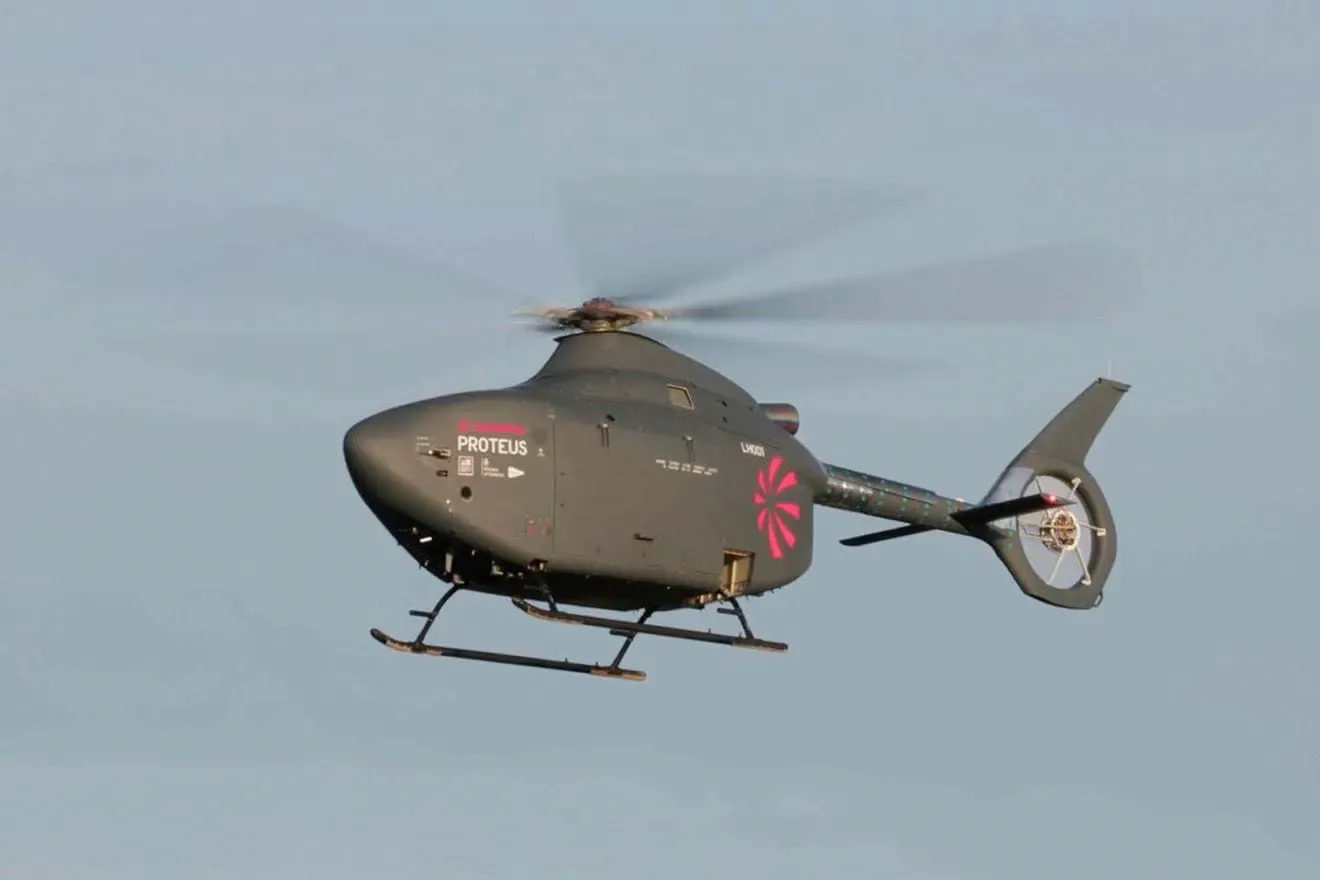
The United Kingdom has written a new page in its aviation history. On Friday, 16 January, the first flight of the full-scale autonomous Proteus helicopter, created as a technology demonstrator for the Royal Navy, took place at Prendennack Airfield in Cornwall, according to the Royal Navy.
The helicopter was designed and built by Leonardo. The project aims to unlock the potential of unmanned aerial systems and prepare them to work alongside manned aircraft as part of a future hybrid air wing. In the future, Proteus is seen as a key element of anti-submarine operations in the North Atlantic as part of the Atlantic Bastion strategy.
The first flight took place just a few weeks after the completion of a full cycle of ground tests at Leonardo's site in Yeovil. There, specialists checked the operation of engines, sensors and on-board systems. Representatives of the company, the Royal Navy and British defence innovation structures watched the historic take-off.
Proteus has become the largest and most complex autonomous aircraft in the fleet. For comparison, the Royal Navy already uses Malloy drones and Peregrine helicopters for reconnaissance, but the new aircraft significantly surpasses them in size, autonomy and technical complexity.
The demonstrator was created as part of a £60 million programme that employs around 100 highly skilled specialists in the UK. There is no crew in the Proteus cockpit. Its functions are performed by sensors and computer systems with software capable of analysing the environment, making decisions and acting independently.
Source and photo: Royal Navy.