Almost 3,000 people evacuated in the Philippines due to the activation of Mayon volcano

Philippine authorities have evacuated almost 3,000 people from the foot of Mayon Volcano after raising the alarm level due to the increase in volcanic activity. This was reported by the local civil protection services, the Independent reports.
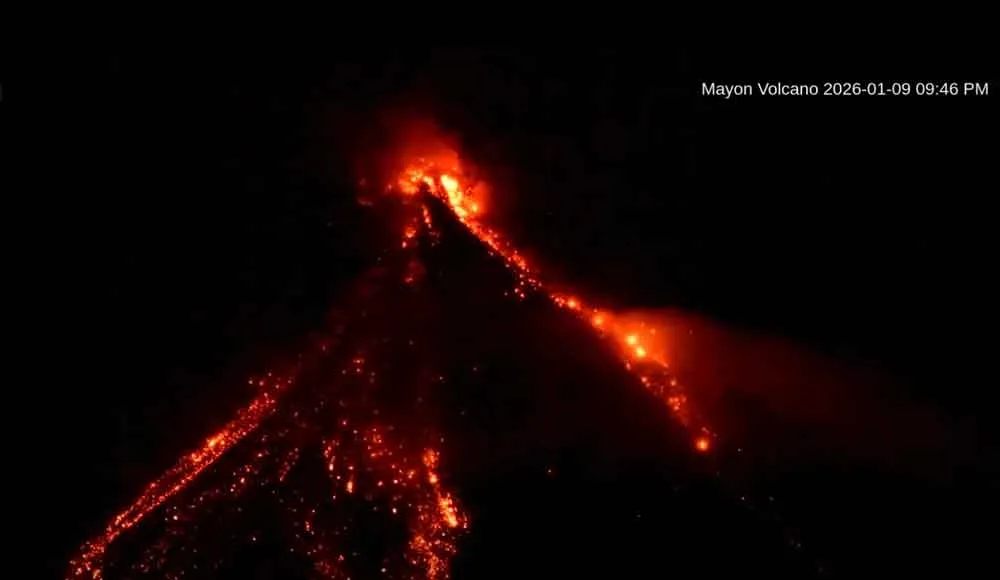
The danger level for the volcano in Albay province was raised to the third on a five-point scale on Tuesday. Experts have recorded a series of weak eruptions, rock falls from the crater and pyroclastic flows of superheated ash, gas and stones. According to the country's chief volcanologist, Teresito Bacolcola, lava is accumulating at the top, leading to cracking of the lava dome and repeated rockfalls. Some of the debris was the size of a car.
According to official figures, the military, police and rescue workers have evacuated more than 2,800 people from 729 households within the six-kilometre permanent danger zone around the crater. Another 600 people who lived outside the area left their homes voluntarily and were accommodated in government evacuation centres.
Experts note that the current activity is already considered an eruption, albeit a relatively calm one. At the same time, experts have not yet recorded a sharp increase in volcanic earthquakes or high sulphur dioxide emissions, which could indicate an imminent powerful explosive eruption. A level five alert would indicate a large-scale explosion with heavy ash and debris emissions.
Mayon, at 2,462 metres high, is the most active of the country's 24 active volcanoes and one of the Philippines' main tourist attractions due to its almost perfect conical shape. At the same time, 54 eruptions have been recorded here since 1616. One of the most tragic was the eruption of 1814, when volcanic flows buried the city of Cagsawa and killed about 1200 people.
The Philippines is located in the Pacific Ring of Fire and is hit by about 20 typhoons and storms every year. Thousands of people are forced to live in hazardous areas near volcanoes, on landslide-prone slopes and in low-lying areas, making evacuations due to natural disasters a regular occurrence.
Photo: Volcanodiscovery