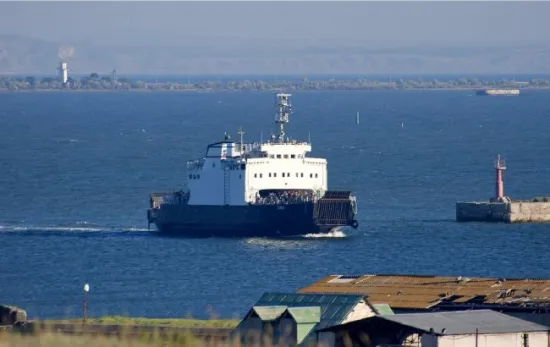
Ships attacked in the Strait of Hormuz: threat of blockade of key global oil route

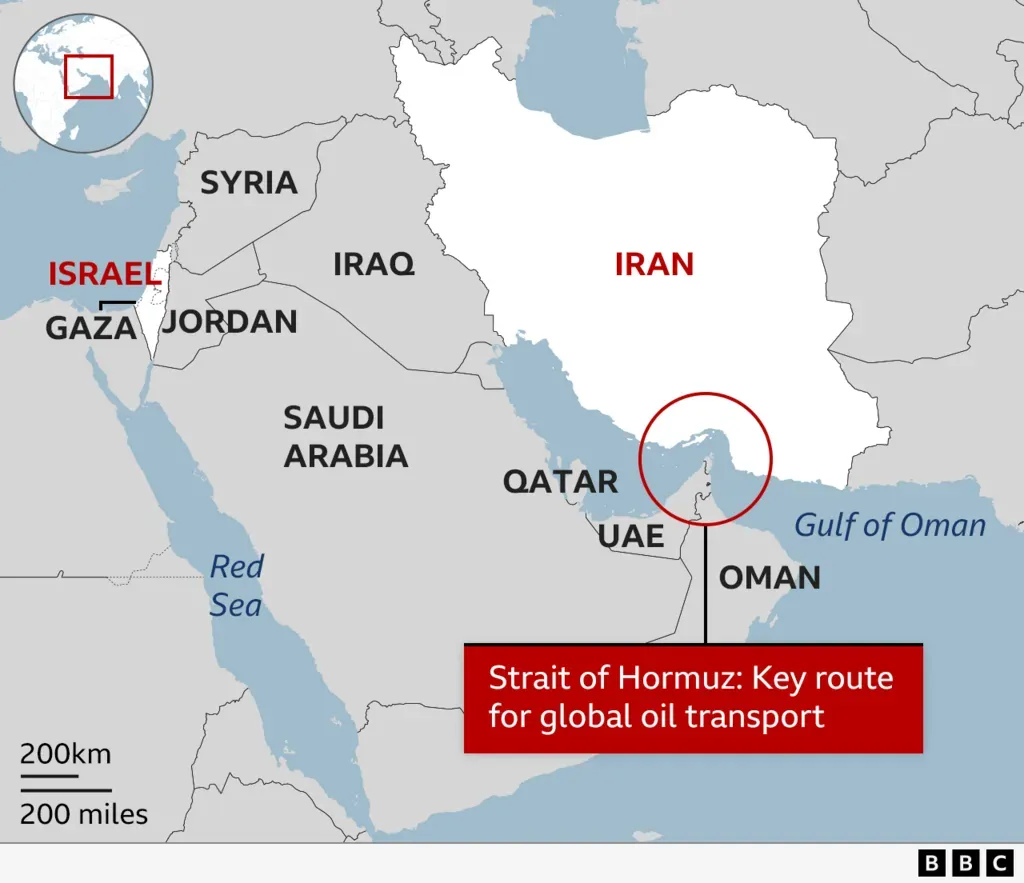
Several ships have been attacked in the strategic Strait of Hormuz, through which about 20% of the world's oil supplies pass, according to the BBC.
According to the British UK Maritime Trade Operations (UKMTO) service, three ships were hit by unknown projectiles. One of the commercial ships was damaged off the coast of the United Arab Emirates, the second ship had to be evacuated after a fire north of Oman, and the third was damaged in an unknown location.
At the same time, the US military said it had destroyed 16 Iranian ships that could have been used to lay sea mines in the strait.
Due to the escalation of the situation, maritime traffic in the area has significantly decreased, and global oil prices have risen sharply. Iran had previously stated that it could attack ships attempting to pass through the strait.
The Strait of Hormuz is one of the most important transport corridors in the world. It connects the Persian Gulf with the Arabian Sea and lies between Iran in the north and Oman and the United Arab Emirates in the south.
According to estimates by the US Energy Information Administration (EIA), in 2025, approximately 20 million barrels of oil were transported daily through this route, and the total volume of energy trade amounted to nearly $600 billion per year.
Asian countries, particularly China, India and Japan, which import significant volumes of oil through this strait, could be most affected by a possible blockade of the route.
Analysts note that even without a complete blockade, the threat of attacks makes shipping dangerous. This increases the cost of insurance and oil transportation. According to the London Stock Exchange Group, the cost of chartering a supertanker to transport oil from the Middle East to China has already exceeded $400,000, which is almost twice as much as a week ago.
Against the backdrop of the conflict, oil prices temporarily exceeded $100 per barrel, although they later fell to around $90, which is still significantly higher than before the escalation.
Experts also warn that even if alternative oil transportation routes are used, global supplies could be reduced by 8-10 million barrels per day.