The Rada is preparing restrictions for SZCh and evaders: what Ivchenko said

This was stated in an interview with Telegraf by Vadym Ivchenko, a member of parliament from the Batkivshchyna faction and a member of the Committee on National Security, Defence and Intelligence.
Main text
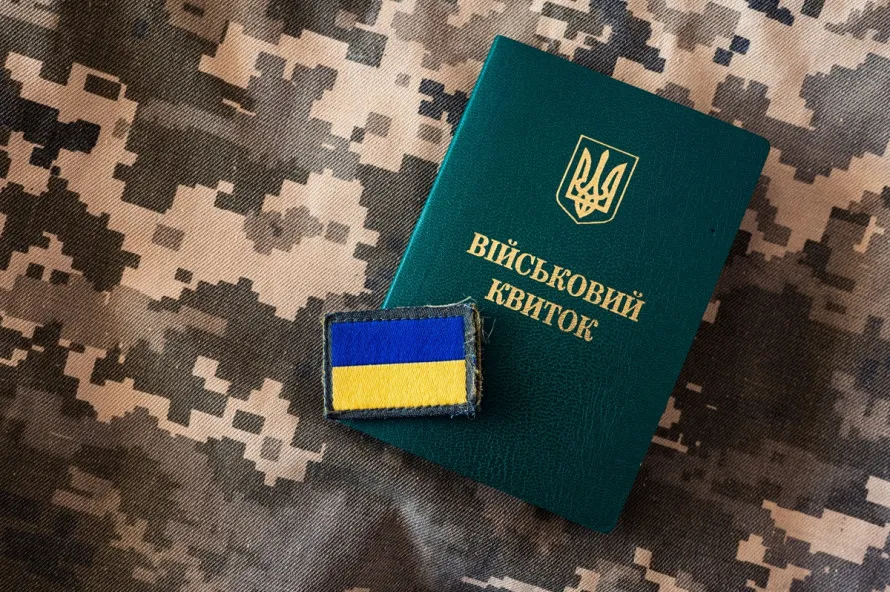
People's Deputy Vadym Ivchenko stated that the Verkhovna Rada is preparing new approaches to accountability for military personnel who have left their units without permission, as well as for those who evade mobilisation.
According to him, some drafts already exist, but they have not yet been registered.
Ivchenko explained that, according to the version he had seen, military personnel in the SZCH would be treated in the same way as persons who do not pay alimony.
This involves imposing restrictions on them in the banking sector, notarial actions, obtaining administrative services, access to loans and driving vehicles.
According to the MP, the same approach is planned for those who violate military registration rules.
He clarified that this could apply to individuals who have not updated their data, do not appear when summoned, have not registered with "Reserve+" and otherwise evade military registration requirements.
Ivchenko stressed that these initiatives are still at the draft stage.
According to him, they must be registered by the Ministry of Defence or the General Staff.
Only after official registration will it be possible to discuss the timing of their consideration in parliament.
The deputy also stated that the problem of mobilisation cannot be solved solely by increasing penalties.
In his opinion, the approach should be comprehensive and combine recruitment, motivational mechanisms, work to reduce the number of draft evaders, and international recruitment.
Ivchenko believes that one of the directions should be to attract foreign professional military personnel.
According to him, there are special recruitment centres around the world through which ready-made specialists can be recruited for specific tasks, from drivers and snipers to security guards and miners.
He noted that this does not only apply to Colombians or representatives of any one country.
According to him, such centres can recruit people with different experiences and from different regions of the world.
Ivchenko stressed that Ukraine needs trained professional soldiers, not random volunteers who still need to be trained.
He also stated that even the arrival of 10,000 trained fighters could already be of significant help.
According to the MP, financially, this approach is comparable to the current cost of training one Ukrainian soldier.
According to him, training one soldier at a training centre costs approximately $5,000.
The same amount, according to the MP's logic, could be spent on a foreign soldier who is already trained.
Separately, Ivchenko touched on the issue of motivation for Ukrainians.
He recalled the Ministry of Defence's proposals for additional financial incentives for those who sign a contract.
According to him, this would amount to one million hryvnia per year of service, as well as an additional 40-50 thousand hryvnia per month.
He also emphasised the need for systematic recruitment work.
According to the MP, recruitment currently provides approximately 8-10% of people to the army.
He believes that this figure needs to be at least doubled to 16-20%.
Ivchenko gave examples of possible contract positions, including UAV operators, BMP drivers, or specialists who speak a foreign language and can work with NASAMS, ATACMS, or Patriot systems.
Separately, the deputy stated that better communication within the Armed Forces of Ukraine is needed to reduce cases of desertion.
According to him, people need to understand that they will not be sent to the front line without 50 days of training at a training centre.
He called this an axiom.
Speaking about forced mobilisation, Ivchenko said that they mainly "busify" those who are already wanted.
According to him, if the TCC knows that a person is wanted and has not appeared, then there is no need to additionally demand that they show their documents.
At the same time, the deputy acknowledged that there are cases when people are first detained, then their documents are checked, and then those who have a deferral, are caring for a child or are studying are released.
Ivchenko also said that the TCC proposed using body cameras to record communications with people and show the full picture of such situations.
According to him, the law already gives various authorities the duty to help with mobilisation.
He added that village elders, village heads and other local authorities should also be involved in this.
Commenting on the topic of a contract army, the deputy stated that if such a model is adopted, there must be clear terms of service.
According to him, all one million people in the Armed Forces could theoretically sign a contract if there was sufficient motivation.
Ivchenko spoke about the idea that for each year of service, a soldier could receive a million hryvnias, as well as a social package and other incentives.
However, he said that the implementation of such a model directly depends on the availability of funds.
He linked this, in particular, to the problem of the blocking of €90 billion in aid from the EU and the risk that Ukraine may not receive this money by 1 April.
Speaking about the international situation, Ivchenko said that the war between the US, Israel and Iran has shifted the focus of partners and could negatively affect Ukraine.
According to him, the US remains the main supplier of air defence systems to Ukraine, with 70% of various types of missiles coming from the US.
He believes that the escalation in the Middle East is detrimental to both the negotiation process on Ukraine and the overall support of partners.
The MP also expressed the opinion that Russia, against the backdrop of events in the Middle East, may change its negotiating position to a more aggressive and radical one.
Among the reasons, he cited rising oil prices, which are beneficial to Moscow, as well as China's temporary increase in energy dependence on Russia.
In his opinion, this means that China may actively support Russia economically and politically.
In this regard, Ivchenko advises preparing for the worst-case scenario.
He believes that such a scenario would involve the continuation of the war and the radicalisation of Russia's demands in the negotiations.
According to him, this could mean not only the Donbas issue, but also pressure from other countries for security guarantees and a reduction in the size of the Ukrainian army.
The MP also touched on the situation within parliament.
He supported Yulia Tymoshenko's position on the need for broader unification of political forces during the war.
According to him, there are parliamentary forces in Ukraine that are not involved in the processes, although they could be useful.
Ivchenko believes that a government made up of strong people who would strengthen certain areas, particularly the military, could gain the support of the entire parliament. He added that the issue of the lack of political will for such a decision should be addressed to the president.