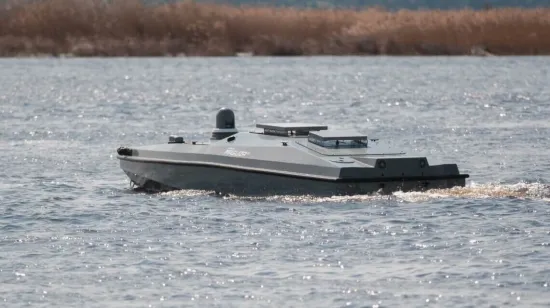
Ukraine has increased its military spending to a record high in 2025

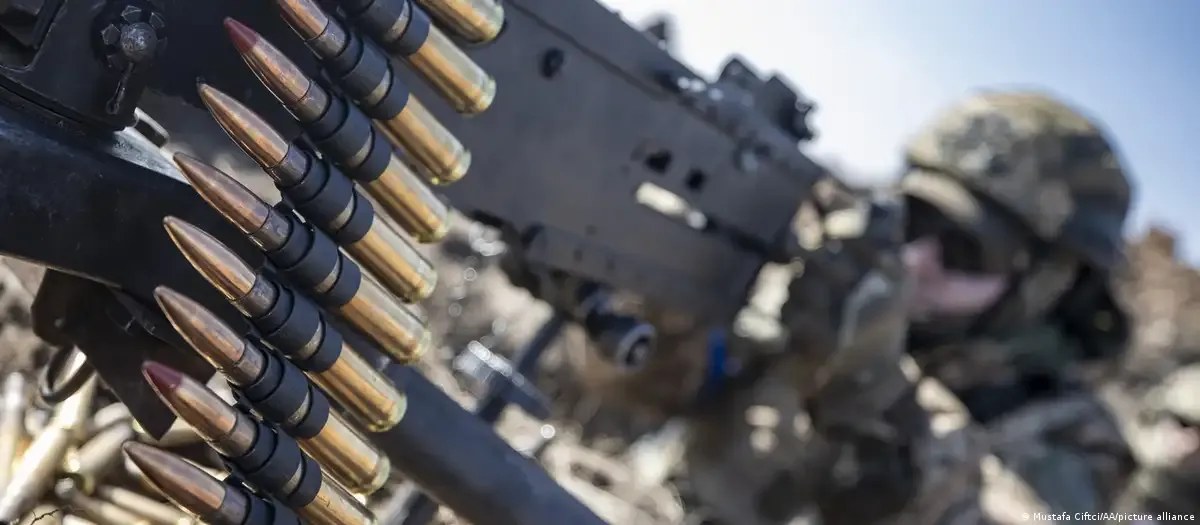
In 2025, Ukraine increased its military spending by 20 per cent, spending $84.1 billion on defence. According to this figure, the country ranked seventh in the world, according to a report by the Stockholm International Peace Research Institute (SIPRI) published on 27 April.
Ukraine’s military spending last year accounted for 40 per cent of gross domestic product and 63 per cent of government expenditure. The report notes that this figure was the highest on record for both Ukraine and Russia. SIPRI suggests that spending may continue to rise in 2026 should the war persist.
According to the institute’s estimates, Russia increased its military spending by 5.9 per cent to $190 billion in 2025, accounting for 7.5 per cent of its GDP. The country remained in third place globally behind the US, which spent $954 billion, and China, with $336 billion. At the same time, the growth rate of Russian spending was the lowest since 2022. Defence spending as a share of the Russian Federation’s budget reached 20 per cent, which is also a record.
In 2025, Germany became the leader among European NATO countries in terms of military spending and ranked fourth in the world. Berlin increased its spending by 24 per cent to $114 billion. For the first time since 1990, the share of defence spending exceeded two per cent of GDP, standing at 2.3 per cent. The government plans to raise this figure to 3.5 per cent by 2029.
To finance these expenditures, Germany has expanded the use of extra-budgetary mechanisms. In particular, the approach to applying public debt limits was revised, allowing part of defence spending to be financed through borrowing.
Globally, military expenditure reached $2.88 trillion in 2025. This marked the eleventh consecutive year of growth and the highest level since 2009. Expenditure accounted for 2.5 per cent of global GDP. At the same time, growth rates were lower than in 2024 due to a reduction in US spending. Excluding the United States, global expenditure rose by 9.2 per cent.
“Global military spending rose again in 2025 as states responded to another year of wars, uncertainty and geopolitical upheaval with large-scale armament programmes. Given the range of current crises, as well as the long-term military spending goals of many states, this growth is likely to continue in 2026 and beyond,” noted the report’s co-author, SIPRI research fellow Xiao Liang.