The war with Iran has halted the delivery of parcels to US troops in the Middle East

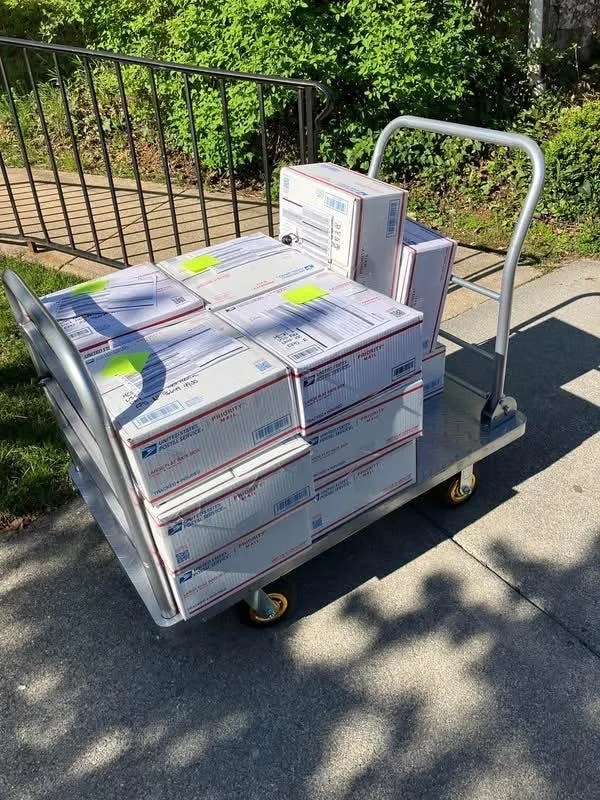
Relatives of US servicemen began sending parcels containing food and essential items following reports of food shortages on ships deployed in the conflict with Iran. The parcels contained sweets, toiletries, books, games and clothing, according to USA Today.
However, the delivery of mail to military postcodes in the Middle East has been suspended indefinitely since early April. Parcels already in transit are being held at post offices or military facilities until the service resumes.
The Pentagon and the Navy have denied reports of food shortages. Defence Secretary Pete Hagset stated that the USS Abraham Lincoln and USS Tripoli have food supplies for more than 30 days.
Postal deliveries have been temporarily suspended to 27 military postcodes following the start of US and Israeli strikes on Iran. According to Army spokesperson Travis Shaw, this is due to the closure of airspace and other logistical constraints. The resumption of services depends on a decision by the civil authorities to reopen airspace and an assessment of transport safety.
Parcels are not being returned to senders; they are being held until delivery becomes possible.
Servicemen and their families are reporting difficulties. They say that food supplies on the ships are limited, there are no fresh vegetables, and some resources have to be rationed. Some parcels containing food and essential items were sent almost a month ago but have still not reached their recipients.
The USS Tripoli has been at sea for over a month and, together with a crew of around 3,500 military personnel, is involved in tasks related to the blockade of ships leaving Iranian ports. Other ships have been at sea for considerably longer. In particular, on 15 April, the USS Gerald Ford set a record for the longest deployment of any aircraft carrier since the Cold War, having spent 295 days at sea.
Experts note that delays in postal deliveries during military conflicts are a common occurrence. According to postal service representatives, such disruptions have occurred in all US wars due to disruptions in logistics and transport routes.
Meanwhile, some parcels remain at senders’ homes or in warehouses, awaiting the resumption of deliveries. Some senders report that they were unable to even post their items due to restrictions on military addresses in the region.