Vladimir Putin — the man who destroyed Russia

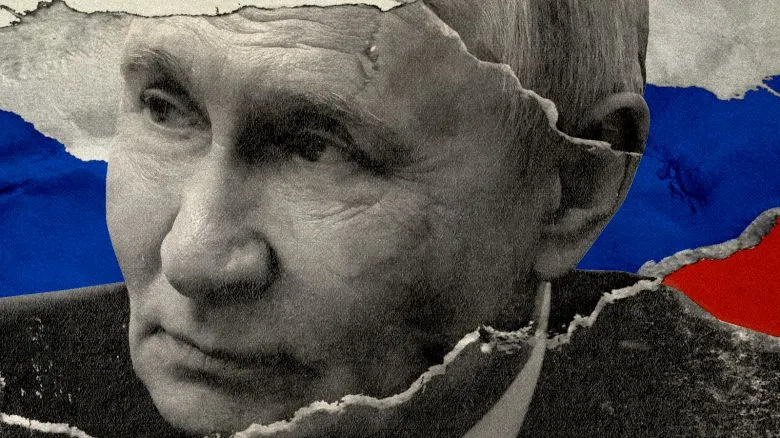
The American publication *The Wall Street Journal* has published an article discussing the consequences of the war against Ukraine for Russia and Russian President Vladimir Putin.
The author notes that for a long time, Putin has successfully exploited the weakness of Western leaders and strengthened Russia’s influence. Examples cited include the war against Georgia in 2008, the annexation of Crimea and parts of Donbas in 2014, and the strengthening of Russia’s presence in the Middle East.
The article also mentions support for Alexander Lukashenko’s regime in Belarus and the weakening of French influence in parts of Africa.
Putin’s decision to launch a full-scale war against Ukraine was a mistake. The Russian leadership underestimated the Ukrainians’ willingness to resist, whilst Ukrainian President Volodymyr Zelenskyy managed to preserve the country’s unity and secure international support.
Even if the Russian army were to achieve further successes, the war has already inflicted significant damage on Russia due to heavy resource losses and the prolonged strain on the economy.
There is also a decline in Russian influence in Europe and the post-Soviet space. Viktor Orbán lost the election in Hungary, whilst Armenia and Azerbaijan are cooperating more actively with the West.
Furthermore, some Central Asian countries are developing economic ties with China and supporting energy supply routes that bypass Russia.
In the Middle East, Russia has been unable to exert any significant influence on the conflict between the US and Iran, whilst Syrian President Bashar al-Assad has lost power.
The Wall Street Journal also reports on Russia’s problems in Africa, notably its military setbacks in Mali and the deterioration of relations with local governments.
The crisis has also affected the demographic situation in Russia, with hundreds of thousands of men of conscription age having died in the war or left the country, including members of the educated classes.
These developments could create a crisis for the Russian Federation similar to the one that arose after the collapse of the USSR.
Russia currently borders a ‘deeply alienated Europe’, whilst in the east it faces the growing influence of China.
Reports of heightened security measures around Putin and his staying in underground bunkers seem plausible, but Putin should not be underestimated, as he has repeatedly demonstrated his ability to take risky decisions and retain power.