Keiko Fujimori has won the Peruvian presidential election by a narrow margin
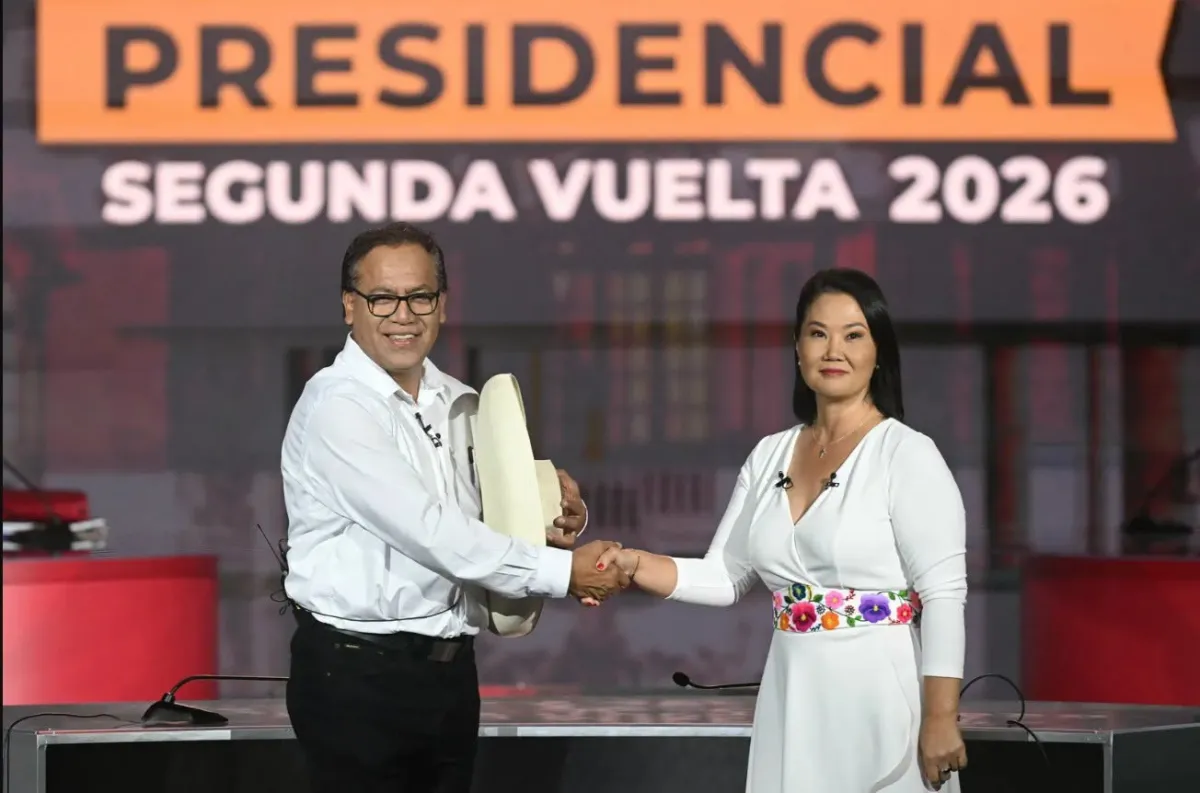
Keiko Fujimori won the second round of the presidential election in Peru, beating Roberto Sánchez, the candidate for the ‘Together for Peru’ party, by fewer than 50,000 votes. The campaign took place against a backdrop of a deep political crisis, high crime rates and acute social polarisation.
What have you heard about the recent presidential election in Peru? For many experts, their impression of elections in Latin America was shaped by watching the cult film *Crisis Is Our Brand*, starring the stunning Sandra Bullock. The film is unbeatable.
The pre-election campaign in Peru unfolded much like the plot of this real-life film, with the country electing Keiko Fujimori as president last month by a narrow margin of 50,000 votes. She won in the second round, securing 50.13 per cent of the vote against the left-wing candidate, Roberto Sánchez, leader of the “Together for Peru” party, who received 49.87 per cent. Meanwhile, 1.28 million ballot papers were declared invalid or spoiled, and 7.6 million voters did not vote for any candidate.
Ballot papers in Peru’s presidential election have their own specific way of being filled in, which often surprises foreigners. You do not need to tick a box or shade in a circle, as is customary in many countries. Instead, you must draw a cross inside the square containing your chosen candidate. In Peruvian electoral law, this mark is known as a ‘cruz o aspa’.
Interestingly, one of the first to congratulate Fujimori on his victory was the Belarusian leader, Alexander Lukashenko. Many interpreted this gesture as a hint at the possibility of Nikolai Lukashenko leading Belarus in the future.
A dynastic restoration – that is how one might describe Keiko Fujimori’s success in what was a truly gripping campaign. Peru has long been in a state of deep political chaos, fuelled by the never-ending struggle between presidents and Congress, impeachments and attempted coups, corruption scandals and resignations. Over the past 10 years, the country has seen nine presidents come and go.
The election campaign served to highlight and bring into sharp relief several electoral divides: the political establishment versus the anti-establishment, the coast and the Andes, the capital Lima versus the provinces, security versus social justice, the legacy of Alberto Fujimori versus that of Pedro Castillo.
And it is against this backdrop that the political star of Keiko Fujimori is rising – the daughter of the Peruvian dictator Alberto Fujimori, who in the 1990s became the country’s first lady at the age of 19, replacing her mother. At the time, the election campaign of Fujimori – an engineer and university rector – was built around the image of an ordinary person with no ties to the political class. Public demand had shifted from the issue of democratic freedom towards public security and restoring order. Ultimately, the country paid the price with authoritarianism and repression.
Similarly now, in 2026, the country has been overwhelmed by a new security challenge – rampant crime. In fact, it was precisely this issue that Fujimori focused his campaign on. 27 per cent of the country’s population had fallen victim to at least one crime – theft, robbery, fraud, extortion and so on. Gangs are attacking schools, small businesses and transport workers, killing those who refuse to pay protection money. Between 2019 and 2024, the murder rate rose by 200 per cent. That is why Fujimori and other candidates have made organised crime a key part of their campaigns.
Keiko’s main electoral problem is her negative image – not even her own, but that of her father. There is little point in recounting Alberto Fujimori’s policies, but he will remain in the memory of Peruvians as a symbol of order, the saviour of the country from economic collapse and the terror of the ‘Shining Path’ group. This is despite the death squads, the programme of forced sterilisation of women, corruption and mass killings. He would subsequently spend around 16 years in prison for his crimes.
Keiko Fujimori is currently the leader of the ‘People’s Force’ party, which has lost the presidential election in the second round three times, in 2011, 2016 and 2021. You have to admit, not every candidate would give up after three defeats, especially as on the last two occasions she lost by a very narrow margin.
It is worth mentioning Peru’s geographical polarisation, as the contrast between the urbanised coast (Costa) – with its urban middle class, private-sector workers and residents of the capital, Lima, where 35 per cent of the country’s population lives – and the rural regions of the Andes and the Amazon, with their local communities, peasant organisations, trade unions and indigenous peoples – is incredibly striking during every election.
Peruvian voters are deeply attached to their place of residence, social structure and local identity. Consequently, this political-geographical factor is one of the key predictors of electoral success.
The key to Fujimori’s victory lay in a combination of traditional support from the coast, a decisive advantage in Lima and votes from the diaspora (over 1 million voters, incidentally). Roberto Sánchez dominated much of the rural Andean region.
Around 63 per cent of overseas voters backed Fujimori, and without the diaspora votes she would have lost the second round. Interestingly, Fujimori did not win at polling stations within Peru itself. Sánchez even demanded that the overseas results be annulled due to alleged irregularities in the transport of the ballot papers, and organised demonstrations, but to no avail.
From a political strategy perspective, Sánchez had no choice but to employ the ‘centre–periphery’ divide. The mountainous departments (in the south of the country) gave more votes to Sánchez, as voters there very often vote not so much for the left as against the capital, Lima, the current political order and the establishment. He also capitalised on the ‘ex-president’ effect – a rural teacher and trade union leader, the country’s first leader to hail from the poor village of Pedro Castillo. He was removed from office by Congress and subsequently arrested for attempting a coup in 2022.
Sánchez effectively built his campaign as a continuation of the legacy of the charismatic Castillo. He regularly visited the same rural areas of the Andes where Castillo enjoyed the strongest support, as for the rural population he remained a symbol of ‘one of their own’, and they viewed his removal as the machinations and intrigues of the capital’s elites. He also made use of Castillo’s instantly recognisable symbols – the traditional Chota hat. Moreover, in the southern regions of the country, memories of Alberto Fujimori’s government are far more negative than on the coast; consequently, even a decade later, the ‘Fujimori’ brand mobilised a significant proportion of voters to vote against him.
It is worth noting separately that Fujimori was supported by some of the poorer urban districts of coastal cities and certain sparsely populated rural areas in the east, due to perceptions of the threat posed by crime. This group also secured her a narrow lead in the second round. Previously, they had voted predominantly for left-wing candidates. Some voters remember her father well as the man who first drew attention to their plight by improving their circumstances, cracking down on gangs and overcoming hyperinflation. They were not concerned with political reprisals and murders, as was the case in the capital.
Incidentally, Keiko Fujimori’s campaign symbolism is very professionally designed and is, in fact, a model of campaign minimalism and a combination of simple graphic elements to create a cohesive political brand: an orange circle, a black square and white lettering (a reference to the conservative principles of authority and discipline, a correlation with the national flag, and an almost perfect colour palette for political advertising), a capital letter K and the word ‘Keiko’ (personifying the first name, whilst the surname recedes into the background), and the slogan ‘Presidenta 2016’. Note that there are no superfluous elements, as people remember symbols rather than text. The brand identity is designed to soften the psychological barrier and stereotypes surrounding the perception of the dictator’s daughter, who carries the shadow of harsh Fujimorism.
The theme of well-chosen archetypes is, in general, highly effective in its own right in any campaign. The second round of the Peruvian elections was a battle between two archetypal models of Peru: the need for order and the need for justice, to put it briefly. Keiko Fujimori combined three archetypes: the ‘ruler’ (emphasis on a strong state), the ‘protector’ (the fight against crime), and the ‘heir’ (an appeal to her father’s policies). Roberto Sánchez is more about the ‘guardian’ archetype (social support, state inclusivity), the ‘ordinary person’ (linked to the image of Castillo), and the ‘reformer’ (proposing a referendum on a new constitution).
You see, when people are troubled by crime, political chaos and economic instability, the pendulum of collective consciousness will always swing towards the archetypes embodied in the figure of Keiko Fujimori. Incidentally, around a third of Peruvians live on less than 8.5 US dollars a day.
Young voters (aged 18 to 29) – who make up around 25 per cent of the total electorate – played a very specific role in the 2026 presidential election. Young people tend to harbour anti-establishment views, which is why a significant proportion of Peru’s youth voted for candidates outside the traditional mainstream — outsiders, bloggers or new political movements. Consequently, ahead of the second round of the election, they faced the traditional dilemma of choosing the lesser of two evils. Many young voters deliberately spoiled their ballot papers or left them blank.
In the first round, it is also worth mentioning the far-right anti-communist Rafael Aliaga and Jorge Nieto. They finished third and fourth respectively. Former footballer and former mayor George Forsyth also stood for election.
Aliago, incidentally, is a rather eccentric candidate, having proposed that criminals be transported to the Amazon rainforest and surrounded by bushmaster vipers. If the far-right Aliago had made it through to the second round, the entire strategy of conservative candidate Fujimori’s campaign would have had to undergo drastic changes. Therefore, ahead of the first round, Fujimori launched a fierce information war against Aliago. A targeted campaign was launched to discredit Aliago’s administrative record as mayor of Lima, utilising independent media, international publications, opposition politicians and investigative reporting. He ultimately failed to reach the second round. Ultimately, in the second round, he endorsed Fujimori, leading to a significant shift in voter support that consolidated Fujimori’s lead.
These elections definitively demonstrated that traditional television had lost its monopoly on influence. In her campaign, Fujimori emphasised a disciplined and structured party network, dancing on stage during rallies and a strong digital presence (her reach on TikTok was 1.4 million, on Facebook it was 2.1 million). The campaign targeted urban residents, the middle class, entrepreneurs and older voters.
It is worth noting that, despite having a 60 per cent disapproval rating at the start of the campaign, the team was able to algorithmically neutralise this through TikTok by employing a micro-segmentation strategy (live streams with popular Peruvian bloggers, analyses of memes about herself, and participation in trending flash mobs). This did not go a long way towards attracting young people, but it did help to partially dilute the toxic image of the ‘eternal contender’ and reduce the mobilisation of young people in favour of his opponent.
Sánchez lagged behind in his social media efforts; in fact, the digital advertising imbalance favoured Fujimori. He focused on the tried-and-tested method of ‘door-to-door’ campaigning (meetings at markets, outside town halls, at farmers’ co-operatives, and at trade union rallies). His main image was that of the ‘president of the suburbs’.
Meanwhile, candidate Jorge Nieto concluded his first-round campaign with a virtual rally streamed on the Roblox gaming platform, clearly targeting young people. Although the event did not result in a significant increase in support, it went viral, as it presented the candidate as a modern, tech-savvy figure.
It is also worth noting the use of deepfakes and disinformation campaigns. There was a mass distribution across the Andes region of AI-generated audio recordings in which voices resembling those of members of Sánchez’s campaign team were allegedly discussing funding from illegal mining operations. All of this was circulated via closed WhatsApp groups in rural areas.
Information was also circulated on social media (mainly via WhatsApp and TikTok) claiming that Keiko Fujimori’s election was a planned conspiracy by the Japanese government aimed at gaining control over Peru’s natural resources and establishing Japanese dominance there, and that Keiko herself is Japanese. This was based on Keiko’s ethnic background, as her paternal and maternal grandparents were Japanese immigrants. One of the most notable examples of this campaign was a widely circulated hoax about Keiko Fujimori’s alleged ‘Japanese passport’, which Peruvian fact-checkers promptly debunked.
Interestingly, Fujimori skilfully capitalised on the votes of people with physical disabilities. She nominated Luis Galaretta as her running mate; he was born without arms because his mother had taken thalidomide during her pregnancy. He was elected to Congress three times and even served as Speaker of Congress from 2017 to 2018.
Be that as it may, the 2026 Peruvian presidential election demonstrated not only the effectiveness of new and old electoral practices, but also how Latin America continues to shift further to the right. The right-wing resurgence is a well-established macro-regional political trend. Brazil is next in line.
All articles in the "Opinion" section are published in full from their original sources. The editorial team may not share the authors’ views and accepts no responsibility for their statements.