On Magyar's victory and the prospects for a reset in Ukraine-Hungary relations
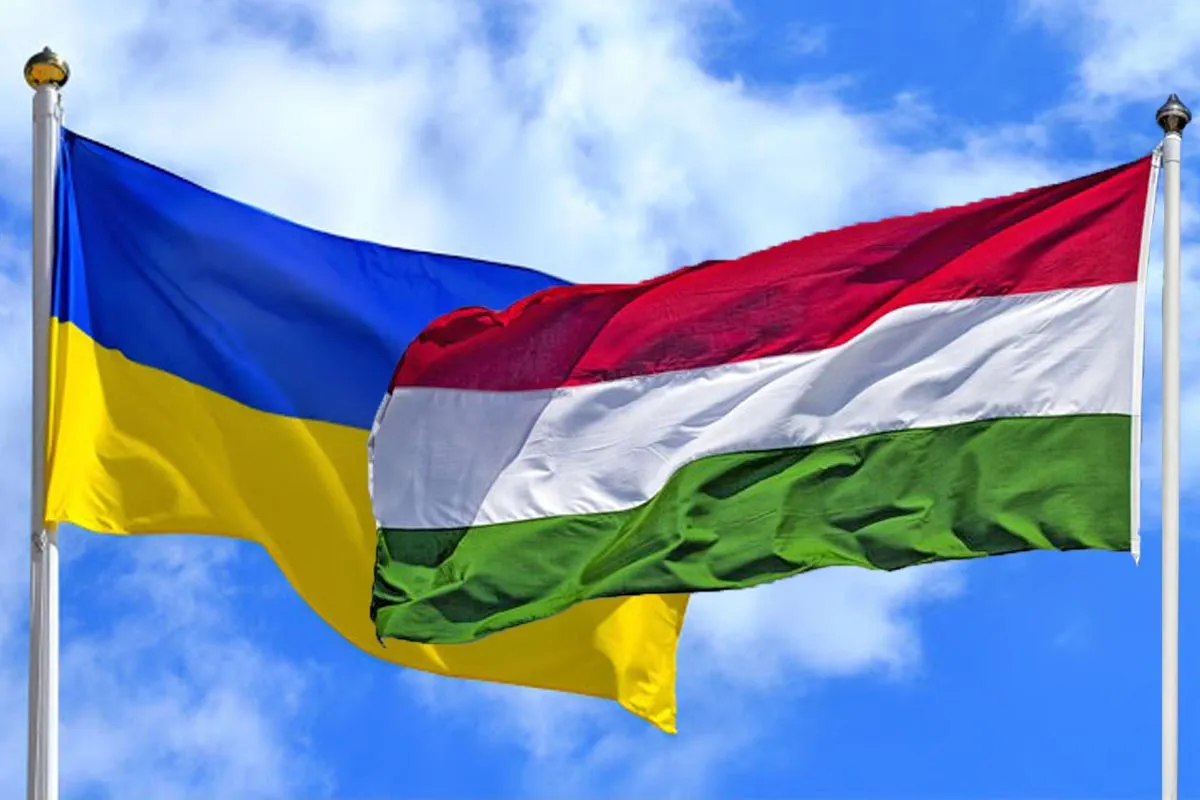
A few words on the prospects for a reset in relations between Ukraine and Hungary.
A widely held view in Ukraine’s intellectual circles—which are always overly critical—is that the future Prime Minister, Péter Magyar, is a sort of ‘closet nationalist’ who is yet to show Ukraine what he’s made of.
Moreover, he himself hails from Fidesz, so there is a risk of ending up with a second Orbán, albeit a young and progressive one. After all, Orbán himself began his career in the 1990s as a respectable democrat and liberal, before evolving into a national conservative.
The first thing Magyar will take into account regarding Ukraine is the consequences of Orbán’s anti-Ukrainian media propaganda and the work of American and Russian political strategists.
True, winners are not judged, and so Magyar could have sought an immediate thaw in relations with Ukraine, but the Ukrainian issue has become so sensitive and inflammatory for Hungarian society that a pro-Ukrainian shift in foreign policy could tarnish his electoral triumph and the initial momentum for implementing his policy of change.
Orbán hasn’t gone anywhere; his Fidesz party has a fairly strong presence and is becoming a powerful opposition. That is why Orbán has stated that his first visits will be to Warsaw, Vienna and Brussels.
If you recall, following his election, Ukrainian President Yushchenko made his first foreign visit to Moscow specifically to meet with Putin, immediately after his inauguration, thereby dispelling the effects of propaganda and the work of those very same Russian political strategists who claimed he was a Russophobe and a Western puppet.
Therefore, right now, any sharp shift by the new Hungarian government towards Ukraine could be interpreted as a clear example of Orbán’s correctness in his view that Magyar is supposedly a puppet of Zelenskyy and Brussels, ready to drag Hungary into war.
Before embarking on a gradual reset of Ukrainian-Hungarian relations, Magyar must steer the country towards domestic political reforms (a change of government, the Constitution, the law enforcement and judicial systems, and tackling inflation) and a thaw in relations with EU institutions.
And only with time, as he consolidates a positive perception of himself as an effective destroyer of Orbán’s mafia-like system, will there be sufficient leeway to restart relations with Kyiv.
Certain diplomatic gestures on Ukraine’s part could accelerate this. From the rapid repair of the Druzhba oil pipeline (though the prospect of low prices for Hungary now poses a separate challenge) to facilitating communication between Ukraine’s Hungarian community and the new authorities in Budapest to dismantle Orbán’s destructive influence.
There is another interesting point. Orbán’s Hungary served as an open battering ram against Ukrainian ambitions in the European direction for those EU countries that did not want to risk entering into a public conflict with Ukraine, which is bleeding from Russian aggression.
It was easier to constantly use Orbán as a ‘scapegoat’ when it came to blocking loans to Ukraine, failing to open negotiation channels, and refusing to adopt anti-Russian sanctions, but this approach fully aligned with the aspirations of some EU countries. In some cases, this was explained by competition with the Ukrainian economy; in others, by a reluctance to sever commercial ties with the Russian economy. Orbán was convenient.
All articles in the "Opinion" section are published in full from their original sources. The editorial team may not share the authors’ views and accepts no responsibility for their statements.