Have you heard anything about the new Labour Code?

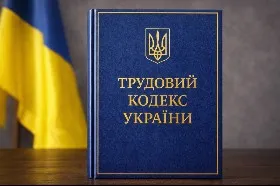
The draft of the new Labour Code, which was drawn up with the involvement of consultants from the Tony Blair Institute, is seen not only as a labour reform but also as a mechanism for bringing employment out of the informal sector.
The very same one that promises 300,000 new legal jobs and an additional 43.4 billion hryvnias for the budget every year. The very same one developed by British consultants from the Tony Blair Institute.
Let’s be honest — what’s really under the bonnet.
This is not labour reform. It is tax de-shadowing dressed up as labour reform.
43.4 billion UAH is primarily a fiscal effect, not a social one. Even if it is via the Tony Blair Institute’s ‘White Paper’, the government does not publicise this fact.
On the one hand, more taxes aren’t a bad thing. On the other, we need to call a spade a spade.
On the one hand, the state cannot function on one leg when, out of a population of 31 million, only 10.5 million actually pay social security contributions. Accordingly, it is critically important for us to bring millions of employment relationships out of the shadows – relationships that have existed for years in the form of sole traders, ‘civil law contracts’ and standard ‘envelope wages’. The Labour Code is precisely the tool for reclassifying these schemes into official employment relationships.
On the other hand, we’ve been down this road before. Relying on this code, tax inspectors will automatically back-charge social security contributions. And then what? In 2020, we were told that all the corrupt officials had left the country. And then came the “Great Construction”, eggs at 17 hryvnias and “Mindich-gate”. Numerous corruption scandals have proven that no matter how much money there is, it will be embezzled. So all these slogans about ‘money for the Armed Forces’ are just empty words.
What’s actually good:
The 1971 Labour Code is a relic of the industrial Soviet economy. It is so out of touch with reality that businesses have long simply circumvented it through sole traders and civil contracts. The new code simply legalises what already exists: seasonal contracts, domestic workers, temporary employment through agencies, and apprenticeship contracts. Whether businesses are interested in such legalisation is another matter. In my view, they are not.
There is also a real catalyst for formalisation that is rarely mentioned: conscription is linked to an official employment contract. No contract, no exemption. In the context of a war that could last for years, this is the most powerful incentive for businesses to regularise their workforce — far more powerful than any inspection.
And then there’s the matter of taxes. The more people in formal employment, the more resources for the army. This is the cause-and-effect link between the front line and the economy that needs to be discussed openly.
What is really bad:
Firstly, the main problem with the shadow economy is not labour law, but the tax burden. Just over 40 per cent on the wage bill. As long as the Unified Social Tax (UST) remains at 22 per cent, businesses will find ways to continue optimising their operations, simply under a new legal guise.
The Code does not amend the Tax Code. Accordingly, +300,000 jobs and +43 billion UAH is an optimistic scenario, not a plan. Realistically: 100–150,000 jobs and 15–25 billion UAH in the first 2–3 years.
Secondly, there is a constitutional issue that cannot be ignored: the narrowing of safeguards. Protection against dismissal for parents — reduced from three years to one and a half. No complete ban on dismissal during sick leave for fixed-term contracts. The Verkhovna Rada’s Main Scientific and Expert Directorate explicitly points to the risk of violating Article 22 of the Constitution — the prohibition on narrowing existing rights.
We talk about a business-friendly code, but ‘business-friendly’ cannot mean ‘employee-hostile’.
Thirdly, the projected effect of “stepped-up inspections” is half of the stated 43 billion. But the State Labour Service’s actual effectiveness as an institution has never been impressive. Without resources, without independence, without the real certainty of punishment — risk-based inspection will remain a nice concept on paper. And we already know that what Ukraine is sorely lacking is precisely the “certainty of punishment”. It turns into very specific pressure, the aim of which is very specific bribes.
What needs to be done before adoption:
There are five things that need to be rectified in the second reading.
First — restore or compensate for the protection of parents with young children. Reducing the period from three to one and a half years poses a constitutional risk and, frankly speaking, sends a signal to society about the reform’s priorities. These do not lie in increasing the birth rate, by the way.
Second — to prohibit dismissal during illness as a general principle. Illness is an insured event, not grounds for termination.
Thirdly, clear criteria for ‘economic and organisational reasons’ for dismissal. Currently, the wording is so vague that case law could go either way. Of course, it’s good for business when it can dismiss an employee at any time. But this runs counter to European practices and looks like an attempt to ‘build the US’ within a specific sector of labour relations.
General conclusion:
We need a new Labour Code. The 1971 Labour Code is a relic that should have been consigned to the archives long ago. The direction is right: de-Sovietisation, EU standards, flexibility, digitalisation.
But in its current form, this is a “business-oriented reform”. If it is adopted without amendments, we will end up with a “European wrapper” offering weakened worker protection. If it is revised in line with the Verkhovna Rada’s comments, we will end up with something similar to the Polish model of the 2010s, which had a real impact precisely because it maintained a balance.
I don’t claim to be an expert. If I’m wrong, please share your view. I’m certain of this: a sensible reform is one that won’t need to be rewritten in three years’ time.
All articles in the "Opinion" section are published in full from their original sources. The editorial team may not share the authors’ views and accepts no responsibility for their statements.