The 40-day plan for long-range strikes needs to be extended – this puts pressure on the Russian economy

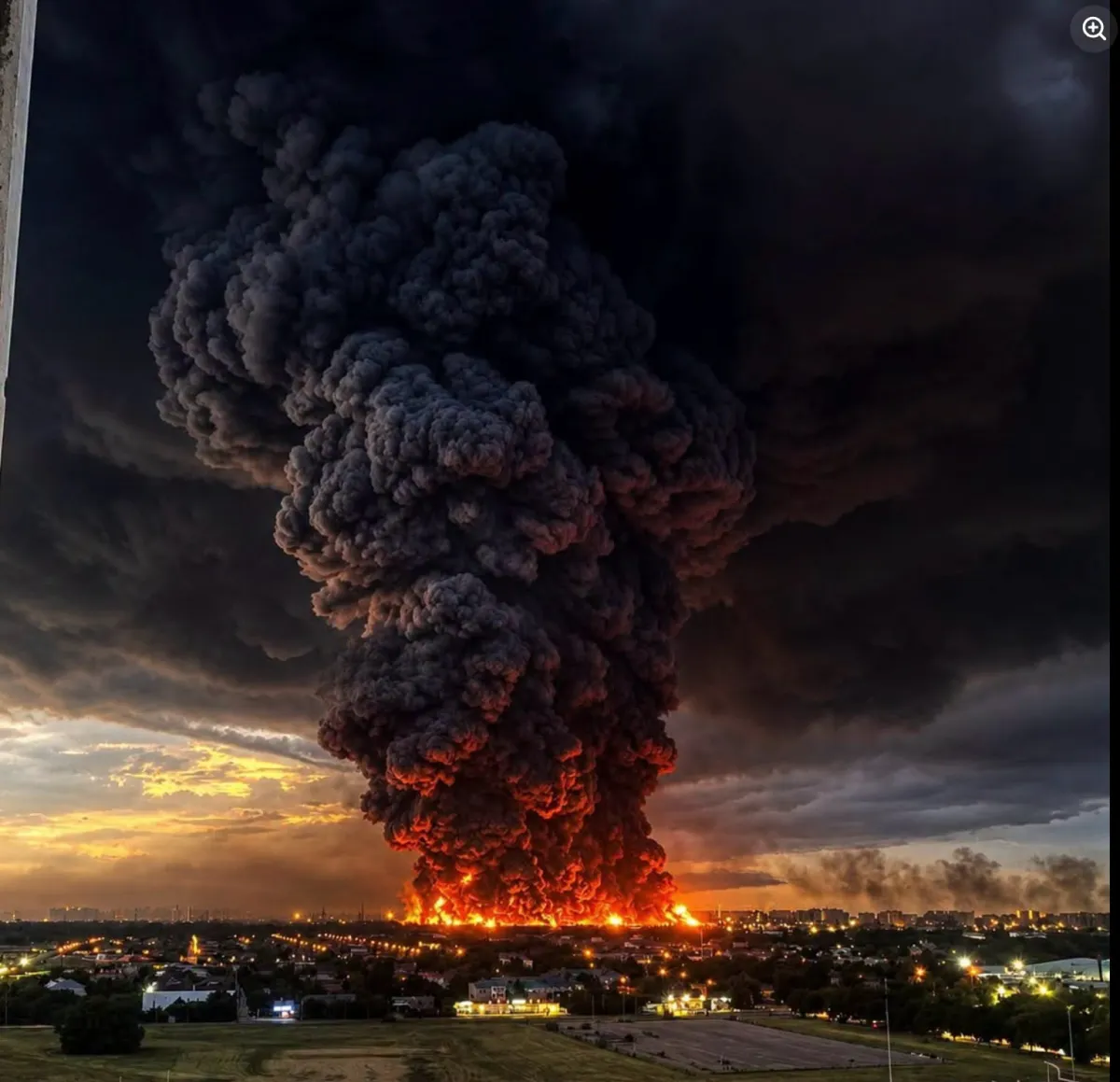
The continuation of long-range strikes against Russia’s logistics and fuel facilities could intensify the economic pressure on the country. The text sets out an assessment of the potential consequences for logistics, the fuel market, business and the banking sector.
I demand an extension of Zelenskyy’s 40-day plan!!!)
These are the best sanctions Moscow has ever seen, and they’ll set the stage for a positive outcome by the end of this year!
Between 18 and 24 July, facilities in at least Kotovsk (Tambov Oblast), Elektrostal (Moscow Region), Krasnodar, Nevinnomyssk (Stavropol Krai), Shushary and Utkin Zavod (St Petersburg and Leningrad Oblast), as well as in Simferopol.
During the first week, the loss of warehouse capacity was initially estimated at 6.5–9 per cent, then revised to around 10–15 per cent (!!!)
The area of the affected complexes amounts to hundreds of thousands of square metres, out of a total logistics infrastructure of around 5.2 million square metres.
Merchandise losses for retailers from the first waves alone amount to at least $1.9–$2.2 billion
If this trend continues for another five months, even taking into account improvements in air defence and attempts to disperse targets, we can expect 25–40 per cent of key fulfilment capacities to be seriously disrupted by the end of the year (!)
In this scenario, cumulative losses of sellers’ goods would easily reach $5.8–$10.3 billion.
The company itself will have to spend, according to rough estimates, $1.5–$3.2 billion on recovery, strengthening security, partial compensation and restructuring its logistics.
This is despite the fact that the group’s net profit for the whole of 2025 stood at around $2.2 billion, whilst the short-term debt of the main operating entity had already exceeded $10 billion by the end of last year.
The total debt burden was estimated at around $16.7 billion (!!!)
...
The strikes on oil refineries have already created a persistent shortage.
Exchange-traded sales of petrol in July fell by as much as half in some places, whilst diesel sales fell by around 20 per cent.
Petrol exports have been officially banned until the end of 2026 (!)
Queues are forming in the regions, supply restrictions are being introduced, and Moscow is prioritising meeting its own needs. Attempts to import fuel (notably by turning to India) have not yet managed to plug the gap quickly.
If the shortage persists until the end of the year – and with the ongoing disruption to refining, this is the most likely scenario – logistics costs will rise systematically.
Every kilometre a lorry travels, every shipment of the remaining goods, will cost more.
This is hitting e-commerce stock levels, traditional retail, agriculture and inter-regional transport (!)
...
Next up: celery.
Most small and medium-sized businesses relied on factoring and loans secured against stock.
When goods were destroyed in warehouses in Kotovsk, Elektrostal, Krasnodar or Nevinnomyssk, and compensation is paid only partially or late (often at 10–15 per cent of the actual value), the debts do not simply disappear.
Bankruptcies among individuals and sole traders were already on the rise – up 13.7 per cent in the first quarter, and up 6.8 per cent (!) for the first half of the year
The rate of increase for sole traders in particular was even higher.
With losses mounting to hundreds of billions of roubles by the end of the year, the wave of defaults will become significantly larger.
And now add to this the higher cost of fuel: even those who have survived are facing higher logistics and supply costs.
This is a further blow to profit margins.
Banks will feel the impact through a rise in non-performing loans in their SME portfolios.
I do not yet expect a systemic collapse of the major players – the state’s share is too large.
But reserves will rise, risk appetite will fall, and lending will become even more expensive and cautious.
...
At the same time, people continue to withdraw cash.
The M0 aggregate has already shown monthly growth of 2–3 per cent and annual growth of nearly 17 per cent.
Since the start of the year, cash in circulation has increased by more than one trillion roubles (over $12–$13 billion).
When stories emerge such as ‘the goods have gone up in smoke – there’s no money left – but the debts remain’, and petrol stations are plagued by queues or supply restrictions, this trend only accelerates.
Cash is flowing out of the system, and the banks’ resource base is shrinking.
...
The most important thing now is how all this works together.
Taken separately, each factor is a cause for concern.
Together, they create a powerful synergy.
Logistical chaos at Wildberries’ warehouses + a persistent shortage and rising prices of petrol and diesel = sharply higher costs for any form of transport (!)
Higher costs + massive losses among sellers = less supply, more bankruptcies and a faster contraction of the product range (!)
Bankruptcies + rising bad debts = banks tightening credit even further (!)
Tightening of credit + flight to cash = weaker domestic demand (!)
Weak demand + local shortages of goods and fuel = a classic stagflationary scenario: prices are pushing up from below, whilst the economy is slowing down from above (!!!)
GDP forecasts of 0.4–0.6 per cent already look optimistic in this scenario. A technical recession or deep stagnation in the second half of 2026 is a perfectly plausible scenario.
...
The cumulative social impact is significant.
Businesses that have lost stock in specific warehouses are left with debts, and now also face higher fuel prices.
When such stories become commonplace, and petrol stations are plagued by shortages or rationing, confidence declines across the board – both in the platforms and in the ability to plan anything. The demand for a cash ‘cushion’ is growing, whilst the willingness to take risks is falling.
I’m not saying that everything will collapse tomorrow. Although I’d very much like it to)
What I am saying is this: if the pattern of blows to logistics and refining continues, and the shortage of petroleum products persists until the end of the year, the Russian economy will face not just one major blow, but several mutually reinforcing processes.
It is precisely the combination of logistical exhaustion, fuel restrictions, a wave of bankruptcies and a flight to cash that constitutes the main effect. A domino effect, where everything will finally come crashing down!
All articles in the "Opinion" section are published in full from their original sources. The editorial team may not share the authors’ views and accepts no responsibility for their statements.