The black market in counterfeit branded goods causes losses to the budget and poses risks to European integration

To understand the legal nature of this phenomenon, it is important to draw a clear distinction between two stages: the origin of the goods and their direct sale within the country.
First and foremost, such goods are usually manufactured abroad (primarily in Asian countries), where a different legal framework applies. For our country, the problem begins the moment the goods are illegally brought across the border. Large consignments of counterfeit goods are not imported officially. The following shadow schemes are most commonly used to import them:
- Splitting commercial consignments. A large shipment is broken down into hundreds of small parcels, which are sent in the names of front men. This allows the shipment to artificially fall within the tax-free import limit and be transported as goods for personal use, thereby avoiding the payment of customs duties and VAT.
- False declarations. In customs documents, consignments of counterfeit goods are declared as cheap, unbranded goods. This is done for two reasons: to significantly understate the customs value and to circumvent the intellectual property rights protection system, so that customs do not seize the consignment at the request of representatives of the original brand.
- Importation by concealing goods from customs control. Usually, the goods are transported directly across official borders, but are physically concealed in lorries amongst other, legitimate and cheap goods, or are transported without any customs clearance at all through abuse of the system and illegal collusion on the part of unscrupulous customs officials.
Combating this stage is the direct responsibility of the State Customs Service and the Economic Security Bureau of Ukraine (ESBU).
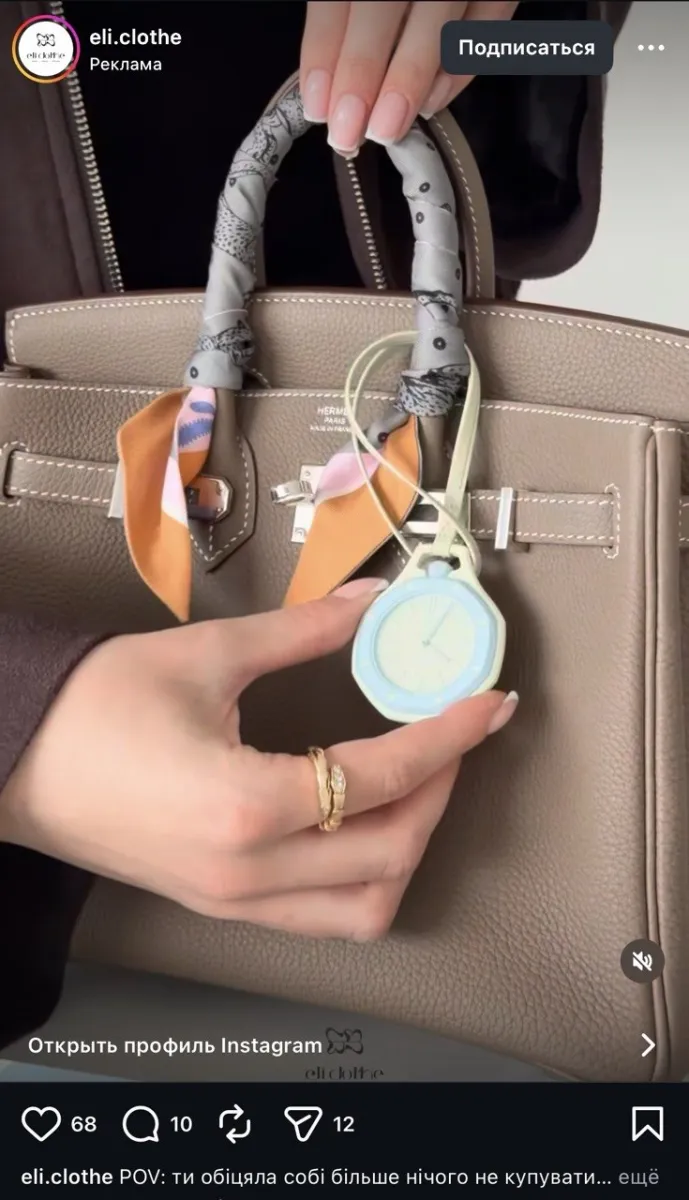
Once illegal goods enter Ukraine, local sellers take over. Their activities on Instagram or in showrooms breach several areas of legislation at once, although legal liability does not arise automatically — each regulatory body requires its own specific legal trigger.
Firstly, trading in copies of well-known brands without their permission constitutes the unlawful use of trade marks. If the rights holder suffers significant damage, criminal liability arises under Article 229 of the Criminal Code of Ukraine. However, law enforcement agencies do not initiate such cases on their own: an official complaint from the brand’s representatives is required for an investigation to take place. The State Customs Service operates on a similar principle: it may seize counterfeit goods at the border only if the brand has been previously entered in the Customs Register of Intellectual Property Rights.
Secondly, the systematic sale of goods without registering as a sole trader or limited liability company constitutes illegal business activity. Under Article 164 of the Code of Administrative Offences, this is punishable by fines and the confiscation of all goods and proceeds. Furthermore, accepting payments onto personal bank cards or in cryptocurrency directly contravenes the requirements of the Tax Code of Ukraine (TCU) regarding the recording of income and the mandatory use of cash registers (RROs).
If, however, the scale of such undeclared income becomes particularly large, the actions of business owners fall within the scope of the Criminal Code — specifically, as tax evasion (Article 212 of the Criminal Code). The state responds to this via two main triggers: either following complaints from defrauded customers to the Tax Service, or through the automatic blocking of cards by banks as part of financial monitoring. It is precisely following such alerts that the Tax Service, the Economic Security Bureau (ESBU) and the Cyber Police obtain the legal grounds to carry out inspections, de-anonymise crypto wallets and close down online shops.
As for Ukrainian buyers who order such bags for their own use, domestic legislation does not provide for any criminal or administrative liability on their part. The consumer bears only moral and ethical responsibility and assumes all financial risks. Such purchases are not covered by the guarantees of the Law of Ukraine ‘On the Protection of Consumer Rights’. Furthermore, in the event of fraud, the existence of a bank receipt for a P2P transfer or a record of a crypto transaction merely proves the movement of funds, not the fact of a sale. As underground sellers make widespread use of bank cards belonging to front men and anonymous crypto wallets, it is almost impossible to prove guilt and hold the actual organiser of the scheme to account.
On a global scale, the operation of such a market has devastating consequences for the state. Economically, this means the loss of billions of hryvnias in customs duties and taxes at a time of acute budget deficit, as well as the creation of unfair competition for the legitimate Ukrainian retail sector. Strategically, however, this poses a direct threat to European integration. Effective protection of intellectual property rights is one of the key requirements for EU accession. The open sale of counterfeit goods signals to international partners and investors that the institutions responsible for protecting property rights are weak, which significantly deters legitimate foreign businesses.