On 27 March, believers celebrate Saint Matrona: what not to do

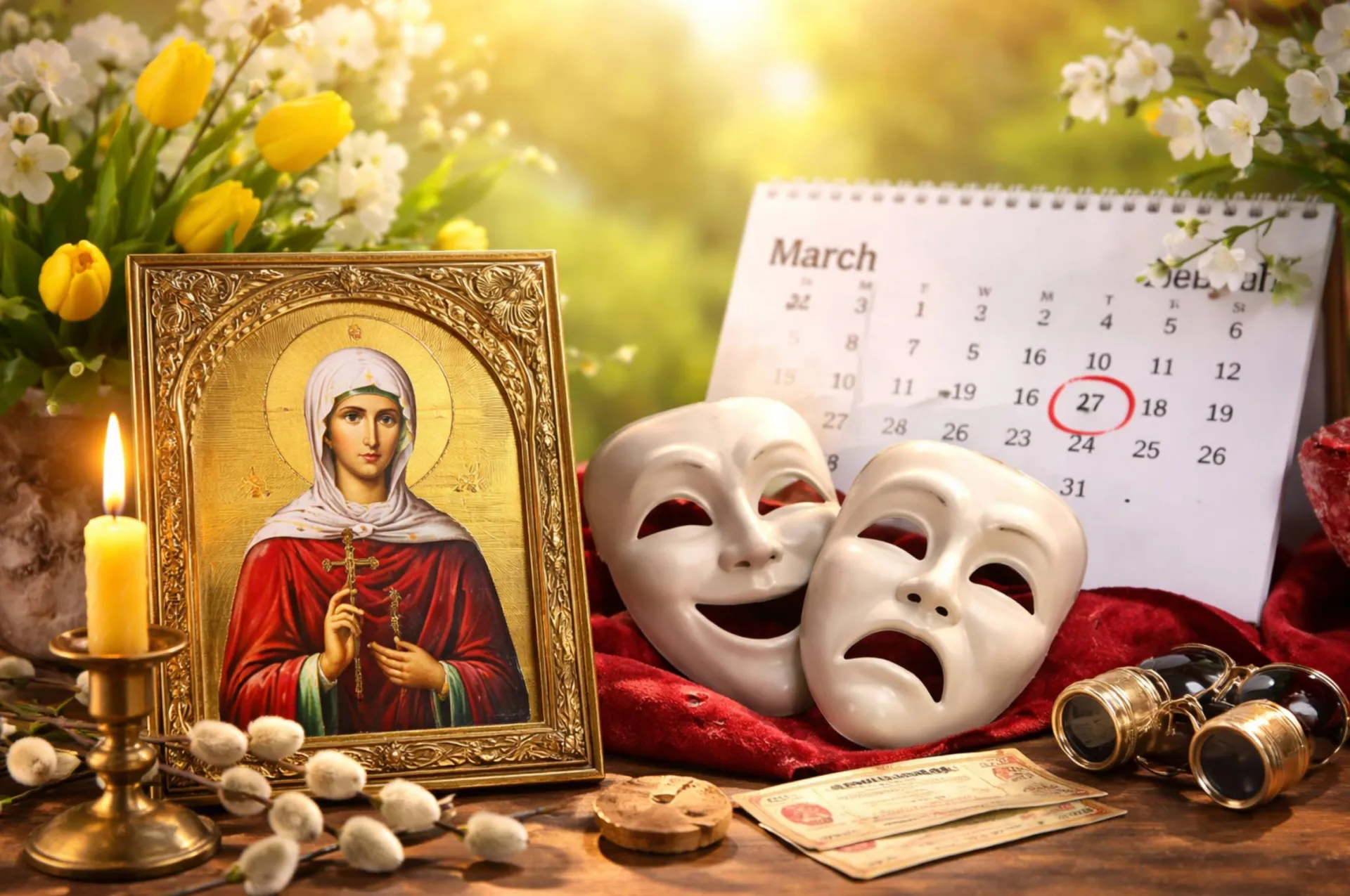
Today, believers honour Saint Matrona of Thessaloniki. She lived in Thessaloniki during the 3rd and 4th centuries and was known for her deep faith from a young age.
Matrona was a servant in the household of a woman who tried to force her to renounce Christianity. Despite pressure and cruel punishments, she remained true to her convictions. For this, she suffered severe torture and was killed.
The saint is considered the patroness of those who remain true to themselves even in difficult circumstances. Believers turn to her with prayers for strength, endurance and protection.
In popular belief, this day was considered difficult, so it was associated with numerous warnings. One must not be lazy, as it was believed that Matrona particularly honours the hard-working, and inactivity could ‘block’ good fortune for a long time.
It was also forbidden to quarrel or use bad language. It was believed that conflicts arising on this day could drag on for a long time and ruin relationships.
People were advised not to refuse to help, as it was widely believed that indifference on this day would come back to haunt you. Cosmetic procedures were also discouraged, as even simple grooming, according to popular belief, could have the opposite effect.
People were particularly wary of heavy physical work involving sharp objects. For example, it was previously advised not to sharpen or use knives, or chop wood, unless absolutely necessary.
As Lent is underway, those observing it should exercise restraint in their eating.
In folk tradition, 27 March was known as Motrona Nastovytsia. This name is linked to the old tradition of bleaching fabrics on the spring snow, which was called ‘nast’.
On this day, people also prayed for a good harvest and asked for blessings for the upcoming field work.
There were also weather omens. If there was hoarfrost or fog in the morning, the year was expected to be a good harvest. A clear sky foretold a bountiful harvest of berries, and if birds flew high, this was considered a sign of dry weather.
Today is the name day for Oleksandr, Ivan, Makar and Pavlo.
Our ancestors believed that on 27 March, one must not let things take their course. Even minor matters, according to tradition, were significant, as it was at this time that energy was stored for the coming months.
Therefore, the day was considered auspicious for tidying up the home, helping others and an inner ‘reset’.
As a reminder, US First Lady Melania Trump brought a humanoid robot, powered by artificial intelligence, to the First Ladies and Gentlemen’s Summit.