A near-record number of flats have been completed in Ukraine, but 11 per cent fewer new ones are being built

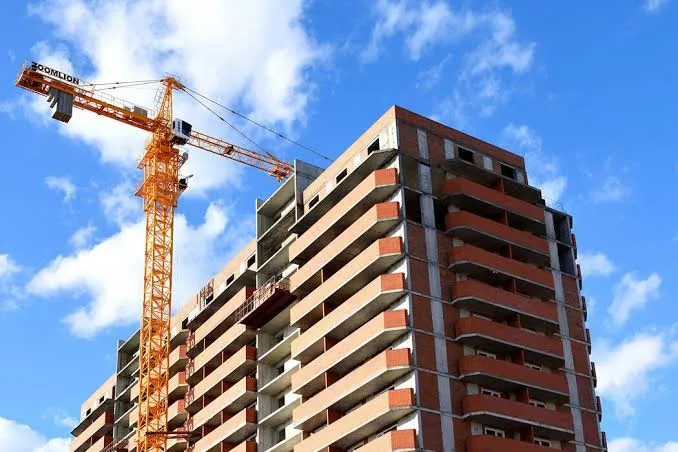
This is reported by the Ministry of Community and Territorial Development in a study of the construction sector in Ukraine for the period 2015–2026. The analysis was prepared on the basis of data from the State Statistics Service and the Unified State Electronic System for the Construction Sector.
Almost 30,000 flats were commissioned
Between January and March 2026, 29,664 flats were commissioned in Ukraine. This is 1,232 flats, or 4.3 per cent, more than in the first three months of 2025.
This figure is the highest since 2021. During the same period that year, 30,371 flats were commissioned — just 707 more than this year.
Following the outbreak of full-scale war, the number of completed homes fell sharply. In the first quarter of 2022, 14,841 flats were commissioned, rising to 24,905 in 2023. In 2024, the figure rose to 25,479 flats, and in 2025 to 28,432.
Consequently, in terms of the number of flats ready for occupation, the market has practically returned to pre-war levels.
Fewer new flats are being built
The picture is different for new buildings. In the first quarter of 2026, construction began on 20,196 flats. A year earlier, the figure was 22,698.
Over the year, the number of new projects has fallen by 2,502 flats, or approximately 11 per cent.
Compared with the start of 2021, the decline is even more pronounced. At that time, construction began on 24,576 flats, meaning the current figure is almost 18 per cent lower.
At the same time, the situation remains better than in 2023 and 2024. In the first quarter of 2023, construction began on 17,697 flats, and in 2024, on 16,693. The current figure exceeds these figures by 14 per cent and 21 per cent respectively.
Thus, developers are launching more housing than in the first two years of the full-scale war, but the pace has already slowed compared with 2025.
Why is the number of completed homes increasing, whilst fewer new buildings are being started?
The commissioning of a flat and the start of its construction are different stages, between which several years usually elapse. Therefore, the almost record-breaking figure for 2026 largely reflects the completion of buildings whose construction began earlier.
The simultaneous decline in the number of new flats suggests that developers have become more cautious about launching new projects. Possible reasons include security risks, labour shortages, more expensive financing and uncertainty regarding future demand. It is precisely these factors that the Ministry of Development cites as the main obstacles for the sector; however, the study does not identify which of them directly caused the decline in housing starts.
If this trend continues, fewer new homes may come onto the market in a few years’ time. At the same time, the document does not contain any forecasts regarding the future number of flats or their prices.
The total floor area of new housing has remained virtually unchanged
In the first quarter of 2026, 2.289 million square metres of housing were commissioned. For the corresponding period in 2025, the figure stood at 2.292 million square metres.
The difference is just 3,000 square metres, or around 0.1 per cent. Compared with 2021, the shortfall is also minimal: at that time, 2.306 million square metres of housing were commissioned.
The number of completed flats, however, rose by 4.3 per cent, although their total floor area remained virtually unchanged. The document does not provide a breakdown by housing type, so it is not possible to determine precisely from this data whether flats have become smaller or whether the ratio between blocks of flats and private housing has changed.
The floor area of new buildings has also decreased
This decline is also confirmed by the floor area of residential and non-residential buildings on which construction began during the quarter.
In January–March 2026, this figure stood at 1.23 million square metres. A year earlier, it had reached 1.41 million square metres.
Consequently, the total floor area of new buildings has fallen by approximately 13 per cent. Compared with the first quarter of 2021, when construction began on 1.591 million square metres, the decline amounts to almost 23 per cent.
This figure covers both residential and non-residential properties, so it does not allow for a separate assessment of the reduction in the floor area of future housing alone. However, it confirms an overall decline in the volume of new construction projects.
The construction sector as a whole continues to grow
Despite the decline in the number of new flats, the total value of construction work in the country has increased.
In the first quarter of 2026, work worth 40.2 billion UAH was completed. During the same period in 2025, the volume stood at 34.8 billion UAH. This represents a 15.5 per cent increase.
The results by sector were as follows:
residential buildings — 6.2 billion hryvnias, up 7 per cent year-on-year;
non-residential buildings — 13.8 billion hryvnias, up 12 per cent;
civil engineering works — 20.2 billion hryvnias, up 20 per cent.
Around half of all work was accounted for by civil engineering works — roads, networks and other infrastructure facilities. Construction of non-residential facilities accounted for a further third or so. The share of residential construction stood at around 15 per cent.
Consequently, the sector’s overall growth is currently driven largely by infrastructure, industrial and logistics facilities, warehouses, hospitals, schools and administrative buildings. The revival of the construction sector as a whole does not necessarily mean the same level of growth in new housing specifically.
Significantly more non-residential premises were completed
In the first quarter of 2026, 811,000 square metres of non-residential premises were commissioned. This is 193,000 square metres, or 31 per cent, more than in the corresponding period of 2025.
The figure has almost returned to the 2021 level, when 864,000 square metres of non-residential property were commissioned.
It was non-residential properties that were the main driver of growth for the whole of 2025. The value of such projects reached 86.2 billion UAH, compared with 57.7 billion UAH in 2024 — an increase of almost 50 per cent.
By way of comparison, residential construction in 2025 increased from 26.6 billion to 34.6 billion hryvnias, whilst civil engineering works rose from 120.4 billion to 137.5 billion hryvnias.
What is happening with construction workers’ wages
The average wage in the construction sector in 2026 stood at 22,616 UAH. A year earlier, it was 19,699 UAH, meaning it rose by almost 15 per cent in nominal terms.
Compared with 2022, when the average salary was 9,781 UAH, wages more than doubled.
However, construction remains among the sectors with relatively low pay. The average salary was lower than in manufacturing, transport, trade, public administration, professional and scientific activities, the financial sector, and the information and telecommunications sector.
The study also compared actual wage growth with cumulative inflation. Based on this calculation, wages in the construction sector in 2026 should have stood at 24,403 UAH. Actual wages were approximately 7 per cent lower.
Which areas are not included
The data is as at 1 April 2026. It does not cover temporarily occupied territories or areas where hostilities are ongoing or have taken place.
Consequently, the figures do not reflect the full situation across the entire internationally recognised territory of Ukraine. They relate only to regions for which the State Statistics Service and the electronic construction system had data available.
Follow us on Telegram.