A powerful geomagnetic storm has hit Earth: forecast for 9 June

This is according to data from Meteoagent. The NOAA Space Weather Prediction Centre also forecast a G3-level geomagnetic storm for 8 June.
A powerful geomagnetic storm began on Earth on 8 June.
According to Meteoagent, the Kp index, which indicates the level of geomagnetic activity, rose to 6.7. This is almost 7 points and corresponds to a strong G3-level geomagnetic storm.
Such a level of geomagnetic activity can affect not only the well-being of weather-sensitive people, but also the operation of equipment, communications and navigation systems.
Forecast for 9 June
According to the forecast, the geomagnetic storm will continue on 9 June, but is expected to weaken.
The Kp index is expected to drop to 6 points. This corresponds to a moderate geomagnetic storm of G2 level.
In other words, the strongest impact occurred on 8 June, and by 9 June, geomagnetic activity is expected to gradually decrease.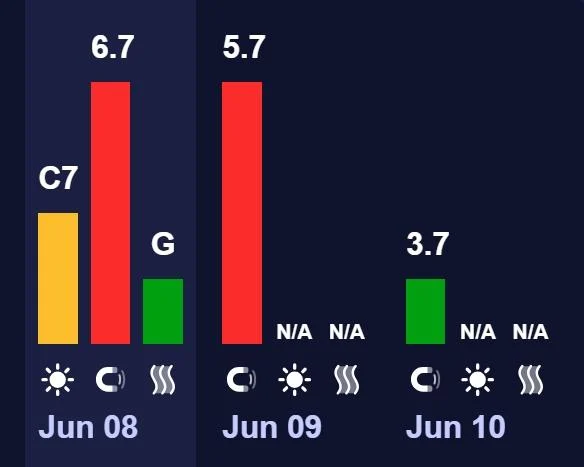
Why is a G3-level geomagnetic storm dangerous?
A G3-level geomagnetic storm is considered severe.
It can cause disruptions to satellite communications, navigation, radio communications and certain elements of the energy infrastructure.
For most people, such a storm does not pose a direct threat. However, weather-sensitive individuals may experience headaches, fatigue, drowsiness, irritability, sleep disturbances or fluctuations in blood pressure.
How to minimise the impact of the storm
On days of heightened geomagnetic activity, it is advisable to avoid excessive physical and emotional stress.
It is also advisable to maintain a regular sleep pattern, drink plenty of water and spend more time outdoors.
Doctors advise limiting alcohol, energy drinks and excessive consumption of strong coffee.
People with cardiovascular conditions should monitor their well-being more closely, keep an eye on their blood pressure and follow their doctor’s advice.
What is important
Forecasts of geomagnetic activity may change throughout the day.
The intensity of the storm depends on the speed and direction of the solar wind, so the data for 8–9 June may be updated following new observations by space weather centres.
Follow us on Telegram