A second front or a stalemate: Gallyamov on Putin’s possible choice

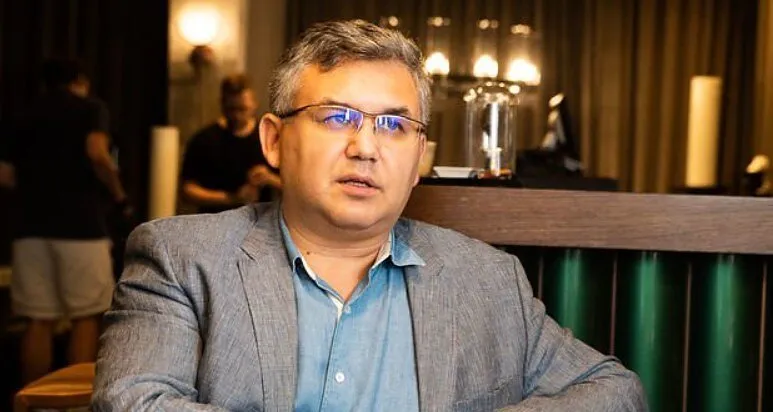
Abbas Gallyamov, a political analyst and strategist, made these comments in an interview with Radio NV.
Abbas Gallyamov stated that Putin’s remarks about the war allegedly drawing to a close do not mean that the Kremlin is actually prepared to acknowledge the problems on the front line.
According to him, for the Russian dictator, demonstrating that “everything is going according to plan” is a way of showing strength. Gallyamov believes that Putin perceives acknowledging an unpleasant reality as a sign of weakness, so he will try until the very end to separate his public image from the actual state of affairs.
The political analyst compared this logic to the behaviour of dictators who, even in the face of obvious defeat, continue to speak of a future offensive and victory.
Putin is approaching a zugzwang
Gallyamov agreed that Putin is increasingly moving towards a situation of strategic zugzwang, where every subsequent move can only worsen his position.
At the same time, he noted that it is too early to call this a complete stalemate. In his view, the Kremlin still has room for manoeuvre, but it is becoming increasingly limited.
Among the factors putting pressure on Russia, Galliamov cited Ukrainian strikes on Russian oil refining and oil export infrastructure, sanctions, the militarisation of the economy, and internal imbalances linked to the growing role of the security services.
In his view, all this is hitting the economy and rapidly depleting Russia’s resource base. The political analyst also pointed out that Putin is waging war primarily not with volunteers, but with mercenaries, who need to be paid large sums of money.
The ‘second front’ scenario
Gallyamov cited an attempt to open a “second front” as one of the potential manoeuvres. According to him, if Putin has reached a deadlock in Ukraine and cannot achieve the desired result, he could theoretically try to put pressure on Europe.
The political analyst suggested that the Kremlin might view a strike on Estonia or another Baltic state as a way of forcing Europeans to negotiate with Russia.
According to the logic described by Galliamov, Putin might calculate that Europe, left without clear US support, would fear a direct war and begin to ask the Kremlin to stop. Moscow’s first demand in such a scenario could be the cessation of military and financial support for Ukraine.
Then, according to the Kremlin’s plan, Ukraine would be left without resources and would be forced to agree to Russia’s terms.
Why this could be a trap for the Kremlin
At the same time, Gallyamov stressed that the ‘second front’ scenario looks like a gamble.
He noted that this logic is built on many “ifs”: if Trump does not support the Europeans, if Europe gets scared, if NATO countries do not resist.
But if Estonia, Poland, Germany or other countries put up a fight just as Ukraine has done, Putin will face two fronts instead of one. In that case, according to Galliamov’s assessment, Russia could become bogged down in the war for good.
The political analyst compared this risk to the historical experience of fighting on two fronts, which ended in disaster for Nazi Germany.
NATO’s reaction and signals to Putin
Gallyamov also commented on the incidents involving Russian drones straying into Romanian territory. In his view, NATO’s reaction may have appeared weak to Putin and the Russian ‘hawks’.
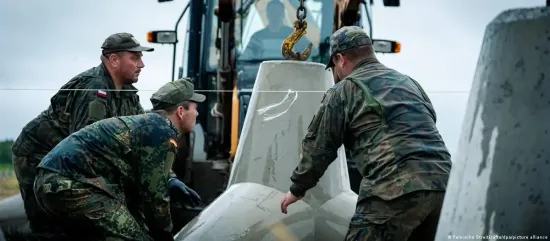
The political scientist believes that for the Kremlin, it is not just statements that matter, but physical actions. In his view, a stronger response could have been the redeployment of NATO units closer to the borders with Russia.
Gallyamov suggested that such incidents could be a way of “testing the waters” with the West. He recalled that prior to the full-scale invasion of Ukraine, Putin also acted gradually – escalating tensions step by step and observing the reaction.
Is a freeze on the war possible?
Speaking about speculation regarding a possible freeze on the war until November or the end of 2026, Gallyamov noted that he could not predict specific timelines.
At the same time, he believes that it is in Putin’s and Russia’s direct interest to stop the war, as the resources to continue it are running out.
According to the political analyst, after Donald Trump came to power in the US, conditions emerged that could have been advantageous for Putin. These included guarantees that Ukraine would not join NATO, as well as Russia effectively retaining the occupied territories.
Gallyamov believes that at a certain point, Putin may have been internally prepared to halt hostilities. However, in his view, Trump’s accommodating stance may have created false hope in the Kremlin that it could seize even more territory and strengthen its negotiating position.
A pause in negotiations with the US
Separately, Gallyamov stated that contacts between Moscow and Washington are likely still ongoing, but the negotiation process itself is on hold.
According to him, this was a significant move by the American side. While the negotiations were ongoing, Putin remained, for a section of Russian society, the “president of hope”, as people expected that an agreement might bring the war closer to an end.
Following the pause in negotiations, Galliamov believes, Putin risks becoming a “president of despair”. This could weaken his position within Russia, as hopes for a swift agreement fade.
The political analyst believes that in response to the pause, the Kremlin may resort to escalation once again – in particular, massive strikes or nuclear rhetoric – to draw the US’s attention back to the negotiations.
Follow us on Telegram
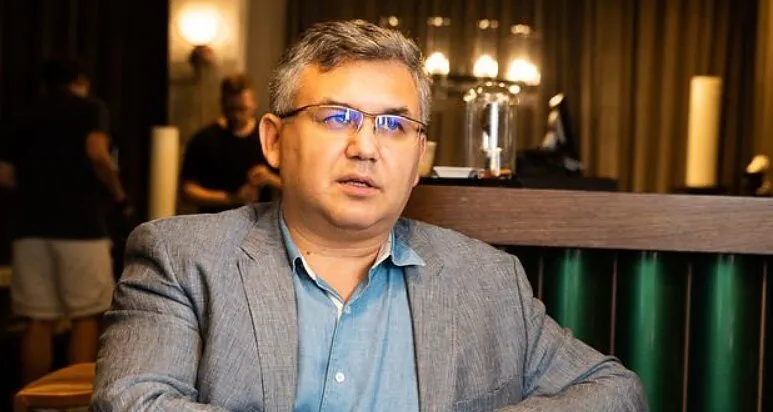
Gallyamov subsequently worked in political consultancy, commenting on Russian domestic politics, election campaigns and processes within the Russian government.
Following the outbreak of Russia’s full-scale war against Ukraine, he became a public critic of the Kremlin. In his commentaries, he analyses the mood among the Russian elite, the state of Putin’s system and possible scenarios for Vladimir Putin.
In Russia, Gallyamov was placed on the register of “foreign agents” and declared a wanted person. He lives outside Russia and acts as an opposition political analyst.