Almost 90 per cent of Russian missiles and drones contain components from Japan

Stanislav Sereda
Stanislav Sereda Journalist
Almost 90 per cent of Russian missiles and drones contain components from Japan

Japanese components in Russian missiles
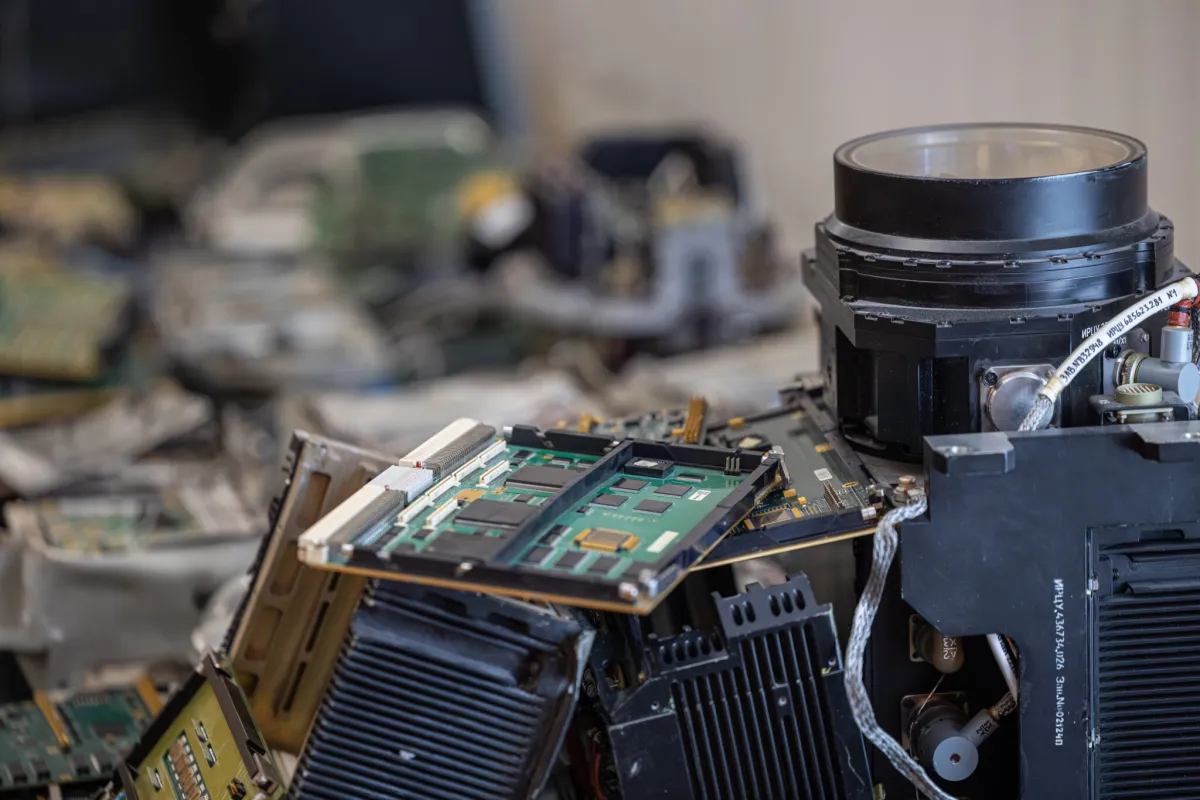
Components manufactured in Japan have been found in around 90 per cent of the Russian cruise and ballistic missiles and drones that the Russian Federation is using to attack Ukraine.

Vladislav Vlasyuk, the Ukrainian President’s Representative on Sanctions Policy, spoke about this in a comment to Kyodo News.

He noted that this mainly concerns civilian electronic components for general use — these may have been diverted to Russia via third countries, circumventing export restrictions, and were subsequently used for military purposes. He therefore called on Japan to tighten controls on the export of such goods.

Internal Ukrainian government documents, which the Presidential Representative provided to Kyodo News, indicate that the Russian Kh-101 cruise missile utilised electronic components manufactured by major Japanese semiconductor and electronics manufacturers.

The agency reports that of the 13 Japanese companies named, five were unable to confirm the origin of the components due to “limited information”. One company suggested that its products might have been repurposed, whilst another stated that the component in question belonged to a different company. The remaining six manufacturers did not provide any comments.

According to Vlasyuk, most of the components found in Russian weapons are civilian electronic parts that are freely available on the Japanese market. This makes it difficult to monitor their end use.

Follow us on Telegram
Share tittle
War
Putin doesn’t have long left
War
  • Important

Putin doesn’t have long left

Against the backdrop of intensified Ukrainian long-range strikes on Russian territory, the Western media are increasingly discussing the mounting pressure on Vladimir Putin’s regime. Among the factors cited are the fuel crisis, strikes on infrastructure and domestic discontent in the Russian Federation.

30.06.2026
The occupying authorities in Crimea have announced that the fuel crisis will continue for another month
War

The occupying authorities in Crimea have announced that the fuel crisis will continue for another month

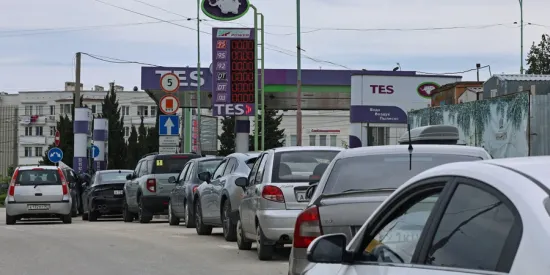
The occupying authorities in Crimea have stated that they do not expect fuel supplies to the peninsula to be fully restored in the near future. Restrictions on the sale of petrol remain in place, and the fuel shortage continues.

30.06.2026
Defence forces have struck two bridges in the occupied territory and a number of key enemy targets
War

Defence forces have struck two bridges in the occupied territory and a number of key enemy targets

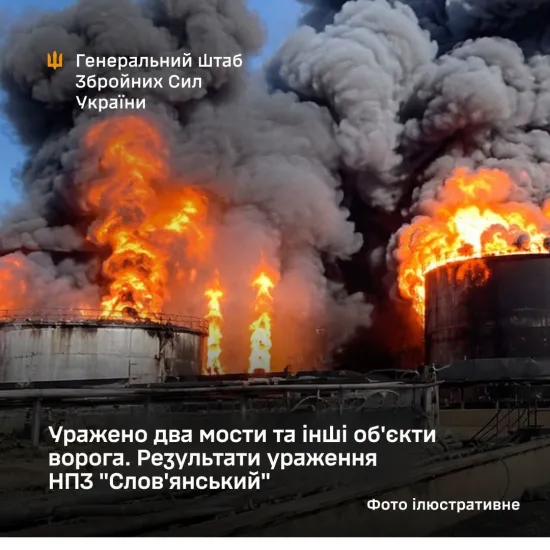
On 29 June and during the night of 30 June, the Ukrainian Defence Forces carried out strikes against a number of key Russian military targets in the temporarily occupied territories and within the Russian Federation. Two bridges, drone control centres and an occupiers’ command and observation post were hit.

30.06.2026
A fire is still raging at the oil refinery in Slavyansk-on-Kuban following a drone attack
War

A fire is still raging at the oil refinery in Slavyansk-on-Kuban following a drone attack

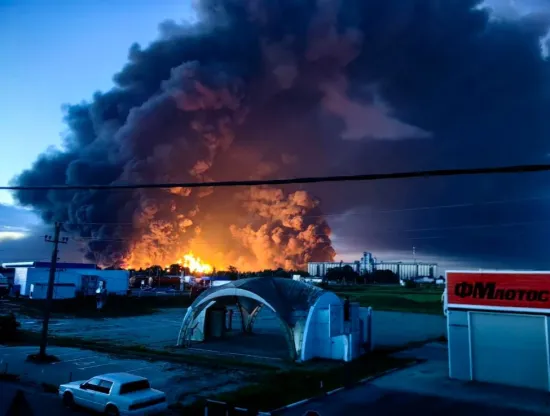
In Slavyansk-on-Kuban, they are struggling to put out the fire at the oil refinery following a drone attack. Local authorities have reported a deterioration in air quality and soot levels exceeding the permissible limit.

30.06.2026
For the second time this month, Ukraine has struck the ‘Dubna’ space communications centre in the Moscow Region
War
  • Important

For the second time this month, Ukraine has struck the ‘Dubna’ space communications centre in the Moscow Region Video

For the second time this month, the Ukrainian Defence Forces have struck the ‘Dubna’ space communications centre in the Moscow region. The facility is used for satellite communications, reconnaissance and the coordination of Russian military operations.

30.06.2026