The Large Hadron Collider has been shut down for four years: what happened

This is stated in the centre’s press release.
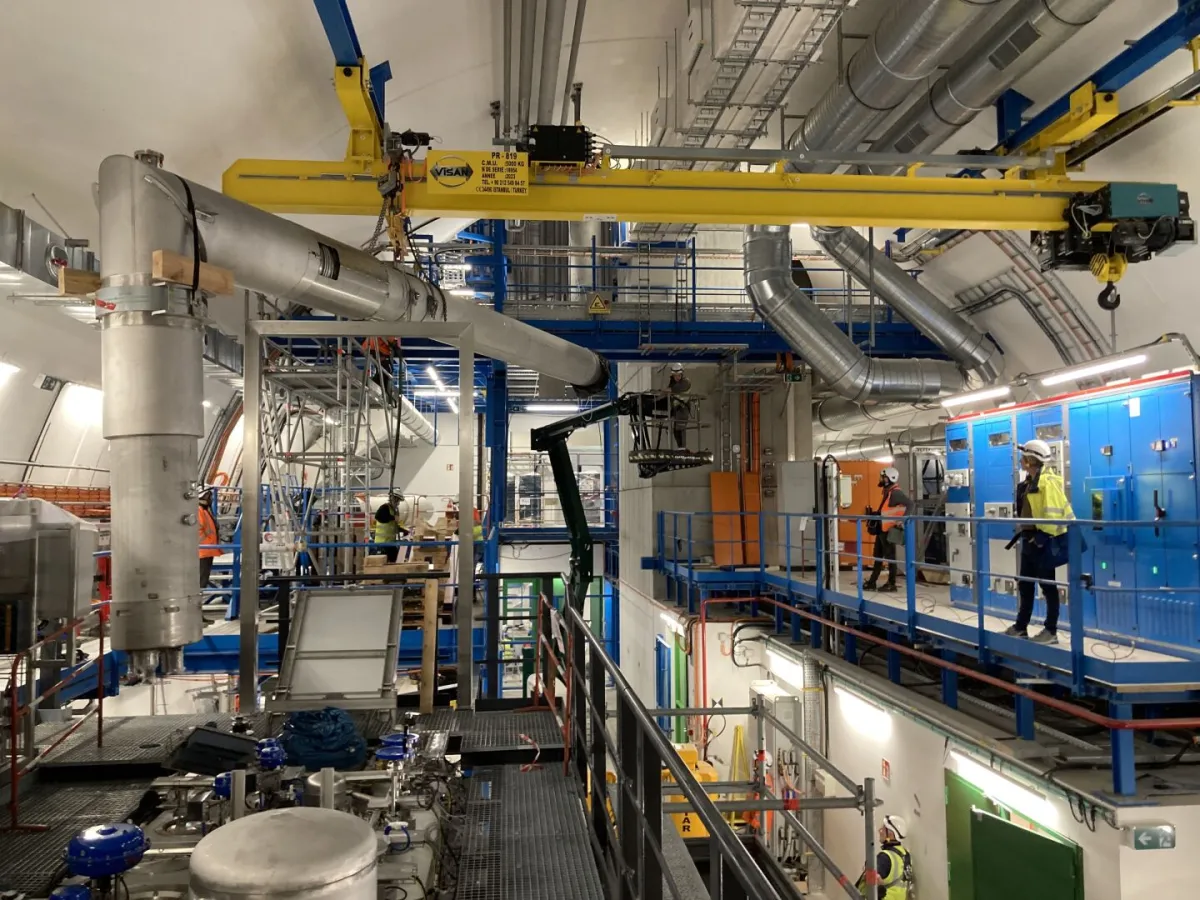
Following the most recent physics run, the accelerator was switched off to begin its third extended shutdown period. This is a major maintenance programme during which the collider will be upgraded: it will be refurbished and new equipment installed.
This shutdown will be the most extensive intervention in CERN’s accelerator complex since the collider’s construction.
Scientists expect that the upgraded collider will increase its luminosity tenfold — this will significantly expand the scope for researching the fundamental laws of nature.
The Large Hadron Collider: what is known about it
Since it began operations in 2008, the collider has pushed the boundaries of science and technology, becoming one of the most ambitious scientific instruments ever created by humankind. In 2009, the accelerator carried out its first proton collisions and quickly became a unique tool for scientific discoveries.
The LHC’s most famous achievement was the discovery on 4 July 2012, when scientists identified the Higgs boson — an elementary particle that confirmed a mechanism proposed almost half a century ago. In the years that followed, the LHC helped to make hundreds of important discoveries: in particular, scientists identified more than 85 hadrons, set limits on the existence of new particles, investigated the imbalance between matter and antimatter, studied the nature of quark-gluon plasma, and carried out measurements of importance to astrophysics.
In addition to scientific achievements, the VAK has contributed to technological developments in the fields of particle accelerators, superconductors, computing and international collaboration.
Follow us on Telegram